Front view of a house with a manicured Hamptons garden featuring shrubs, grasses, and decorative pots. The house boasts a white exterior, large windows, and a covered porch with elegant columns.

How to Design a Hamptons Style Garden Unique to Your Tastes

Is there anything better than having a garden that makes you feel like you’re always on holiday? Now we can’t bring the ocean and time off work of the Hamptons to you, but we can help you create a garden that is luxurious, classy and beautiful.

Small white wildflowers surrounded by green foliage and large rocks.

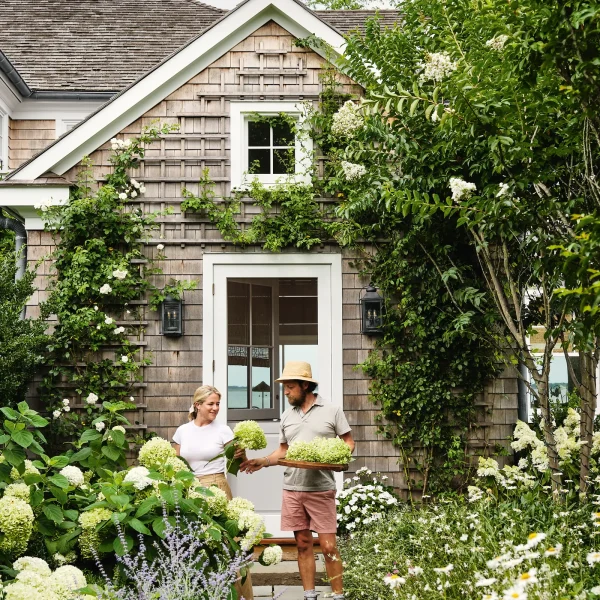
Two people standing in a lush garden, holding hydrangeas, in front of a shingled house with a white door. The garden path is lined with various flowering plants.

Field of purple wildflowers with tall, thin stems and clustered blooms, set against a blurred green and brown background.

A charming house with a porch and two chairs, surrounded by a blooming tree and manicured garden.

Pink flowers with yellow centers surrounded by green leaves and other purple and white blooms.

A dense bush with light green leaves and pink tips, set against a background of grass and trees.

A cluster of vibrant purple flowers with green leaves overflowing from a white planter.

The Hamptons style has been popular for a long time, and we find that almost every second garden design is asking how to do a Hamptons style garden, but with a little twist. Maybe it’s a Japanese element, or a Cottage leaning angle.

First, we’re going to define what the Hamptons style is. Then we’re going to chat about how you can make the style uniquely yours so that you stand out from the other Hamptons Style Gardens.

Here’s what we will be covering in this article:

THE ESSENTIALS
THE BEST PLANTS TO USE:
– Flowering Plants
– Trees
– Hedges
HOW TO ADD A TWIST:
– Hamptons with a Cottage Twist
– Hamptons with Australian Native Plants
– Hamptons with a Japanese Style
TIME TO MAKE YOUR HAMPTONS GARDEN

The Essentials of the Hamptons Style
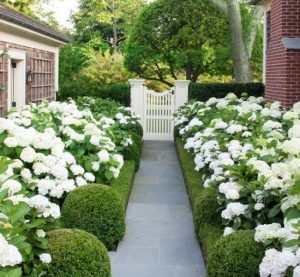
The pathway, reminiscent of a Hamptons garden, is lined with white hydrangeas and manicured bushes, leading to a charming white picket gate. A stately brick building and lush trees provide an elegant backdrop.Let’s start with breaking down the essential elements. It’s important that you have a set parameter to work within, or you’ll risk having a hodge podge of random things thrown together.

Chris actually likes to define Hamptons as a “Cottage Garden but with a specific colour palette.” Whereas a Cottage Garden gives you the freedom to mix and match as many different colour plants as you choose, you want to stick to certain shades when it comes to a Hamptons style.
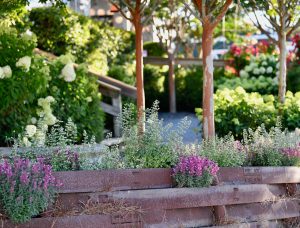
A Hamptons garden scene features blooming flowers in white and purple, bordered by wooden structures, with trees and lush greenery in the background.The colours at your disposal are white, pink, mauve, blue or purple. And of course green for the foliage of the plants, or even green-silver.

What you don’t want is any plant that has shades of yellow, red, or orange, whether that be in the foliage or from the flowers.

You’ll probably have already noticed but we’ll just point it out that essentially the colour palette is quite cool tones.
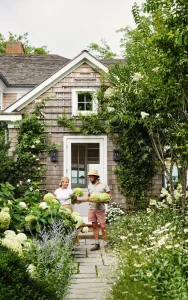
Two people standing in a lush garden, holding hydrangeas, in front of a shingled house with a white door. The garden path is lined with various flowering plants.

That doesn’t mean a warm-ish colour like magenta can’t ever find it’s way into a Hamptons garden, but you just want to make sure to use it sparingly and always strive for more cooler shades.

Now the secret to a Hamptons Style is finding the perfect balance between formality and looseness.
Lean too much towards formality and you lose the relaxed laid back quintessential vibe of the Hamptons. Err too much towards looseness and you abandon the sophistication and classiness.

To strike this perfect balance you want to bring the structure and symmetry by using hedges, topiaries and standard plants.

Then you add the soft romantic touches with your other plants like flowers, border plants, trees, shrubs, ground covers and climbers. You want to make it flowy and wild (but not too wild).
In every Hamptons Style Garden there is an interplay between structure and softness.

The Best Plants for the Hamptons Style

So you’ve got the basic elements down, what are the plants that are best suited? We’ll start with flowering plants.

Flowering Plants:
Nepeta ‘Catmint’
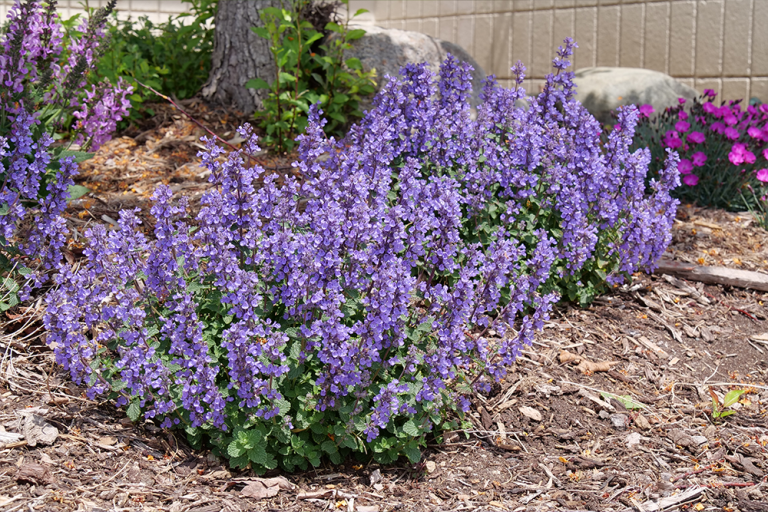

Purple flowering plants flourish in a garden bed with mulch, creating a vibrant lawn alternative. They're surrounded by lush green foliage and small rocks, offering both beauty and sustainability. Catmint

With the most gorgeous delicate purple flowers, Catmint is a no brainer when it comes to picking flowers. The foliage is also a perfect grey-green. Catmint is actually a herb, with a nice fresh scent.
Those gorgeous flowers will come about in summer and autumn, with the nice foliage filling your garden the rest of the time.

You could use Catmint for edging or large spaces you want to fill with a mass planting. They are so easy to grow so you don’t have to worry about spending a lot of time taking care of it.

If you are in a hot and dry area, you definitely want to be going with Catmint as they are excellent for those conditions.

Agastache ‘Sweet Lili’
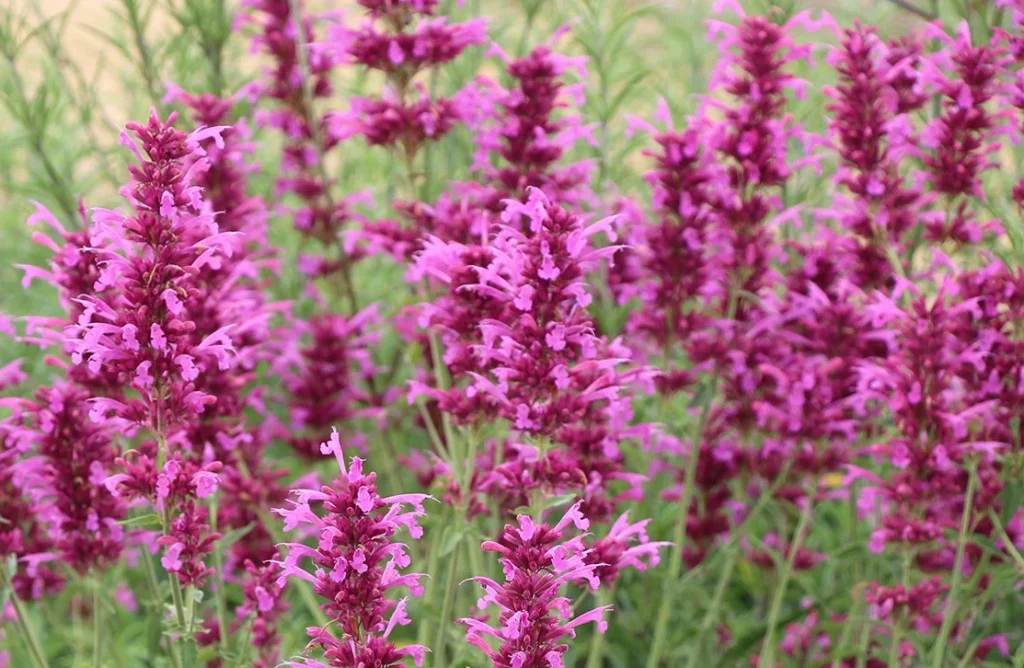

Purple blooming flowers on green stems create a vibrant lawn alternative in the garden setting. agastache sweet lili

With larger bottlebrush flowers and a more pink-purple colour, Sweet Lili is another great option. They flower from end of December through to autumn, giving you colour for a long time.
They are fantastic for the hot summer conditions and are a resilient perennial that are drought tolerant once established.

Make sure to plant in full sun with well drained soil. If you want to prolong the flowering, deadhead regularly.

You can even eat the foliage! It is anise-scented and can be used in salads and teas, or you can just use it in the kitchen as a pretty flower arrangement.

Convolvulus ‘Blue’
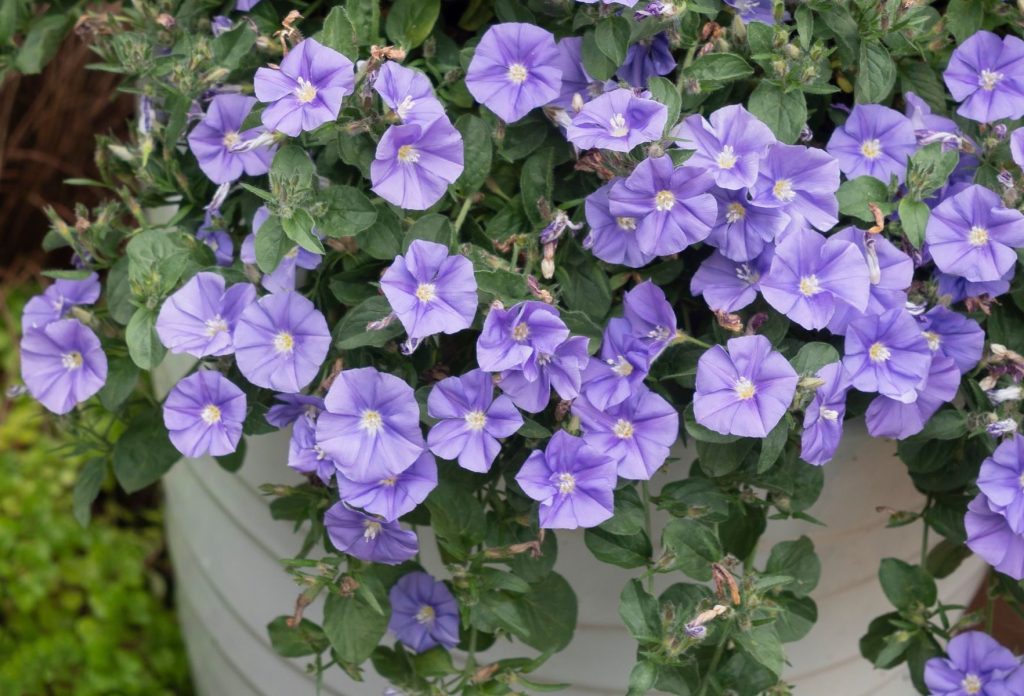

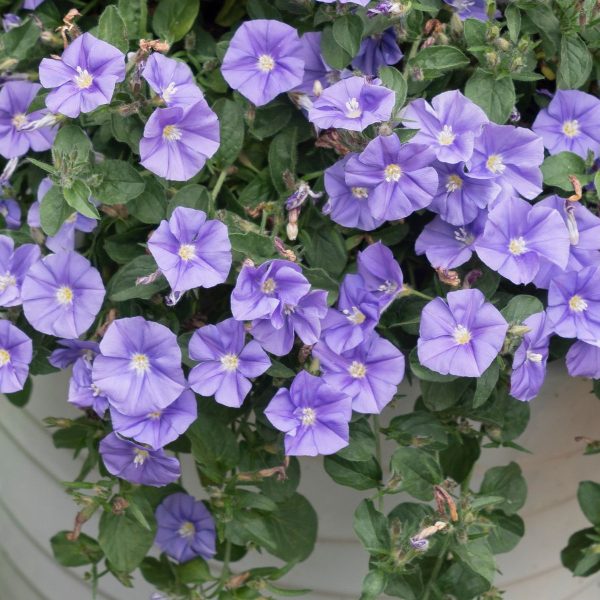
Purple morning glory flowers bloom in a white planter with lush green leaves, offering a vibrant lawn alternative. Convolvulus Blue

Convolvulus ‘Blue’ is an excellent ground cover that is not only low maintenance, but also very long flowering. You can put this in a large space that needs covering or plant it by an embankment and let it spill over and down.

The flowers are a vivid purple-blue that absolutely cover the entire plant. But even when the flowers are gone, the foliage by itself looks wonderful.

You can also use it to fill spaces between shrubs and larger perennials or even by the poolside.

Salvia ‘Mexican Bush Sage’
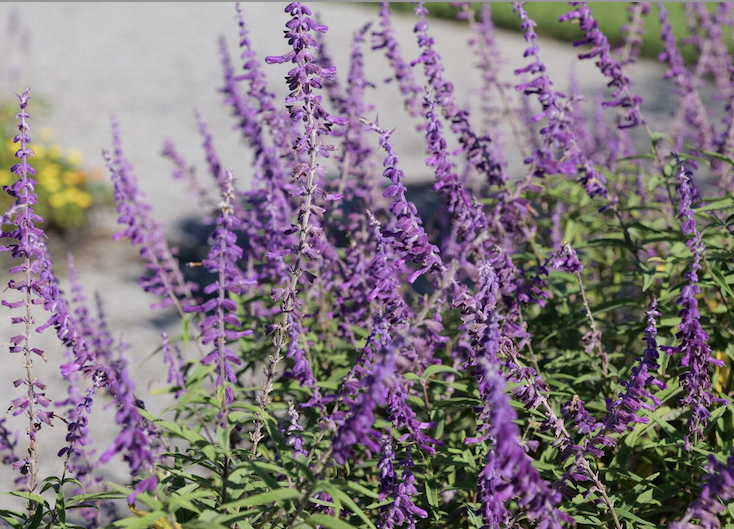

Close-up of tall purple flowering plants with slender green leaves, offering an elegant lawn alternative in a garden setting.

Now here’s a plant that’s really going to add that looseness your Hamptons Garden needs. This is an evergreen shrub that flowers for a long period, from winter until end of spring.

You can choose between purple or white flowers (both fit the Hamptons colour brief!)

Mexican Bush Sage is great as a flowering hedge or a medium sized border plant. They are very easy to grow and can handle moderately dry conditions.

Make sure to plant it in a sunny spot, as it will only handle small periods of shade throughout the day.

Lavandula ‘Hidcote’ Dwarf Lavender


A close-up of blooming lavender plants showcases their vibrant purple flowers and lush green stems, offering a picturesque lawn alternative.

This is a dwarf bush with striking silver-green foliage and purple-blue flowers throughout spring and summer. Of course, it also smells incredible.

Hidcote is a hardy plant that does well in hot dry conditions, and to get the best flowering make sure to plant in full sun with free-draining soil. It doesn’t grow as tall as some of the other varieties.

This is great to plant as a hedge or in a pot and its perfect for creating a romantic vibe in the garden.

Leucanthemum ‘Shasta Daisy’ Shaggy
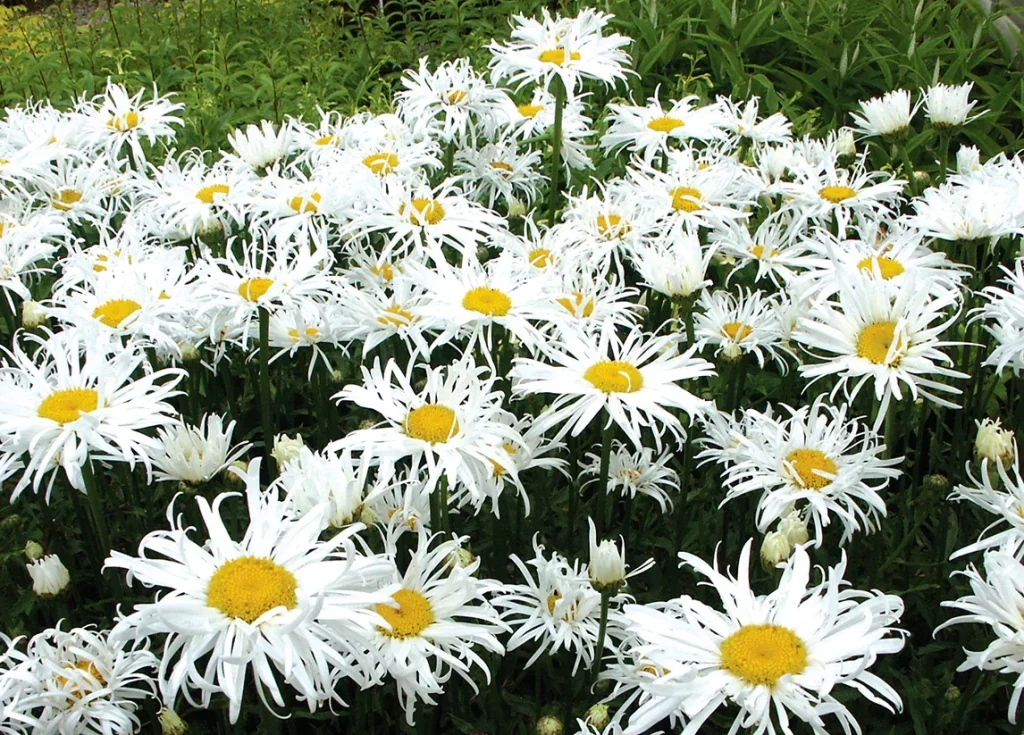

A cluster of white daisies with yellow centers flourishes as a vibrant lawn alternative in a garden setting, surrounded by lush green foliage. Leucanthemum Shasta Daisy Shaggy.

Those shaggy flowers really bring the wild looseness to your Hamptons Style Garden, but if you want flowers that are just a bit more formal looking you can always go for the regular Shasta Daisy.

It’s quite an unusual daisy with its ruffled petals, but we love how it’s something a bit different from normal daisies.

They have white flowers with yellow centres (don’t worry this yellow is fine in such a small dose) and green compact foliage.

Shasta Daisy can handle almost any soil and should be planted in a full sun position. Once established they are frost hardy.

This would be a perfect border plant amongst some of your other purple and blue flowers.

Japanese Anemone
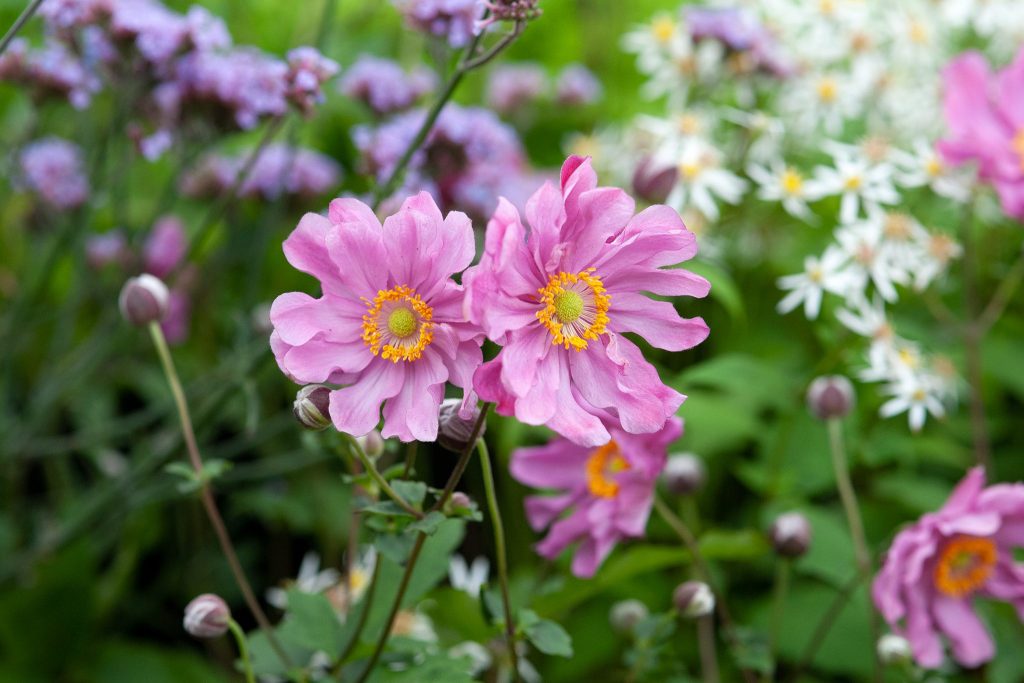

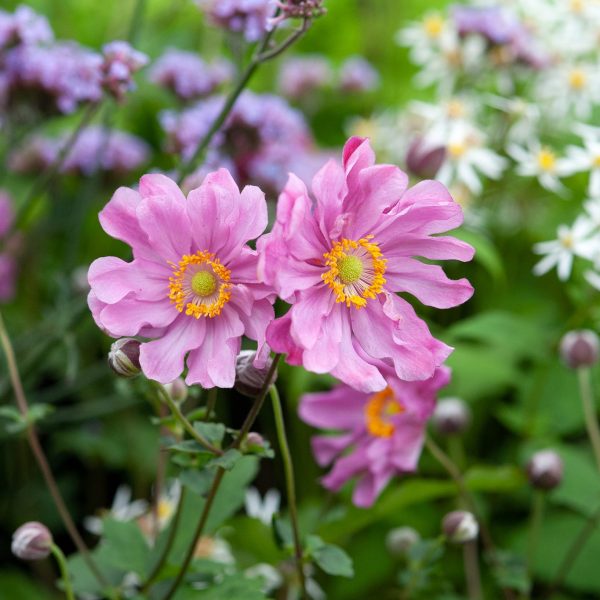
Two pink flowers with yellow centers bloom among lush greenery, surrounded by an array of purple and white blossoms, offering a vibrant lawn alternative. Japanese anemones

The Japanese Anemone is a flowering perennial with elegant pink flowers that rise up quite tall from the foliage. They are resistant to most insects and diseases.

Now you don’t have to plant these in full sun, and they actually prefer partial shade.
They are great for a border or planted anywhere you want a pop of colour.

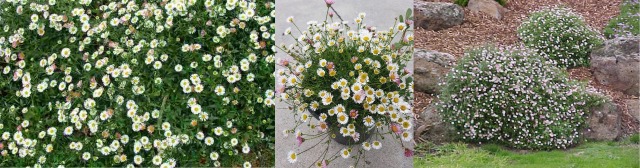
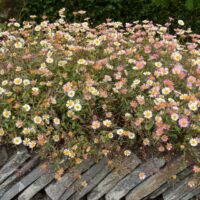
Arenaria ‘Mountain Sandwort’


White flowers with small petals flourish among rocks and lush green foliage, offering a charming lawn alternative. arenaria mountain sandwort

Here is a low growing evergreen perennial that flowers from late spring through to early winter, so you can enjoy flowers even in the colder times.

They are great for rockers and filling gaps in the garden and form compact small mounds.


Hydrangeas
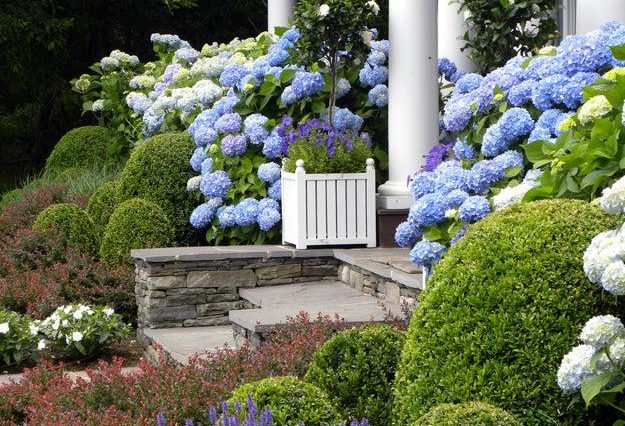

Experience a Hamptons garden, where stone steps lead you through manicured shrubs and blooming hydrangeas, all nestled alongside elegant white columns. Hydrangeas

We couldn’t write an article about the Hamptons style without talking about Hydrangeas – they are practically THE Hamptons flower.

If you have a sunny spot you want to plant a Hydrangea paniculata, if it’s a shady spot you want to use a Hydrangea macrophylla. We aren’t going to go too much into Hydrangeas here because we already have a very in depth article all about Hydrangeas which you can read here.

So there’s a huge selection of flowering plants, let’s move onto trees now.

Trees:
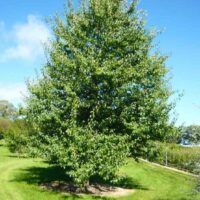
Betula ‘Moss White’ Silver Birch
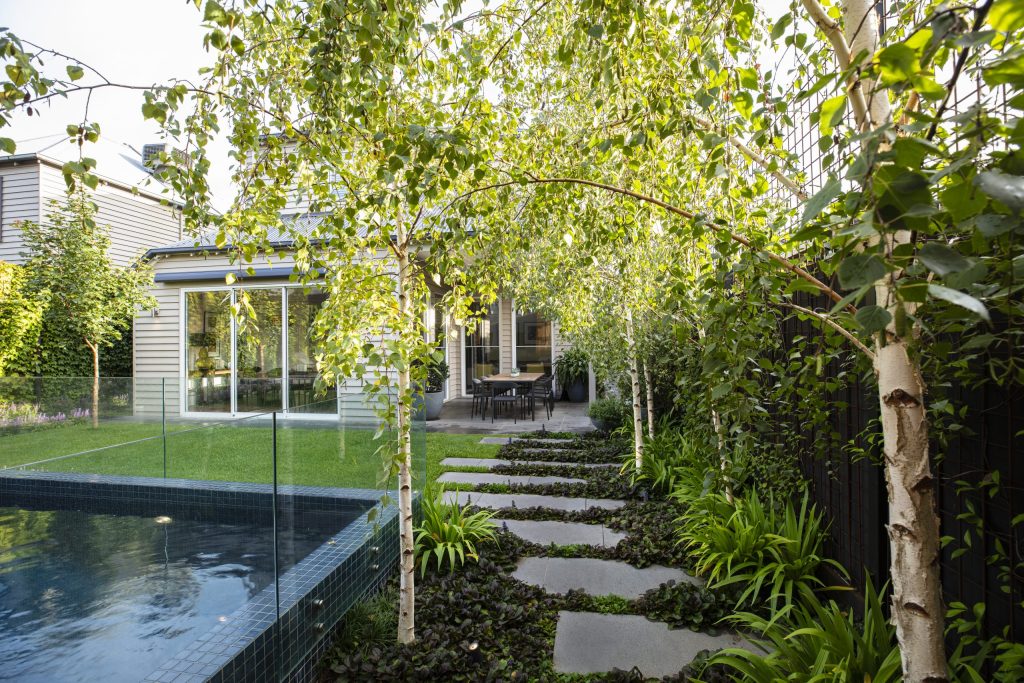

A Hamptons garden features a backyard with a small pool, stone pathway, and lush greenery. A modern house stands in the background, complete with large windows that invite natural light to dance across the serene landscape.

Silver Birch will always be a classic and we particularly love Moss White for its striking white bark and foliage that turns a vivid yellow in autumn.

This is a deciduous tree that looks incredible even in winter, because you get a full view of that distinctive bark.

Moss White Birches are best in a position of full sunlight to partial shade and look fantastic when planted in groups.

Lagerstroemia ‘Natchez’ Crepe Myrtle
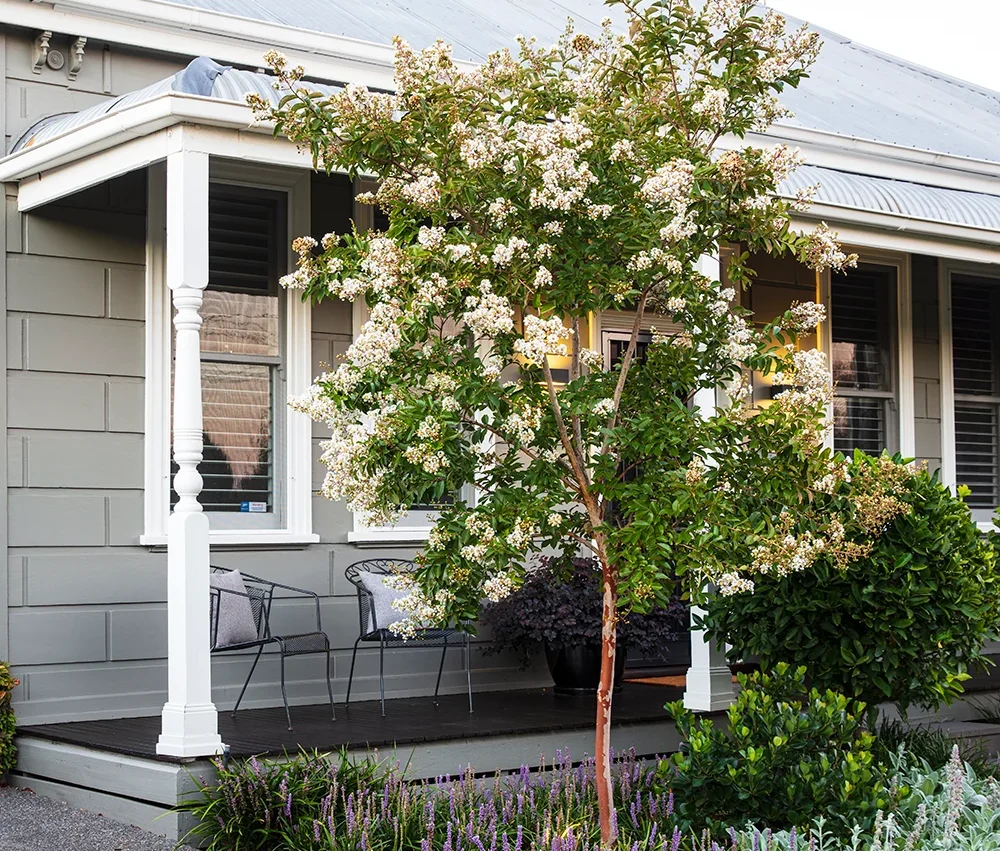

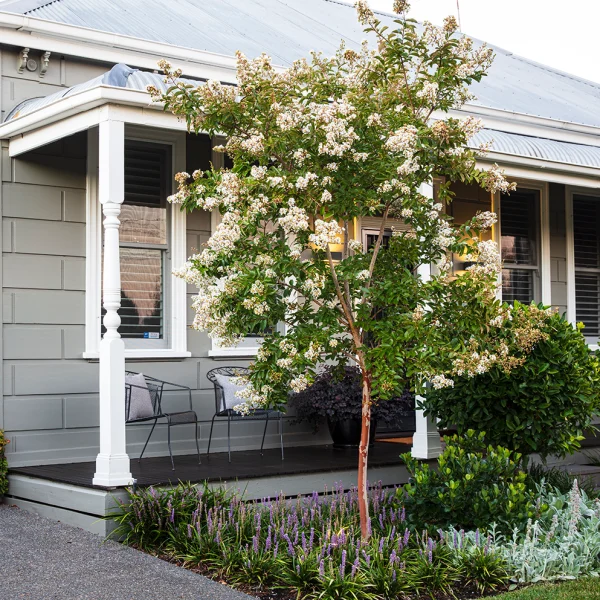
A small tree with white blossoms graces a Hamptons garden in front of a gray house, complete with a porch and two inviting chairs.

Crepe Myrtles are the trees you buy when you want something that will look incredible all year and give you something special in each season.

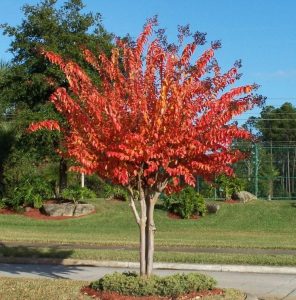
Summer brings a riot of white flowers, then comes dark green leaves. In autumn you see the foliage turn a bronzy red shade. Then winter the tree will be bare, with distinctive bark on full display. Spring then circles back to flowers.

Truly a beautiful tree, you can’t go wrong in picking this as your feature and for your Hamptons garden we recommend the ‘Natchez’ Crepe Myrtle as a good option.

Salix ‘Hakuro Nishiki’ Variegated Willow
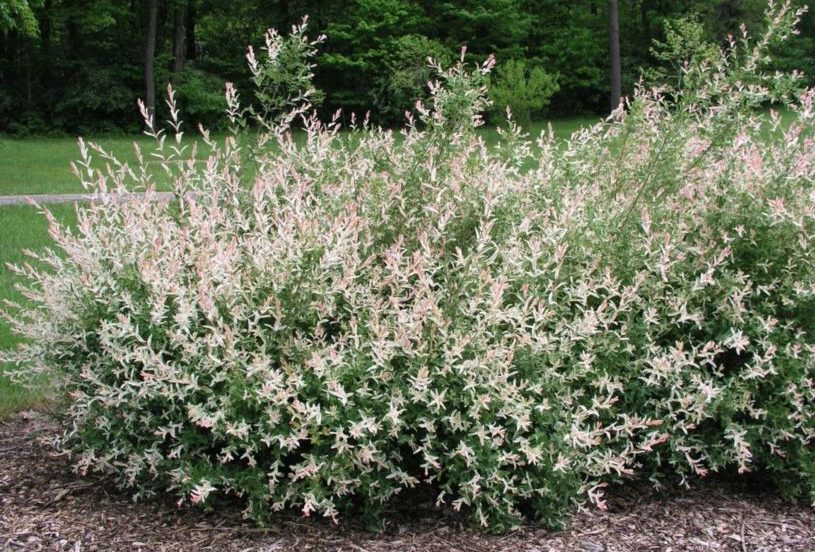

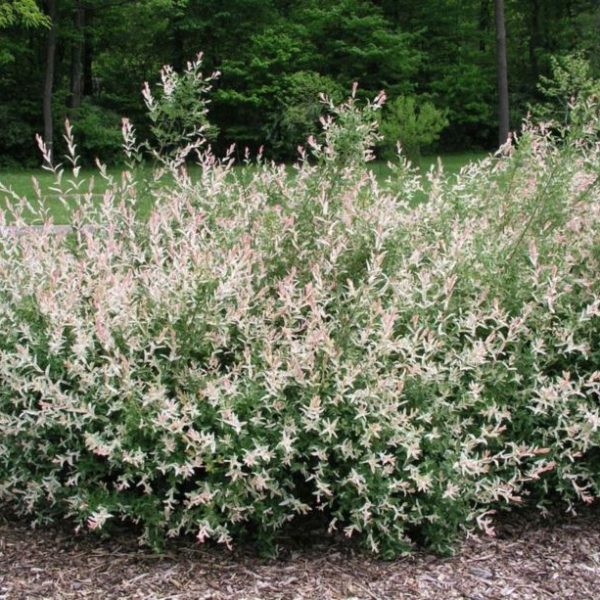
A variegated willow shrub with green and pink-tipped leaves thrives in a Hamptons garden, nestled in mulch and set against a backdrop of lush trees and grass.

You will mostly see this tree as a standard, but it looks incredible in its natural form as well. The green-white variegated leaves, pink buds in spring and catkin in autumn make for a very striking tree.

It originates from the Asian flower garden culture and elevates any garden it is added to. Hakuro Nishiki is quite low maintenance, so you don’t have to fuss over it much.

However if you want the best results plant in a sheltered full sun to part shade position. The exotic foliage is quite a wonder to look at, with even hints of pink in the leaves.

Magnolia ‘Little Gem’
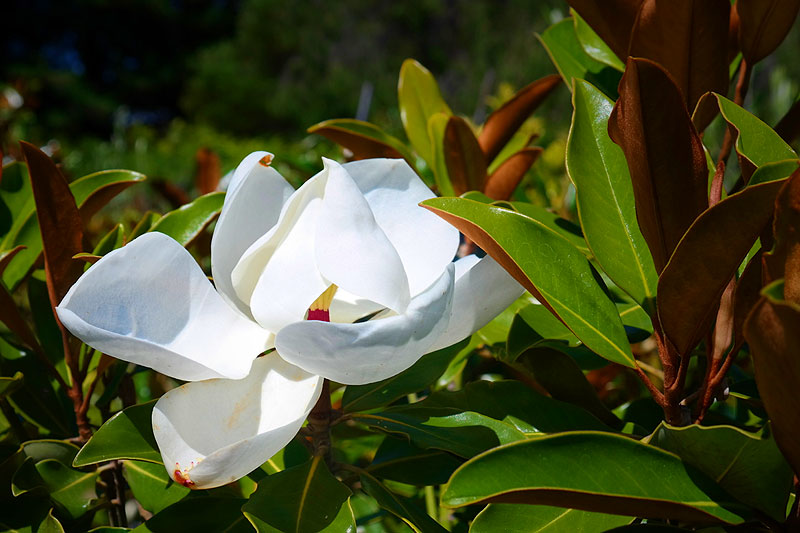

In a serene Hamptons garden, a white magnolia flower blooms amidst the lush green leaves.

This is a classic beauty with two-toned leaves, one side is a glossy green, and the other one a velvety brown. On top of this in summer and autumn you get gorgeous creamy white flowers.

Little Gem is great for screening or as a feature tree, and once established is very hardy.

To add structure you’ll want to add some balls and topiaries which are best done with English Box.

Buxus ‘English Box’

This is Melbourne’s most popular topiary plant, and for good reason.

First of all, it is gorgeous and lush, remaining nice and green through situations that would turn other plants brown or scraggly.

Next it is low maintenance, only requiring pruning once or twice a year.

Lastly, you have practically no limits when it comes to what you can do with English Box, from the classic ball and cone, to more fancy options like spirals and standards.

To continue with creating that formality these are the plants you can use for hedges.

Hedges:
Buxus ‘English Box’


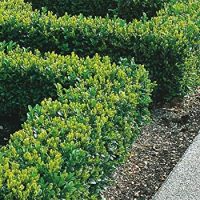
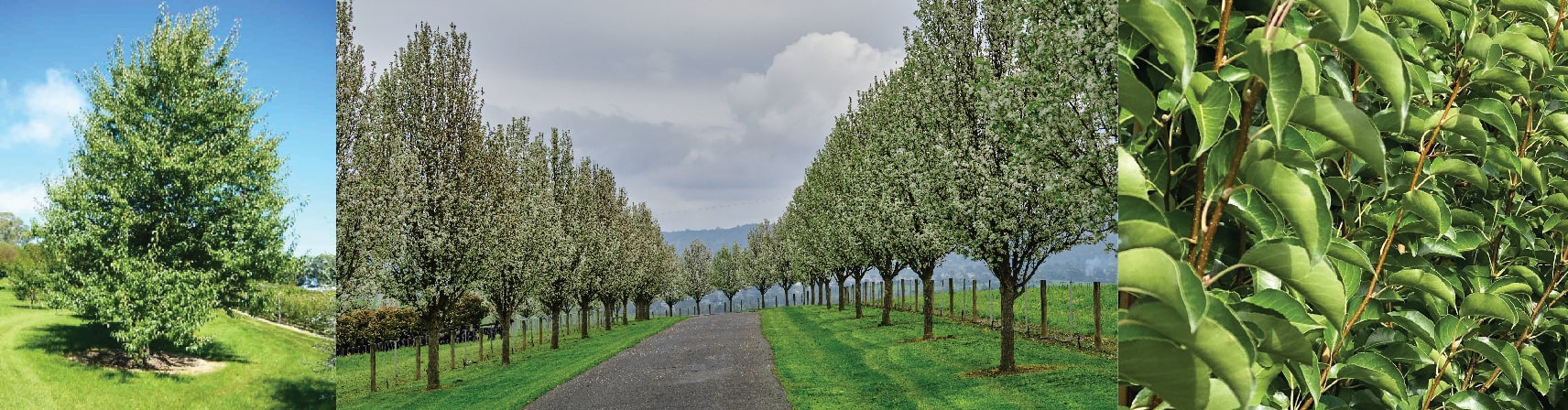
A hedge of Buxus 'Blauer Heinz' Box Hedge 6" Pot plants in a yard.

As we said before, English Box is such a popular and incredible plant. You can grow it up to 3 metres or trim it and keep it down to 1 metre

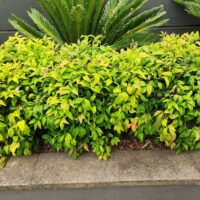
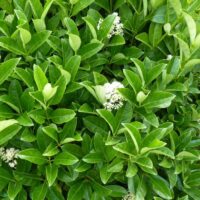
Viburnum odoratissimum ‘Sweet’


In a serene Hamptons garden, a white magnolia flower blooms amidst the lush green leaves.

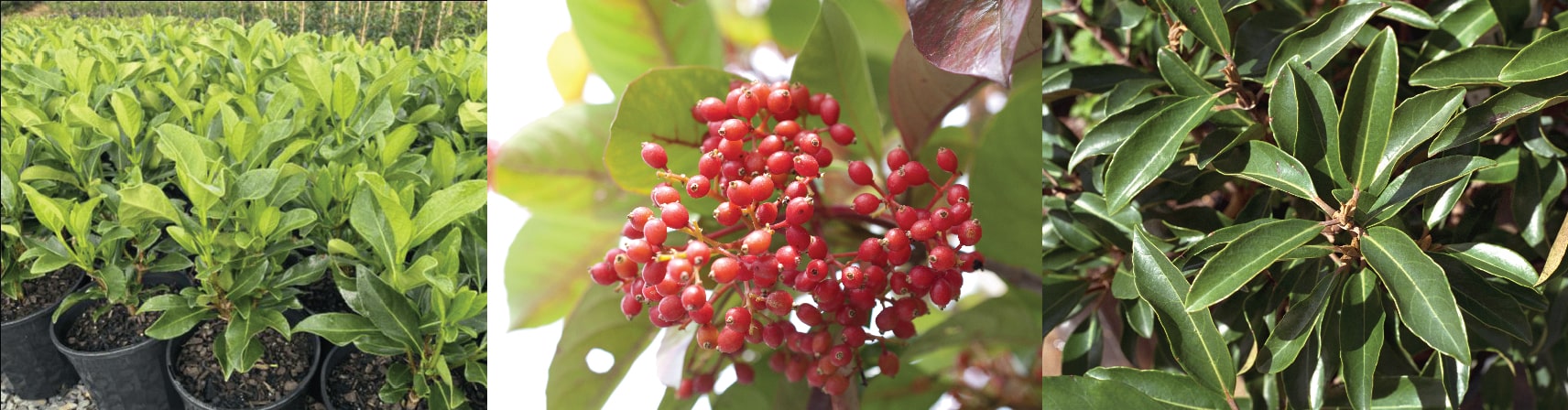
This is a gorgeous flowering hedge that is great as a screening plant. The fragrant small white flowers in spring nestle nicely alongside large oval shaped leaves.

Then in autumn you get beautiful red berries, adding even more interest to the hedge.

Sweet Viburnum is fast growing, reaching a maximum height of approximately four metres.

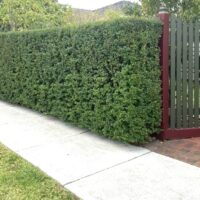
Prunus ‘Portuguese Laurel’
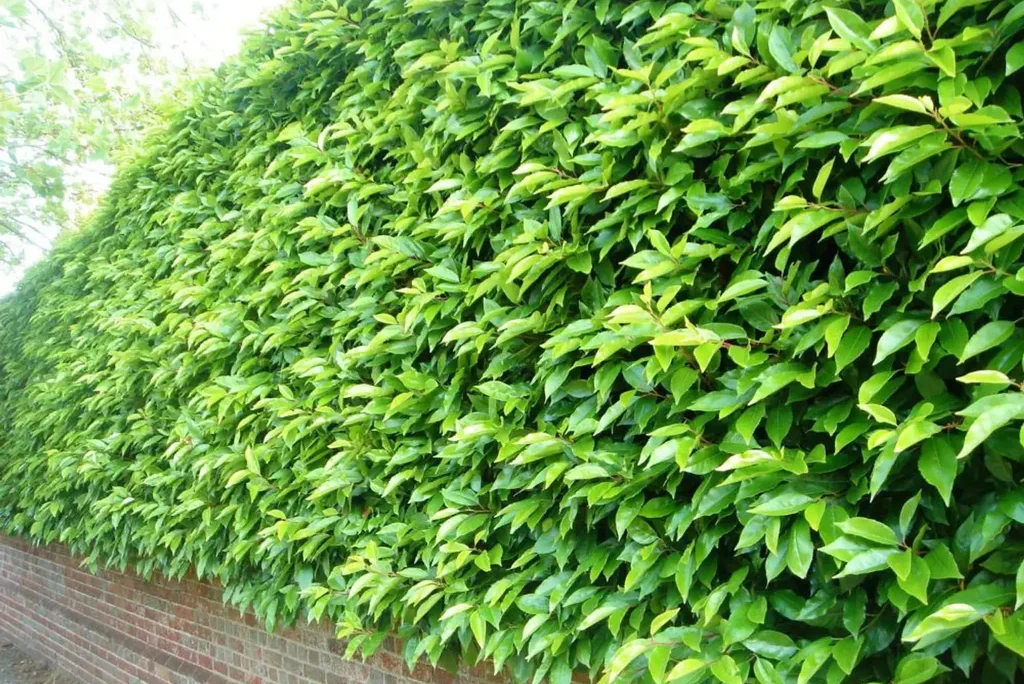

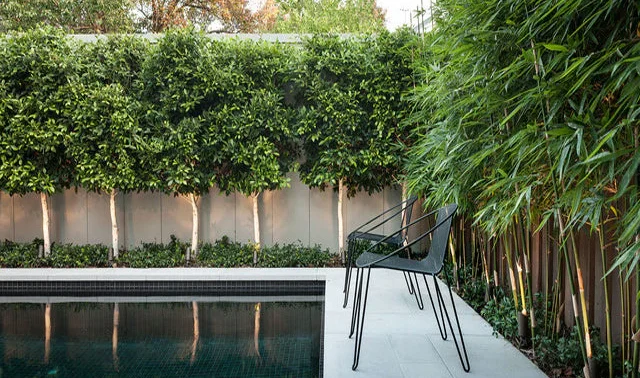
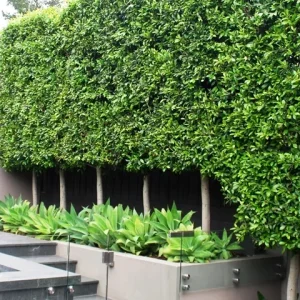
Tall, dense hedge with bright green leaves atop a red brick wall, reminiscent of a classic Hamptons garden, stretching horizontally across the image.

When you really want to add the classiness to your Hamptons Garden, this is the plant you go for. With deep green foliage and elegant white flowers in the warmer months, Portuguese Laurel is a great choice.

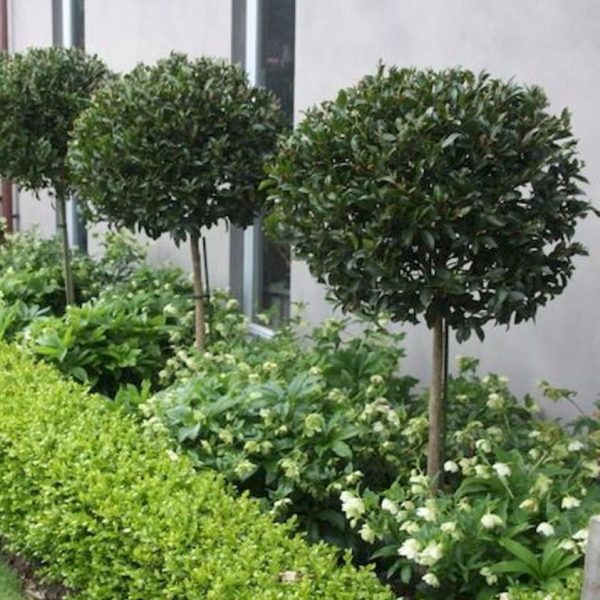
It’s perfect for pleached hedging and large standard topiaries. Portuguese Laurel will tolerate most soil conditions and loves full sun to part shade.

How to Add a Twist to Your Hamptons Style Garden

A Hamptons garden scene features blooming flowers in white and purple, bordered by wooden structures, with trees and lush greenery in the background.So let’s say you’re one of our Garden Design clients that wants to add a unique spin to the Hamptons Style Garden. Here are some of the things we’ve heard our customers say they want:

  • I want Hamptons but with a Cottage twist.
  • I want Hamptons with all Native plants.
  • I want Hamptons but in a Japanese style.

Let’s tackle each option and go through how we would approach each one.

Hamptons with a Cottage Twist
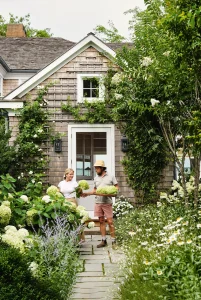
Two people stand on a garden path in front of a charming Hamptons house, holding hydrangeas. The home features classic shingles and a white door, surrounded by lush greenery and vibrant flowers, capturing the essence of a serene Hamptons garden.Now because Hamptons is essentially a “Cottage Garden but with a specific colour palette” you have so much freedom of choice here. We’ll mention a few of our favourite Cottage Plants but you definitely aren’t restricted to just them.

Some of the Cottage plants that fit the Hamptons colour palette are:

Explore our entire Cottage range here.

Hamptons with Australian Native Plants
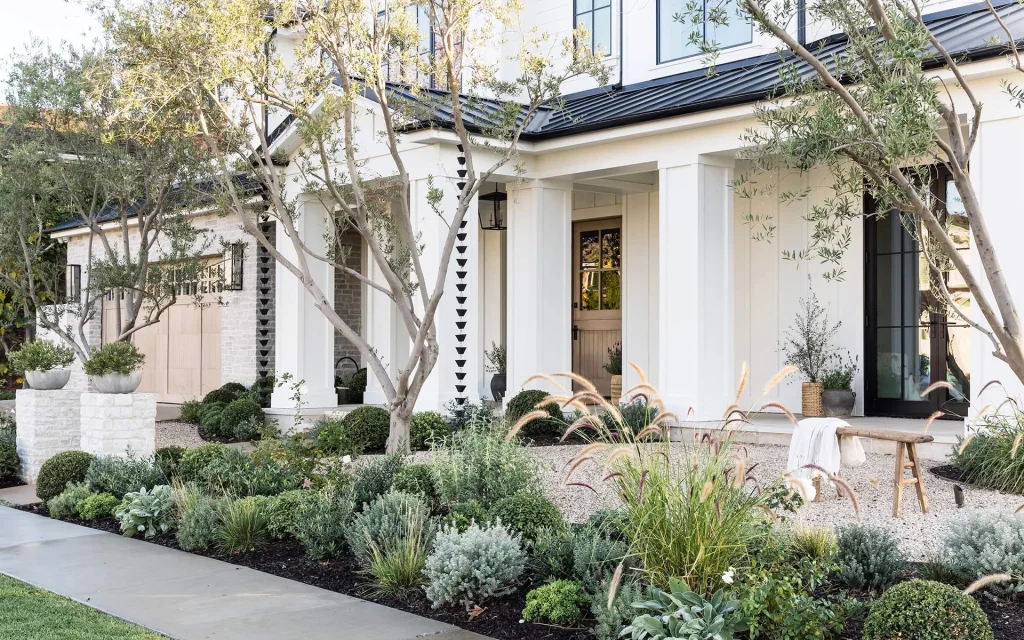
A modern house with a porch overlooks its Hamptons-inspired garden, where neatly landscaped shrubs, ornamental grasses, and potted plants create a serene front yard.

Topiarised Natives are a great starting point for a Hamptons style using Australian Native plants. Westringia and Correa alba are to great options for topiaries, or you can also make hedges out of them.

There is also quite a few Natives that will give you that wild loose look. This is plants like Prostanthera ‘Round Leaf’ Mint Bush which has an incredible show of purple flowers with a strong mint smell. You can keep it natural or shape it into a low hedge or neat round shrub (just make sure you still have those ‘loose’ looking plants).

Native Grasses are another great plant, particularly Lomandra ‘White Sands’ with its fascinating variegated foliage. White Sands is fast-growing and great for mass planting and rockeries.

Explore our entire Native range here.

Hamptons Combined with a Japanese Style
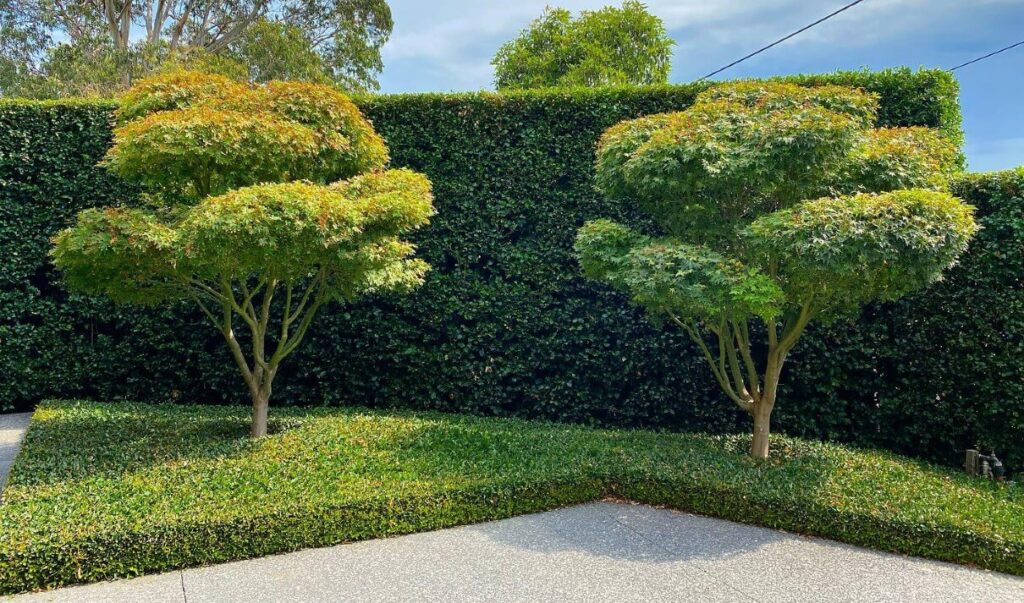
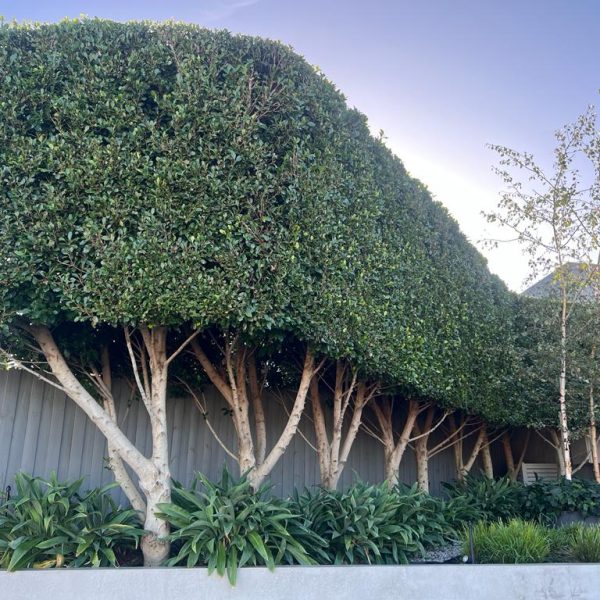
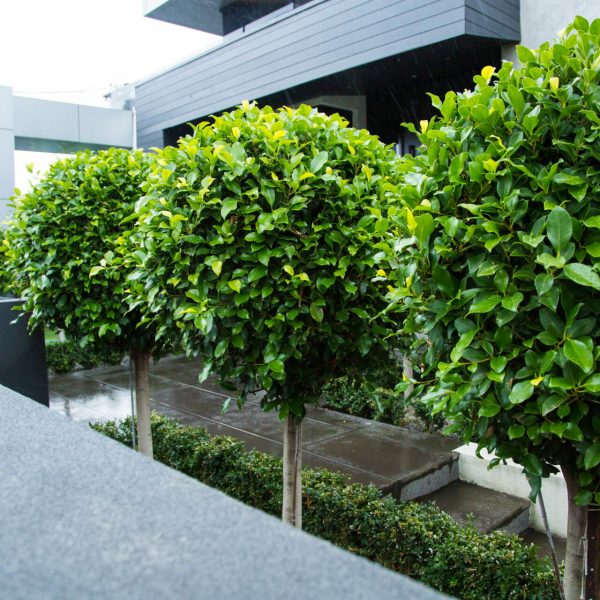
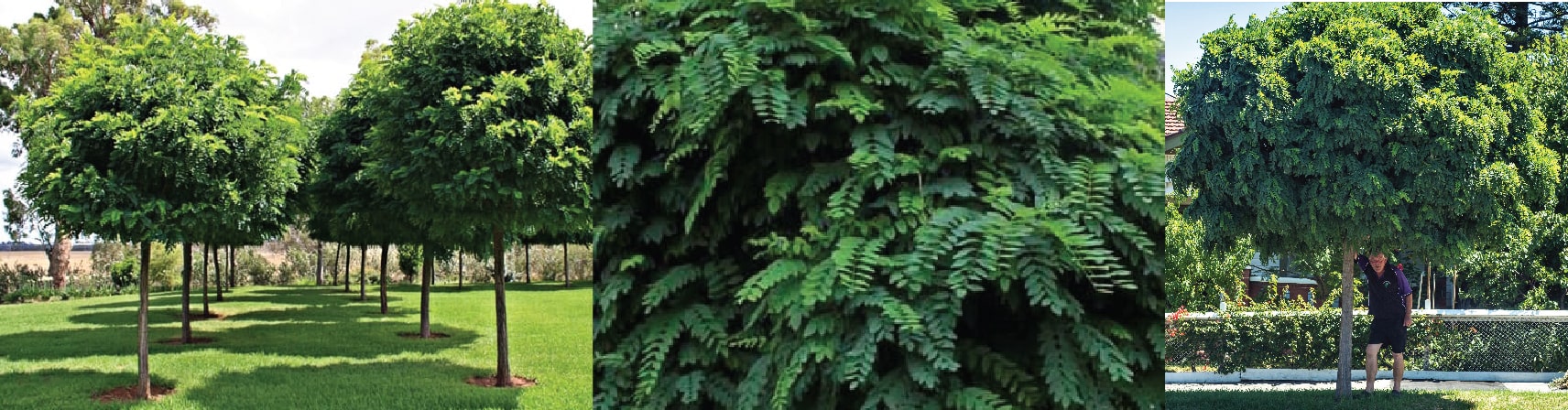
Two neatly trimmed trees with round canopies stand next to a high, well-maintained hedge, reminiscent of a classic Hamptons garden. Concrete pavement stretches in the foreground, completing this serene landscape.

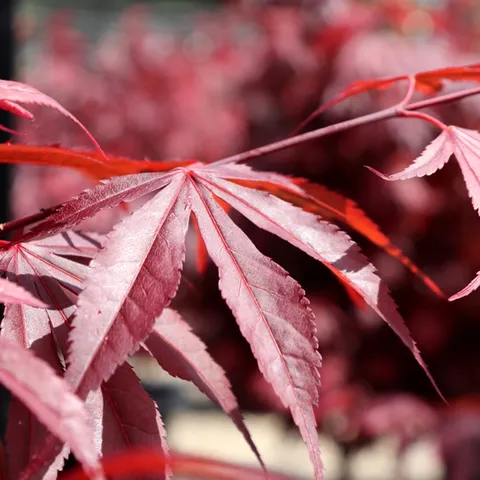
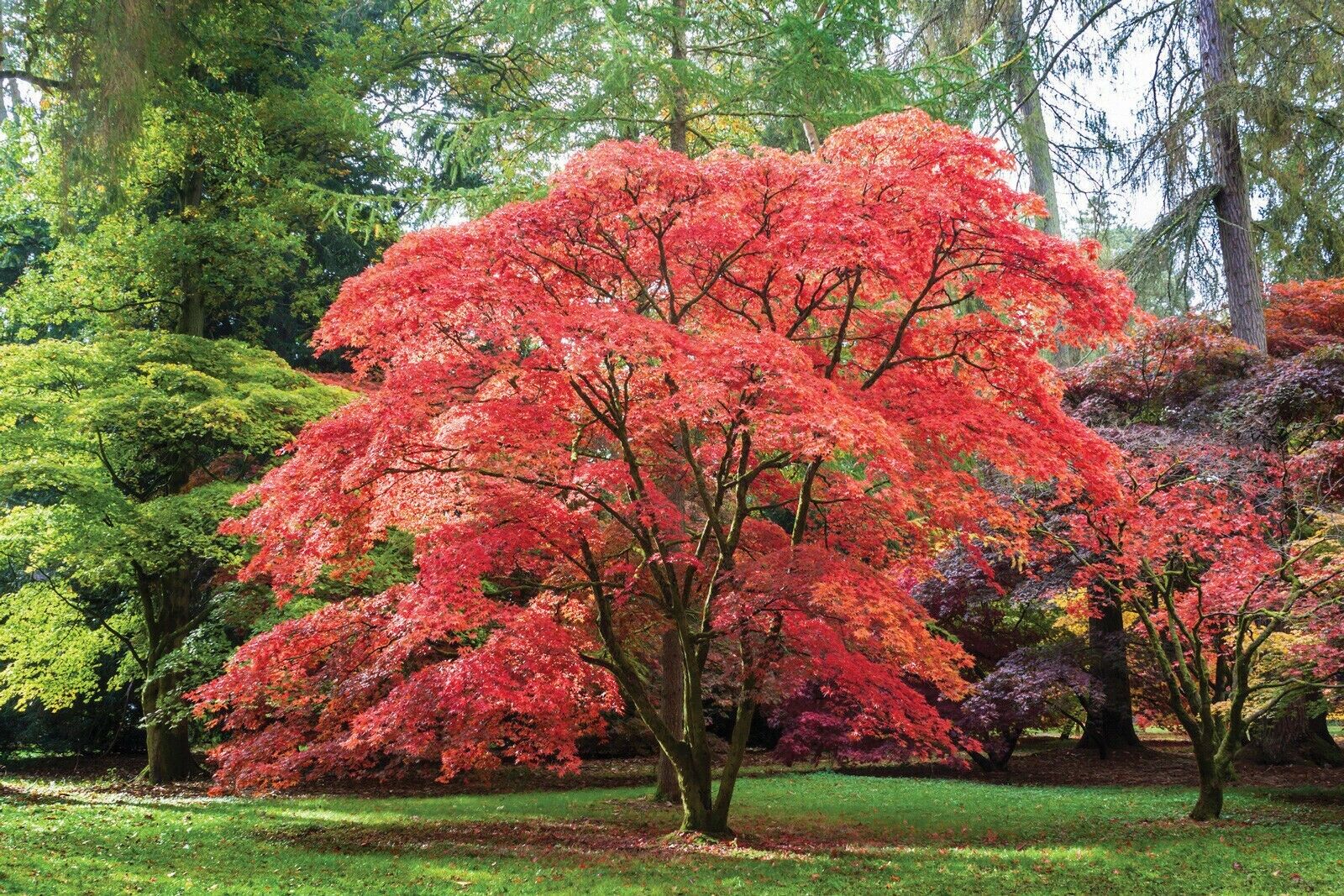
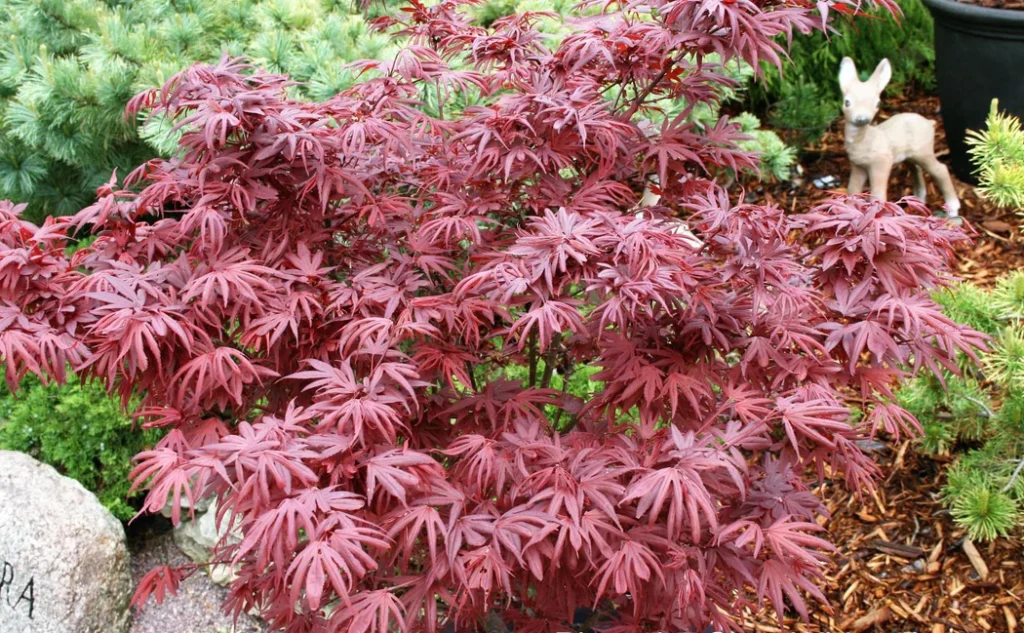
Take the quintessential plant of the Japanese style – a Japanese Maple, and cloud prune it to make it Hamptons style. It looks absolutely incredible and gives you a feature tree unlike anyone else’s.

Then it’s just a matter of choosing plants that fit the Japanese style and criteria of the Hamptons style such as Ophiopogon ‘Dwarf’ Mondo Grass, Gardenia ‘Florida’, Jacaranda Tree, Prunus ‘Falling Snow’ Weeping Cherry and Wisteria sinensis ‘Purple Chinese Wisteria’.

Explore our entire Japanese range here.

Now it’s Time to Make Your Hamptons Garden
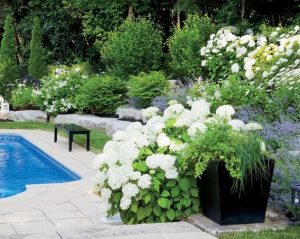
A backyard Hamptons garden with lush green plants and white flowers borders a swimming pool, surrounded by trees that create a serene atmosphere.Whether you go for the classic Hamptons Style, or incorporate some new twist to it, we hope this guide has helped you get started.

Remember, a few solid shapes combined with loose and wild plants that stick to that specific colour palette and you got a Hamptons style.

If you’re still feeling a bit suck and want some personalised advice, book one of our Free Garden Designs here.

Feeling inspired to create your own garden, but want some expert advice? Try our one-on-one garden design service with Chris. Together you’ll come up with a selection of plants along with a layout plan that gives you the look you want, as well as being suitable for your local soil and conditions.

get your own tailored modern garden design:


FIND OUT HOW

Articles you may also like

Close-up of a small, green beetle with antennae on a verdant leaf, nestled under the gentle shade of a weeping cherry tree.

This is the Solution to Your Beetle Damaged Lilly Pillys

The Problem

There are so many people in Victoria that are facing this problem in their gardens – their beautiful Lilly Pillys that are being ravaged by beetles.

Close-up of green leaves on a bush, with some leaves showing signs of browning and curling.This beetle problem is quite recent, a decade or so ago this wasn’t an issue at all. Which is why so many people in Victoria were buying and filling their gardens with Lilly Pillys.
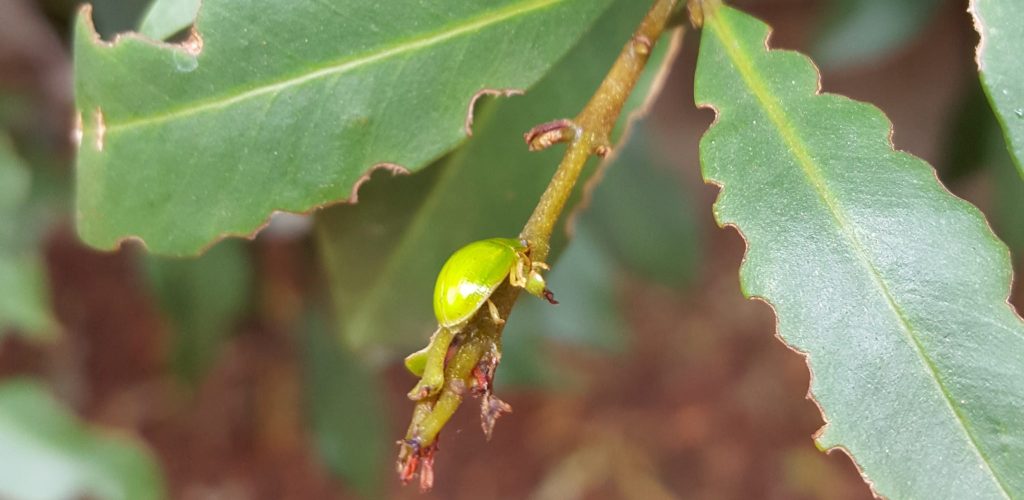
But in a way this popularity is what has now led to the downfall of most Lilly Pillys. This is because a beetle that used to always live up in Queensland has now migrated down, and finding such a bountiful feast, has decided to stay.

So if your Lilly Pillys look like this, it’s this slippery migrating beetle that is to blame.

A small green beetle on a plant stem with large leaves, reminiscent of the lush foliage of a bargain Weeping Cherry Tree, some of which have bite marks.

The Solution

Now we’re going to be straight up with you, there is nothing you can do to get rid of the beetles forever and keep your current Lilly Pilly plants.

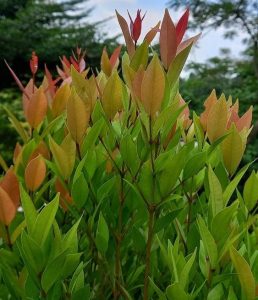
A cluster of elongated green leaves with red stems in a dense arrangement.We know how frustrating this is, you probably spent a lot of money and time growing these bushes to the size they are now. But the unfortunate reality is that the best solution is to remove your current Lilly Pilly hedge and replace it with new plants.

Now you don’t have to abandon Lilly Pillys entirely, there are two varieties of Lilly Pilly that the beetles absolutely don’t touch. The Smithii and Waterhousia are the two families of Lilly Pilly that the beetles don’t eat at all.

Both of these are wonderful, stunning plants that can be planted and trimmed up as a standard or used as a hedge/screen.

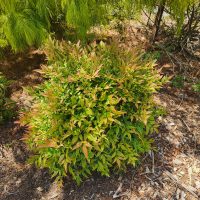
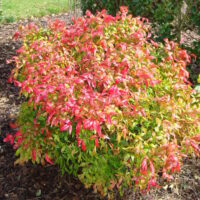
Acmena smithii minor Dwarf Lilly Pilly foliage green leaves with orange red tipsLet’s say you’re not in a position to be ripping out your old hedge or plants to replace it with something new. What we would then recommend is to fertilise your Lilly Pilly very well, then in summer spray it with something like confidant once a month for the next three months.

This is not a good long term solution because confidant is a really nasty chemical, and you’ll be forced to fight these beetles every summer. But it’s the best thing to do in the short term to avoid you’re Lilly Pillys looking terrible.

More of a visual learner? Check out our video where we show a living illustration of this problem, and the solution!


A person stands in a garden with trimmed bushes, under the text "Sick Lilly Pilly?" A red car and houses are in the background.

If there’s any other plant problems you’ve been struggling with, be sure to come down to our weekly Live Q&As every Monday on Tik Tok, X, Facebook, Instagram and YouTube. Chris has decades of gardening knowledge and can answer pretty much any plant question!

A backyard features a seating area with wooden chairs and a fire pit, surrounded by lush lawn alternatives and stone pavers, under the sunlight.

Alternative Lawn Solutions For Small Patches of Ground

Lawns just aren’t what they used to be. With more and more units popping up and land getting smaller, lots of people are ending up with a tiny little piece of green.

That patch of green is so small that it’s really not worth having grass there that you have to mow and muck around with. It can actually be quite tricky figuring out to make this space pretty.


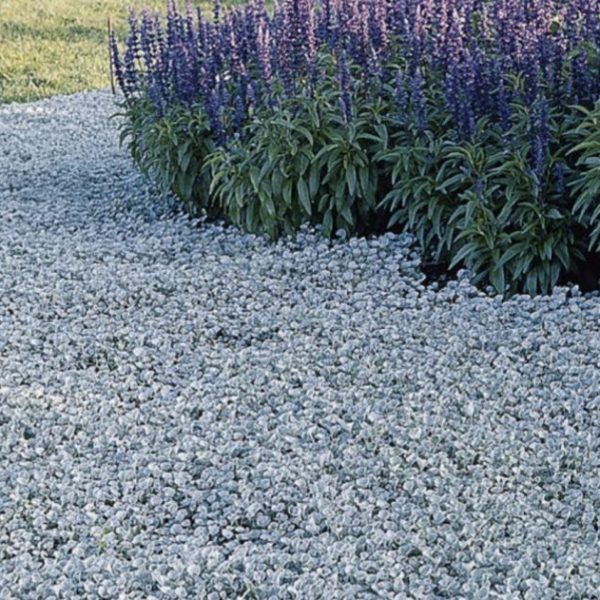
A garden bed features a dense cover of light-colored small flowers in the foreground and a cluster of tall, purple flowers with lush green foliage in the background, providing the perfect setting to showcase some of the best magnolias.


Four stone blocks partially buried in lush green ground cover, surrounded by some of the best magnolias blooming with grace.


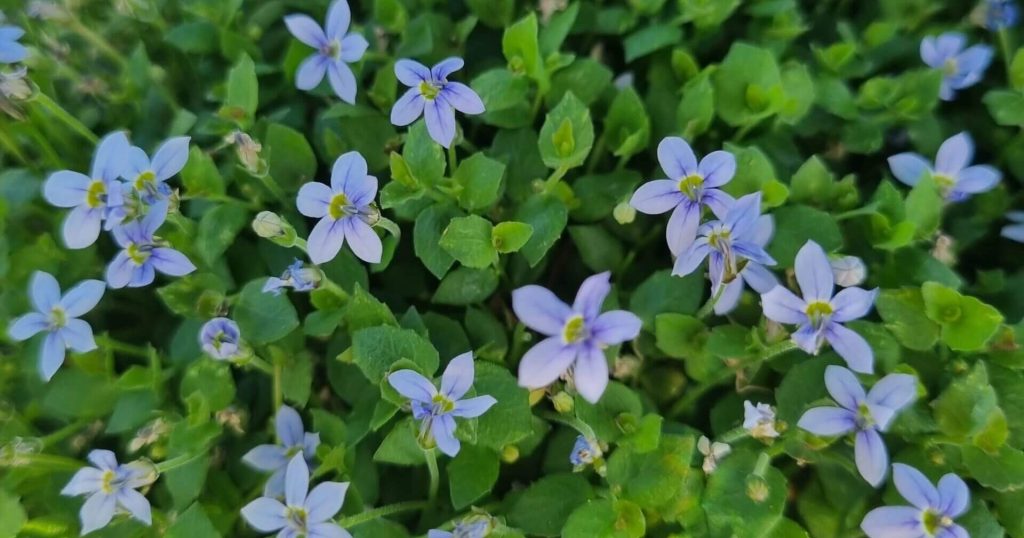
Close-up of a cluster of small, light purple flowers with green leaves in a garden, showcasing nature's best magnolias.


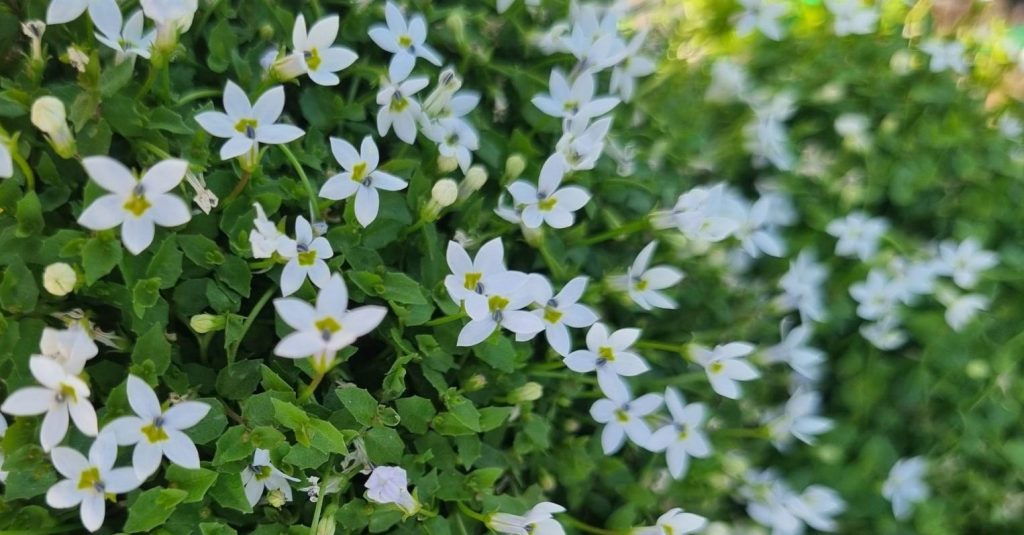
Close-up of a dense cluster of small, white, star-shaped flowers with green foliage. The bottom left corner features a colorful "Hello Hello Plants" logo, renowned for offering the best magnolias.


Close-up of a low-growing herbaceous plant with numerous small white flowers, surrounded by small rocks and soil, offering a glimpse of nature's simplicity that complements even the best magnolias in your garden.


Close-up of green grass blades, showing sharp, pointed tips and a lush, dense texture, reminiscent of the best magnolias.


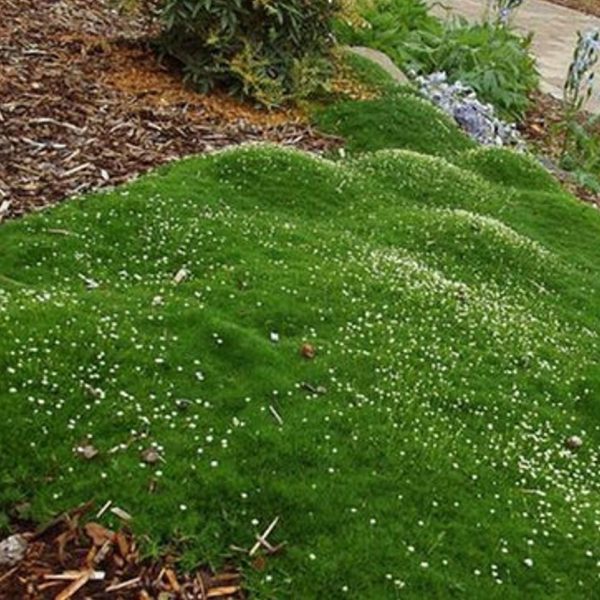
Dense green moss with small white flowers growing on it in a landscaped garden, surrounded by wood chips, other plants, and a stone walkway leading to the best magnolias nearby.


Now there are people who think the solution to this is putting down plastic grass, which we… strongly disagree with. Honestly, we hate the stuff. It’s ugly, it’s expensive, it’s hard to lay down, and it makes any garden look ten times worse.

So we’re going to steer you away from plastic grass to much better, prettier, and cheaper options. Let’s get right into it.

Here is a list of the plants we will be talking about today.

Dichondra repens
Dichondra ‘Silver Falls’
Ophiopogon ‘Dwarf’ Mondo Grass
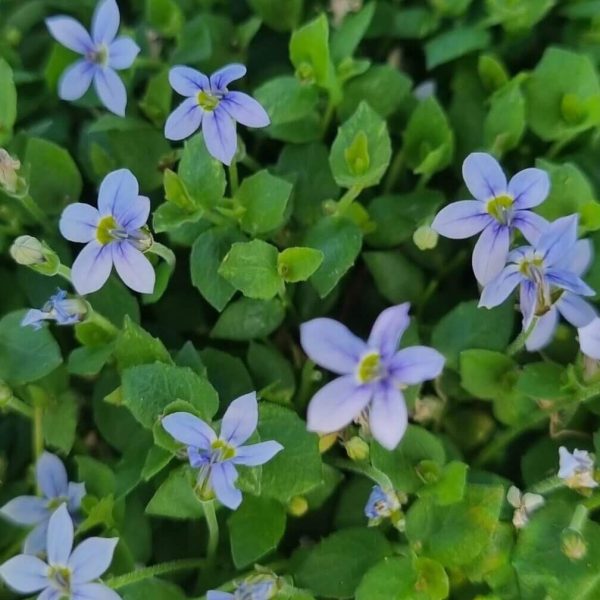
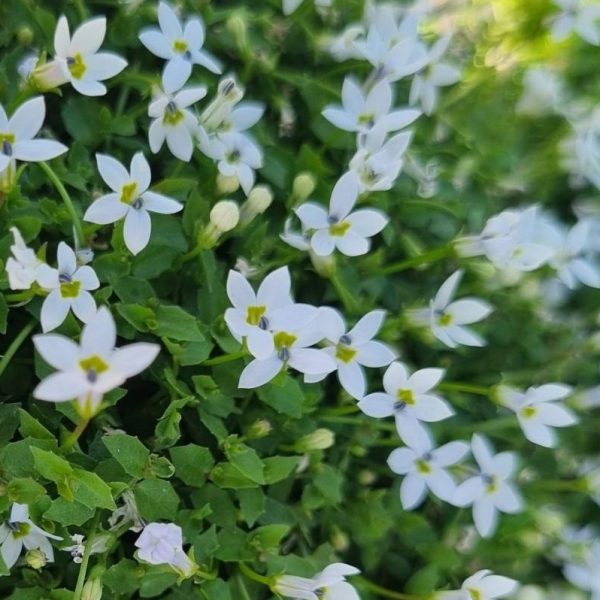
Pratia ‘White Star Creeper’ and ‘Blue Star Creeper’
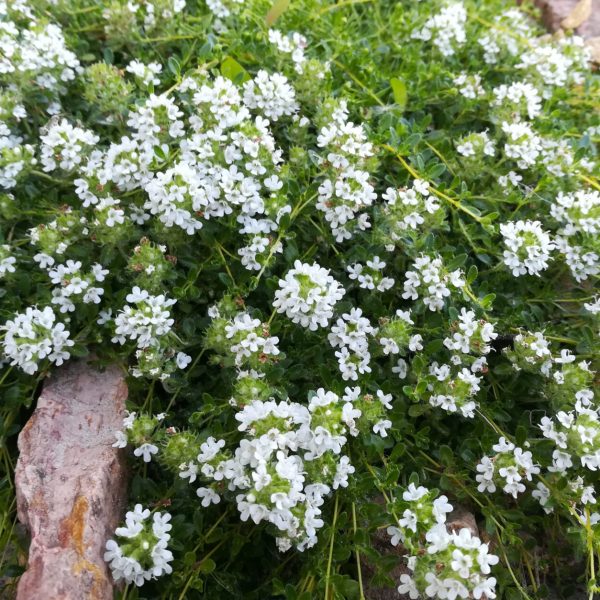
Thymus ‘White Creeping Thyme’
Dymondia ‘Silver Carpet’
Myoporum ‘Yareena™’
Soleirolia ‘Baby’s Tears’
Sagina ‘Green Irish Moss’
Scleranthus biflorus ‘Lime Lava’
Mint ‘Corsican’
Zoysia ‘No Mow Grass’

Dichondra repens


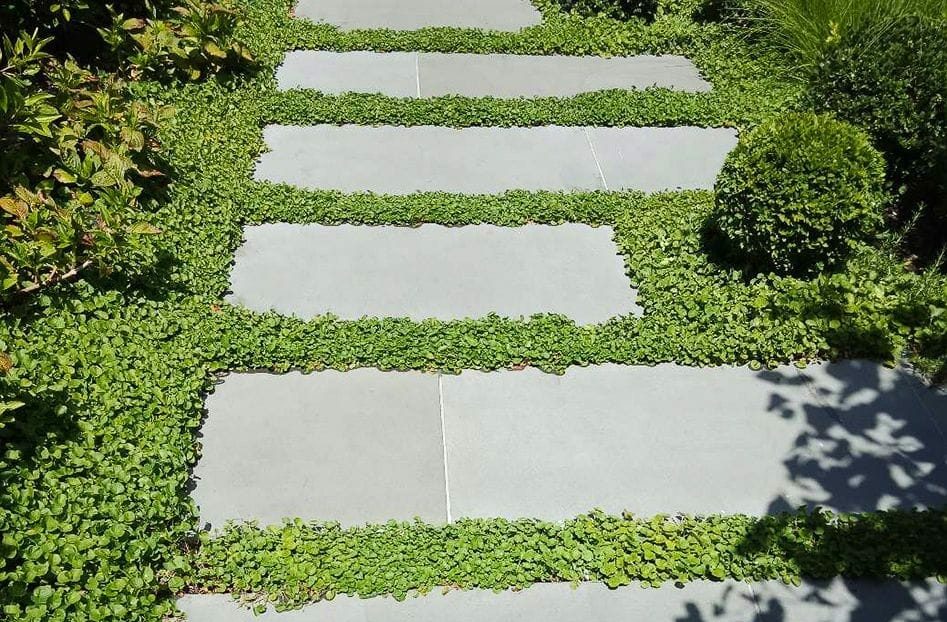
A garden path with rectangular stepping stones surrounded by green ground cover and the season's best magnolias. The "Hello Hello Plants" logo is in the bottom-left corner.

This is a very popular groundcover and is perfect if you have a shady spot. You might have a big tree that casts shade over the whole area, or it’s on the south side of the house.

Close-up of vibrant green plant foliage in a garden center under a clear blue sky. The logo "Hello Hello Plants" is visible in the bottom left corner, showcasing some of the best magnolias around.

Lawn typically doesn’t grow great in these spots. But Dichondra repens is going to absolutely thrive.

Dichondra repens will also grow in full sun, so if you have a mixed spot with sun and shade in different patches, then this is a great option.

It’s great around pavers, most people like to choose Mondo, but Dichondra repens is faster, easier and cheaper. Also, it looks a lot better.

It has a kidney shaped leaf and looks very green and lush with minimal effort. It also will take low foot traffic.

It needs a reasonable amount of water and fertiliser, and reasonable soil. If you plant it now as we go into the warmer months, it will cover the ground really quickly

Dichondra ‘Silver Falls’


A garden bed features a dense cover of light-colored small flowers in the foreground and a cluster of tall, purple flowers with lush green foliage in the background, providing the perfect setting to showcase some of the best magnolias.

This is Dichondra repens’ silver-green coloured cousin. Now Silver Falls can grow in the hottest sun, or the deepest shade.

It will give you that pop of bright silver that contrasts beautifully with the rest of the greenery in your garden.

It’s great for covering any area, particularly an embankment where it can cascade over. It can cascade for more than a metre, so is really perfect for those situations where you want a lawn besides a retaining wall.

We’ve often used it in our garden designs at the base of a large pot and also love to use it around paving.

Ophiopogon ‘Dwarf’ Mondo Grass


Close-up of densely packed, long, green grass blades with a mix of dark and light shades, resembling the intricate beauty found in the best magnolias.

This is very, very popular. We do want to note that Dwarf Mondo Grass doesn’t seem to blanket out the weeds all that great though. We’ve seen many plantings of it where it has quite a lot of weeds coming through it, so just be mindful of that.

Dwarf Mondo is also only good in the shade, if you put it in a place with hot sun it will get sunburn. So the whole area you’re planting it in needs to be shady, and you have to stay on top of the weeds.

But don’t let that dissuade you from buying it, Dwarf Mondo is very beautiful. It’s lush, low and a gorgeous shade of dark green. It will take a bit of foot traffic, but nothing crazy.

Pratia ‘White Star Creeper’ and ‘Blue Star Creeper’


Close-up of a dense cluster of small, white, star-shaped flowers with green foliage. The bottom left corner features a colorful "Hello Hello Plants" logo, renowned for offering the best magnolias.


Close-up of a cluster of small, light purple flowers with green leaves in a garden, showcasing nature's best magnolias.

If you love flowers, then you’ll love the White Star Creeper and Blue Star Creeper – it has the most beautiful starlike flower which you can get in a striking white or a soft blue.

Best of all, you’ll get these stunning flowers for eight months of the years, which is a very long flowering period.

It’s a low groundcover that is great to put around paving or make a whole lawn of.

It loves the hot sun but can do well in partial shade. However, absolutely don’t plant it in deep shade. It needs fairly good soil, a regular feed, and a good amount of water, especially in the heat of summer.

But it is a very pretty and reliable groundcover that’s going to make that small patch of land shine.

Thymus ‘White Creeping Thyme’


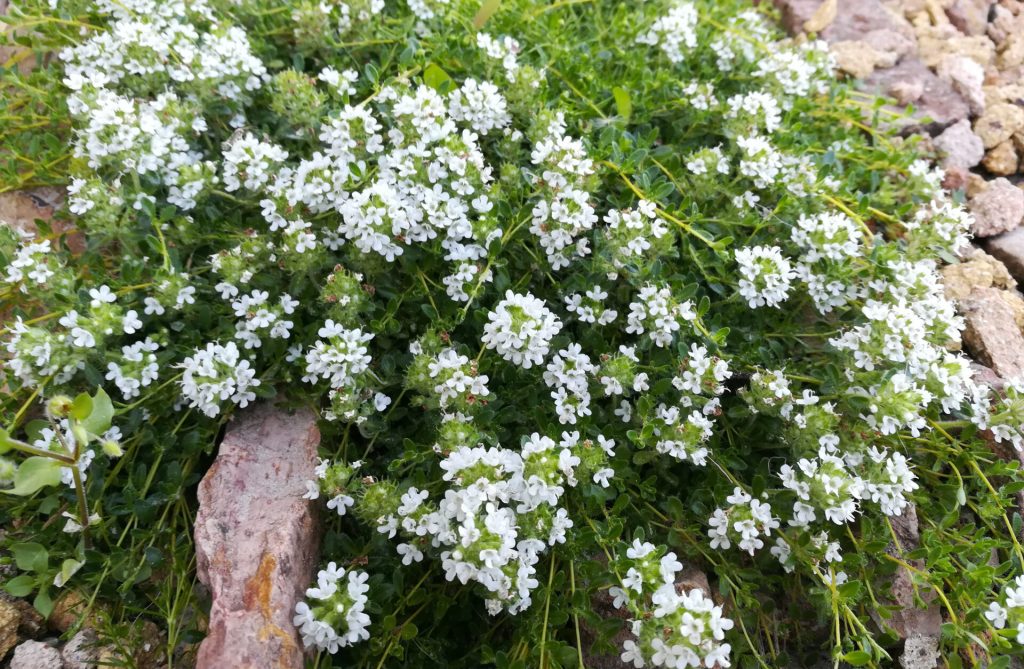
Close-up of a low-growing herbaceous plant with numerous small white flowers, surrounded by small rocks and soil, offering a glimpse of nature's simplicity that complements even the best magnolias in your garden.

Creeping Thyme is a spectacular option, with our favourite being the white one. It is a beautiful moss like green mat and flowers from mid spring through to late summer. So another groundcover with a long flowering period.

The flowers also give off a gorgeous fragrance when you brush over the top of it. It will take some light foot traffic, but again, don’t go stomping all over it.

It will grow well in hot sun through to partial sun, but just make sure you aren’t planting it in a completely shady spot.
It’s easy to grow, and spreads quite quickly, particularly in the warm weather. It needs good soil and fertiliser.

You also have a couple variations, of course the white one we love the most, but also crimson, pink and purple. We’d say the Purple Creeping Thyme is the second best, and the Crimson Creeping Thymeis the third best.

Some of the other variations are a bit more shaggy and not quite as smooth and flat as the ones we just pointed out.

Dymondia ‘Silver Carpet’


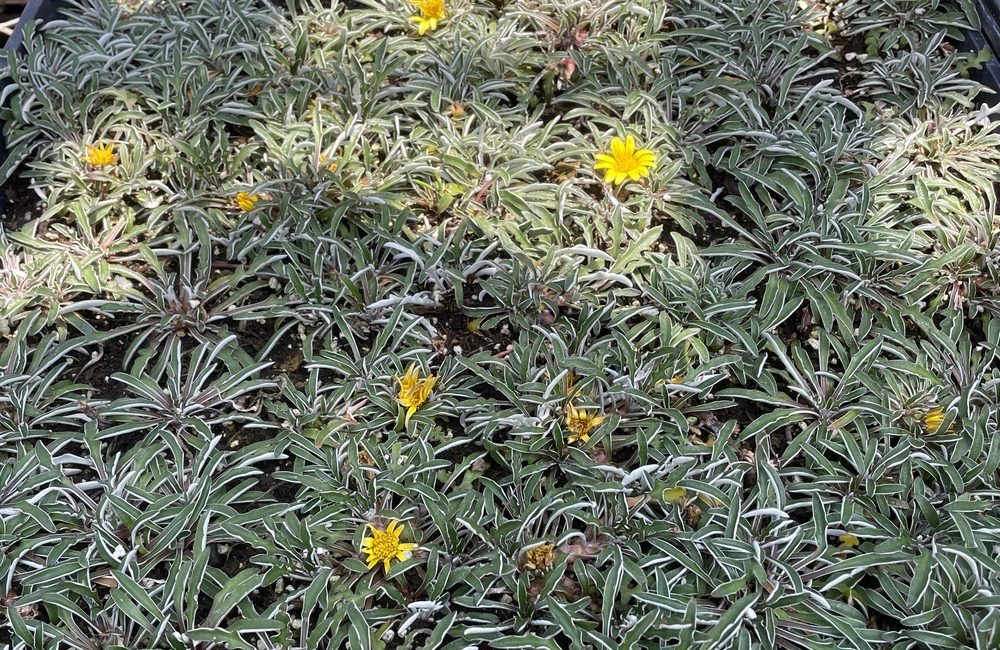
Close-up view of a dense patch of variegated foliage with a few scattered small yellow flowers, reminiscent of the elegance found in the best magnolias.

Silver Carpet is closely related to the Marguerite Daisy, but it hardly ever flowers, you may get the odd yellow flower on it every now and again.

It’s a beautiful silver-grey that would pair very nicely with dark paving, like a dark blue stone.

It takes light foot traffic – maybe the occasional dog running over it or person walking on it. Silver Carpet is very tough and has a neat appearance.

It loves the hot sun but will take partial shade.

Myoporum ‘Yareena™’


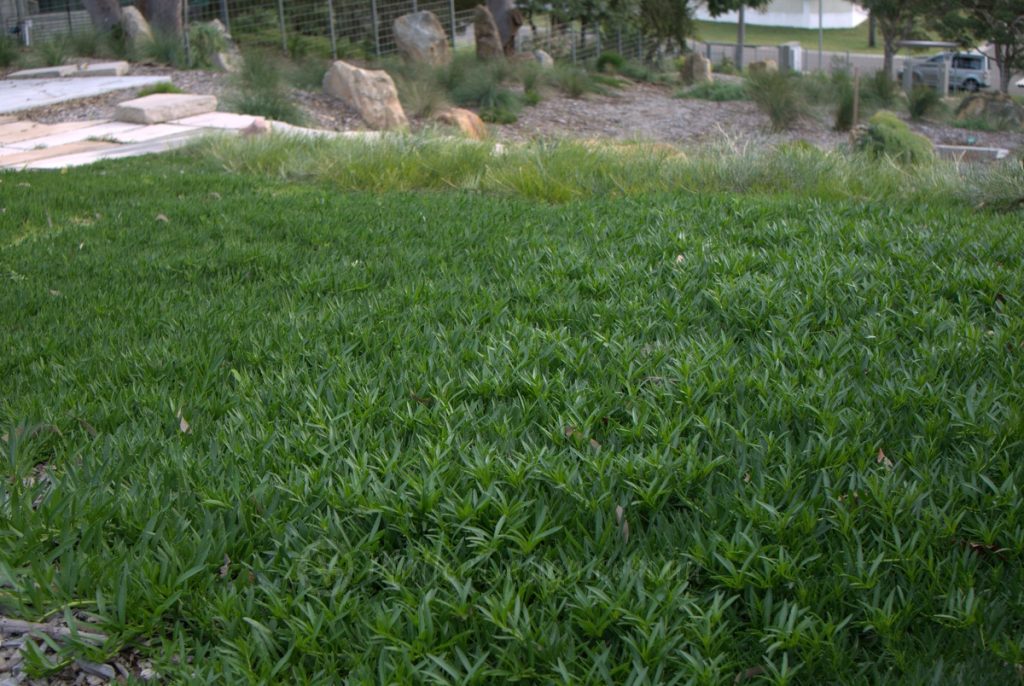
A lush, green grass lawn in a garden area, bordered by stones and tall grass in the background, perfectly frames some of the best magnolias in full bloom.

This is a good Australian native that has a broad dark green leaf and grows fairly flat on the ground. All through the summer you get lovely starry white flowers that have an amazing honey fragrance.

It can take quite a bit of foot traffic, you can jump on it, lay on it, do whatever you like, it’s very tough stuff. It is a bit fatter than some of the other options on this list.

Once established it will end up about 20 or 30cm tall. Yareena is incredibly low maintenance, occasionally you’ll have to cut around the edges but that’s about it. It also blankets out the weeds really well.

One of the best patches we’ve seen of it was Shepparton on the side of the road where it never gets watered and it’s a really hot dry climate with hard clay soil. Yet, it remained lush and green all year.

So if you want something really tough and low maintenance that is going to cover a large area, Yareena is the one to go for.

Soleirolia ‘Baby’s Tears’


Close-up view of dense green foliage with textured leaves, reminiscent of the best magnolias. The bottom left corner features a logo with the text "Hello Hello Plants".

If you have a spot that is in really deep shade, Baby’s Tears will absolutely thrive there. You get in a green or yellow shade, and it is a beautiful delicate looking plant.

The best time to plant it is now at the end of August/start of September and it will spread like crazy in the warm weather. Keep it well watered and fertilised, and out of the hot sun.

You can put it around pavers, along garden walls and in between cracks. It would do great in a fernery or undercover courtyard.

Sagina ‘Green Irish Moss’


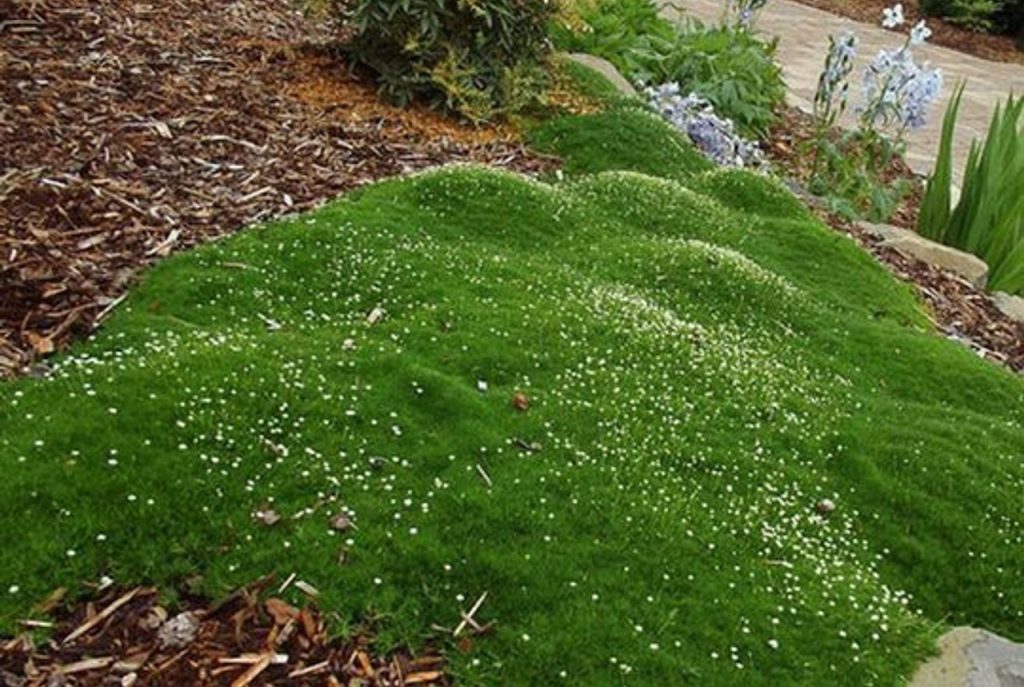
Dense green moss with small white flowers growing on it in a landscaped garden, surrounded by wood chips, other plants, and a stone walkway leading to the best magnolias nearby.

We know we’ve said this a few times, but we are providing a list of the best options, so here is another popular one.

Irish Moss has starry white flowers in springtime and looks just like moss, but it’s much hardier than moss.

It’ll grow in full sun through to partial shade, such as planting it under a tree where it gets speckled sun.

It’s low, lush and smooth with a luminous limey-gold colouring. It looks very attractive in the garden.

It needs good soil, and a fair amount of water and fertiliser.

Scleranthus biflorus ‘Lime Lava’


Close-up of green grass blades, showing sharp, pointed tips and a lush, dense texture, reminiscent of the best magnolias.

This has an incredible texture, that grows into a mound with a very smooth finish. It is this special quality and softness about it that makes a lot of people pat it when they walk past it in the nursery (we see this happen every day).

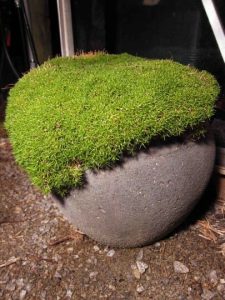
A gray, round planter is covered with thick, green moss, resembling a shrub. The planter is placed on a gravel surface with a dark background, creating the perfect setting to showcase the best magnolias in your garden.What’s interesting about Lime Lava is that it’s actually an Australian Native – even though it looks like something that would have originated in Scotland. In truth it grows naturally in the cracks of the rocks above the snow line on top of Australia’s mountains.
In winter it will be buried in the snow, then once the weather warms up and it thaws out, it needs the full sun. You really don’t want to be planting it in the shade because it will get all shaggy and weird.

Instead, it needs full sun, well drained soil and plenty of water and fertiliser. When we use it in our Garden Designs, we pick out the sunniest spot in the whole garden and then plant two or three of them together. They look really great as a clump, and we also like to blend them with a little bit of Black Mondo for some contrast.

They are not suitable for foot traffic, so don’t grow them in a spot where a lot of people, or animals, will be walking over it. In this situation you would be better off with a Creeping Thyme.

Mint ‘Corsican’


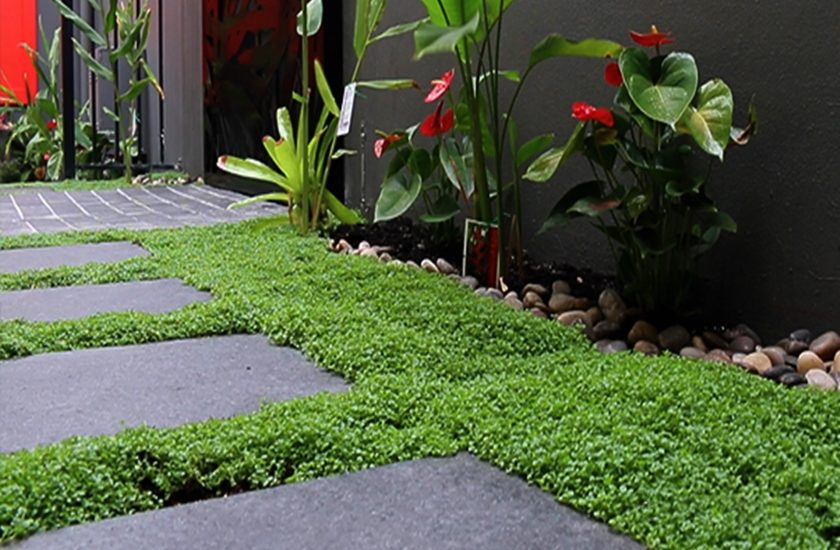
A garden pathway with large stone tiles surrounded by lush green ground cover plants, best magnolias, and anthuriums near a dark wall and red door.

This is a really interesting one that you don’t see round that much. It’s pretty much Baby’s Tears for the sun – so if you loved the look of Baby’s Tears but your spot isn’t in the shade, then Mint Corsican is the choice for you.

Now Mint Corsican does flower, unlike Baby’s Tears. It has a gorgeous mauve flower and a fine mossy look. It’s great for growing over rocks and right in the cracks of pavers.

It also has a delicious minty fragrance when you brush your fingertips over it or squish it.

Zoysia ‘No Mow Grass’


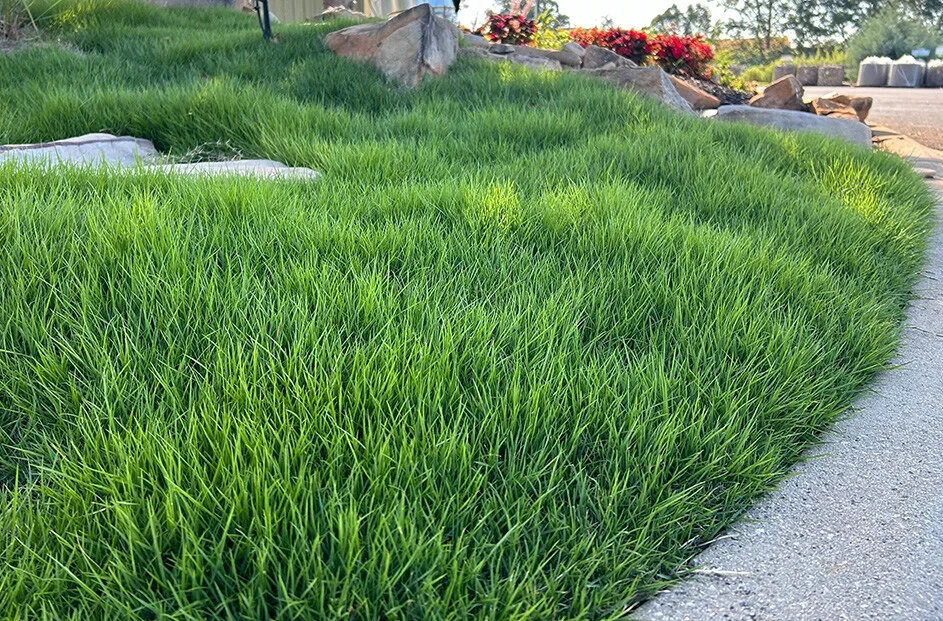
A lawn with lush green grass near a garden area featuring the best magnolias, flowers, rocks, and a shaded tree in an outdoor setting under a sunny sky.

Also known as Temple Grass, Zoysia is a fine and dense grass that grows in hilly tuft mounds. It will take light foot traffic and grows best in warm weather.

It will grow fine almost anywhere in Victoria and even though it’s a little tropical it can take quite a bit of frost. It needs plenty of fertiliser and water.

When you first plant this, it’s important to keep really on top of the weeds until it has had enough of a chance to form a thick mat. Once it’s established, you’ll find that it will blanket out the weeds.

Then you just need to make sure you keep it well watered and fertilised, and you will have this gorgeous soft green mat that you never have to mow.

It’s not your conventional flat lawn and the reason why you don’t have to mow it is because the blades of grass have no real length to them.

Choose The Right Option For You

An oval rock is surrounded by a dense carpet of small white flowers with green foliage, creating a picturesque setting reminiscent of the best magnolias in bloom.So there you have it, an excellent round up of lawn alternatives for that tricky small space in your garden. We hope this has shown you how easy and cheap it is to create a beautiful lawn – and to steer FAR away from artificial grass.
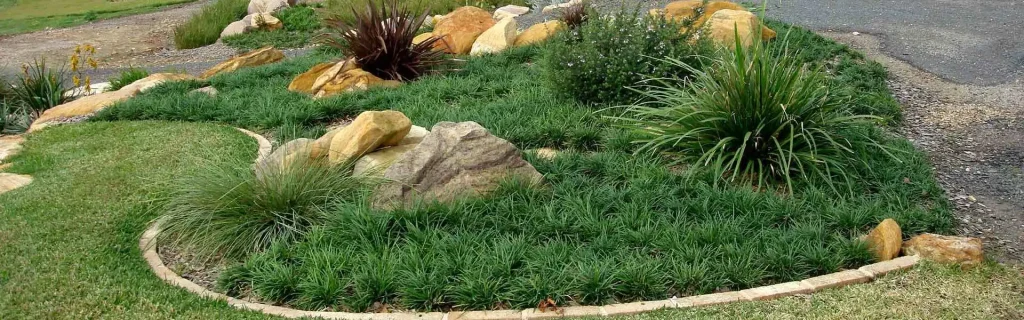
If you’re struggling to make your mind up, here are some questions you should ask yourself:

  • Do you want flowers?
  • Do you want shade loving or sun loving?
  • Do you want a mossy-like look or more of a grass-like look?

Now is the time to be thinking about it because all of these options grow and spread much better in the warm weather. Which means the time it takes to get coverage from your plant is much shorter. And we are very happy to say this, but the weather is getting better, and we are drawing closer to summer.

If you’re someone who wants more interactive content, come join our lives! We typically do two a week, a Live Q&A 12PM on Monday and an educational lecture 12PM on Tuesday (like this one on lawn alternatives!). Now these aren’t set in stone times, so please be sure to check our socials for updated information.

Spread the word and help us make gardening accessible for everyone.

A landscaped garden bed with grasses, shrubs, and large rocks bordered by a curved stone edge offers stunning lawn alternatives.

Feeling inspired to create your own garden, but want some expert advice? Try our one-on-one garden design service with Chris. Together you’ll come up with a selection of plants along with a layout plan that gives you the look you want, as well as being suitable for your local soil and conditions.

get your own tailored modern garden design:


FIND OUT HOW

Articles you may also like

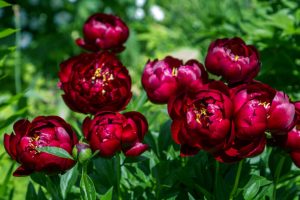
A cluster of blooming pink peonies with green leaves against a blurred green background presents a serene escape, even amidst common garden design problems.

The Brand New Peony on the Market – The Peony for the People

There is a brand new Peony on the market and it’s nothing like the Peonies you know – this one can actually be grown by anyone. Peonies are notorious for how difficult they are, which means not many people have been able to enjoy their beauty. But that changes today.

All About the New Peony:

Steve’s History with Peonies

Close-up of vibrant new peony rose on the market, in full bloom surrounded by lush green foliage.We met up with Steve from Nishiki Nursery, who is one of our growers and a plant expert in his own right. He may even know more about plants than Chris does!
He says that growing Peonies “is sort of in my blood. My dad’s been doing it. My grandfather was doing it. There’s something really captivating about a Peony flower – the size, the colour, the beauty. They are just so impressive – they can’t help but capture your attention.”

Steve’s experience with Peonies really does stretch back generations. His grandfather came over from Holland in the forties and started growing Peonies in Silvan.

It was mostly Tree Peonies, which was the original form of Peony. Then Steve’s dad started growing Peonies when he started his own nursery. And now Steve, having started his own nursery too, has taken that torch and continued the lineage of growing Peonies.

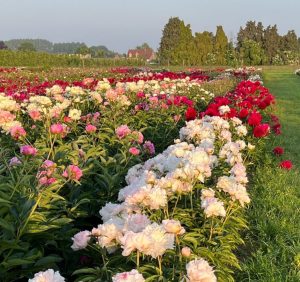
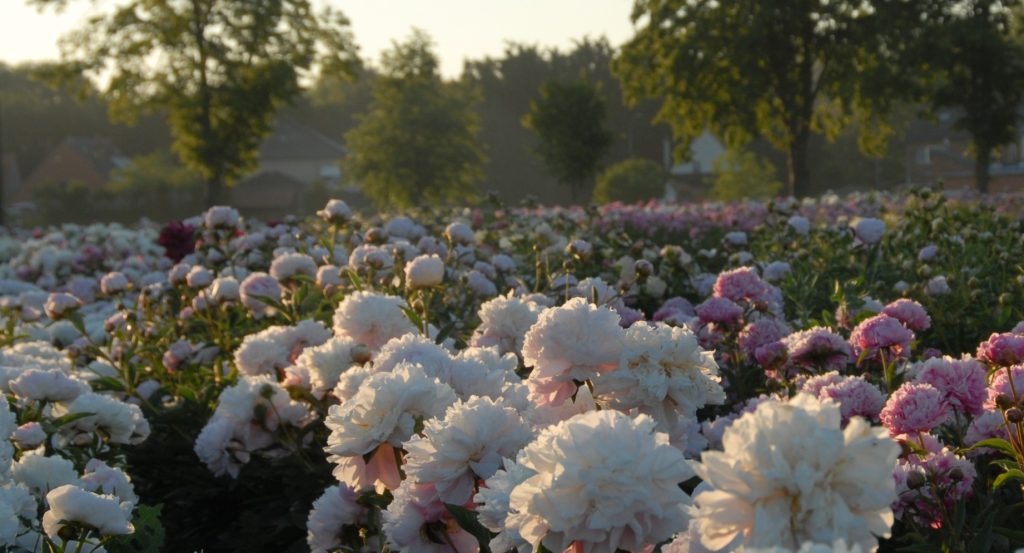
A field of blooming peonies with various shades of white, pink, and purple is illuminated by soft sunlight. Trees and homes are visible in the background.

That’s about 70 years that Steve’s family has been growing Peonies. Steve himself has been growing them for 20 years. Such an incredible history and expertise there.

Now, Steve’s dad made an amazing breakthrough on how to grow Peonies – and it was completely by accident.

One day, one of his workers put WAY too much Dolomite Lime on the Peony beds. He was instructed to do just a little bit, but actually put about four inches thick of Dolomite Lime.

This could’ve been a disaster but what ended up happening was that those Peonies grew and flowered the best he’s ever seen.

From then on, he grew Peonies prolifically, using lots and lots of lime.

The reason for this is that Peonies are native to China and Japan where they mostly grow on limestone, which is quite alkaline. Whereas our soil here is quite acidic.

A Peony for the People

Two vibrant pink peonies in full bloom with lush green foliage in the background, showcasing a solution to common garden design problems.

This is why Steve is the perfect person to talk about Peonies with – and specifically the brand new type of Peony he created.

Coral Charm Peony
Two pink peony blooms surrounded by green leaves with one smaller bud in the background, offering a serene solution to garden design problems.These are Herbaceous Peonies, and we have two types for you. There’s Coral Charm, with a double pink flower, and Rosedale, with a double red flower.

These are amazing exotic flowers that will create excitement and interest in any garden.

They are both easy to grow and don’t require any special soil or treatment. They don’t need frost to flower properly either.

Which means absolutely anybody could grow these in their garden.

Rosedale Peony
Close-up of a vibrant 'Morning Lilac' peony rose with prominent yellow stamens, surrounded by green leaves, capturing the essence of peony morning.So, let’s say you buy one of these types – this is what’s going to happen in the next few months and even year.

It’s early spring now and they’ve just started to shoot up. They’ll grow to about 40 to 50cm tall and have one or two flower buds on each stem.

This will turn into huge double flowers, which are simply exquisite to look at. These flowers will last for a week – a brief but beautiful show. You can cut them off and place them in a vase inside the house.

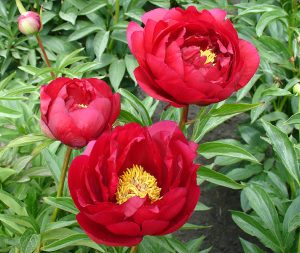
Three vibrant red peonies with yellow centers bloom among lush green foliage.After this flowering period, you’ll just have the beautiful green foliage through summer. Then in autumn the foliage will have some gorgeous autumn colour. Come winter the Peonies will slowly die down, only to be rebirthed in spring with more flowers – around three to four now.

The first year it’s only one or two, but with each passing year the number of flowers will double. So, in five years’ time, it’s going to be simply incredible.

You have the option between growing these in a pot or in the garden. Which is really handy for those who have a courtyard garden or a patio they want to fill.

It’s a good idea to put in a bamboo stake or some kind of market so that when they die down in winter, you don’t lose track of them in the garden.

How Were These Peonies Created?

A field with rows of blooming pink, red, and white flowers under a clear sky, bordered by a green grassy path and lined with trees and a rustic building in the background showcases impeccable garden design without any problems.Most types of Peonies require frost and special conditions to flower, which is a big part of the reason why only the very keen gardeners and experts would plant Peonies at all.
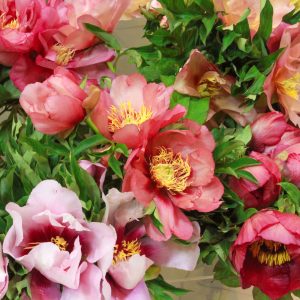
But Steve’s dad set out to change this – and made a huge breakthrough in the gardening field. He selected the varieties that don’t require frost to flower and are easier to grow and propagate.

It was all a process of testing different conditions and climates to work if they’re going to perform well for people. It was about ten years in the making to create these Peonies.

Because of his expertise and dedication, anyone can have flowering Peonies in their garden.

ITOH Peonies


A cluster of pink peonies in full bloom, surrounded by green foliage and varying degrees of blooming buds, showcases a solution to common garden design problems. ITOH Peonies

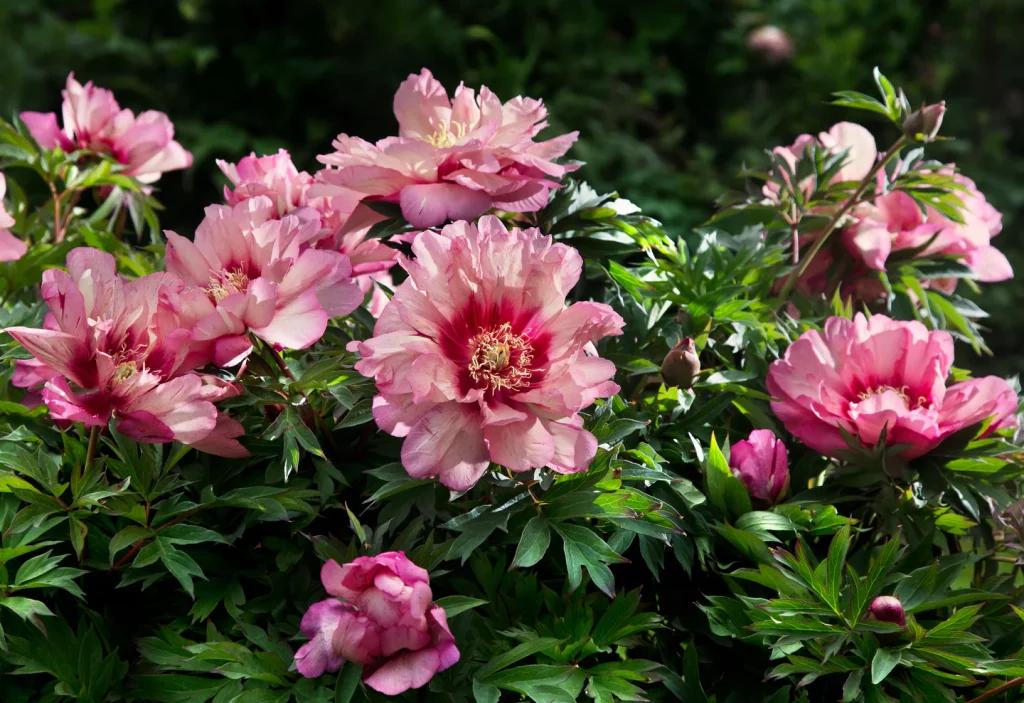
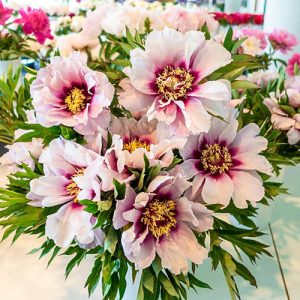
A bouquet of light pink flowers with yellow centers and green leaves is displayed indoors among other similar floral arrangements, offering a beautiful solution to common garden design problems.Steve has moved away from the traditional Tree Peonies to a more exciting type of Peony which is a hybridisation between the Tree Peony and the Herbaceous Peony. This is the ITOH Peony.

It is a vigorous grower with lots of flowers and doesn’t require a particular soil to grow properly. You’re getting the best of both worlds.

In the next few weeks, we’re going to have an incredible range of these Peonies coming in.

If you were to plant an ITOH Peony, in five years you’ll have a meter wide round clump that would be up to a metre tall. It would be covered with around 50 huge flowers.

A close-up of vibrant pink and red peonies with green foliage offers a solution to common garden design problems, creating a stunning focal point.On average they’re about six to eight inches across, and there are even some varieties as large as a dinner plate!

There’s a huge colour range including white, pink, yellow, orange, red, then some that have a few blended colours like orange, yellow and pink in one flower. There’s even a flower that is almost black, that’s how dark the shade of red is.

For this season there will be about six different colours, with a totally range of about 12 to 15 varieties.

You can expect to have one or two flowers this year, as they have been established in the pot for at least six months. If they don’t flower this year, they definitely will next season.

Caring for your Peony


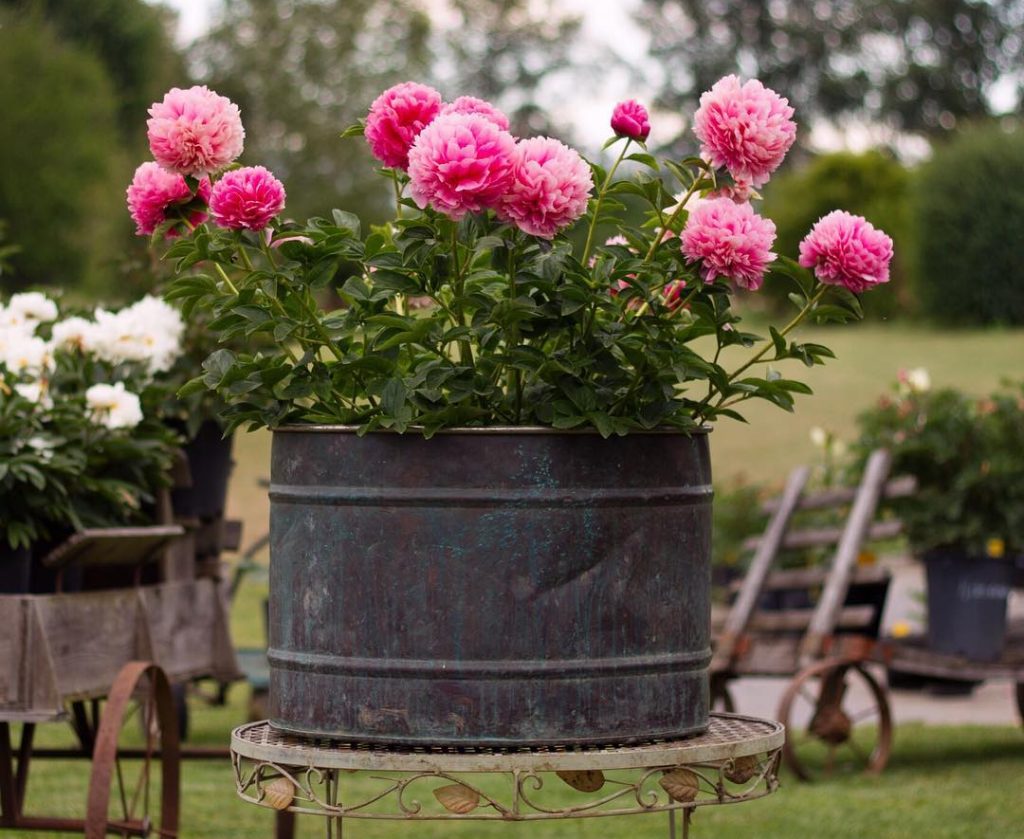
A large metal planter is filled with blooming pink peonies. In the background, more flowers and garden equipment adorn the grassy lawn, showcasing a solution to common garden design problems.

If you wanted to get the best performance from your Peonies this is what you should do. From the pot you buy it in, either transplant it into a bigger pot or into the garden. Ideally, you want to be doing this in winter or autumn, rather than spring.

Now these two steps aren’t essential, but it is how you will get the most flowers and the healthiest plant. You want to add some mushroom compost because it has quite a high PH factor and helps with the lime levels. Also make sure to use good quality potting mix.

Herbaceous or ITOH?


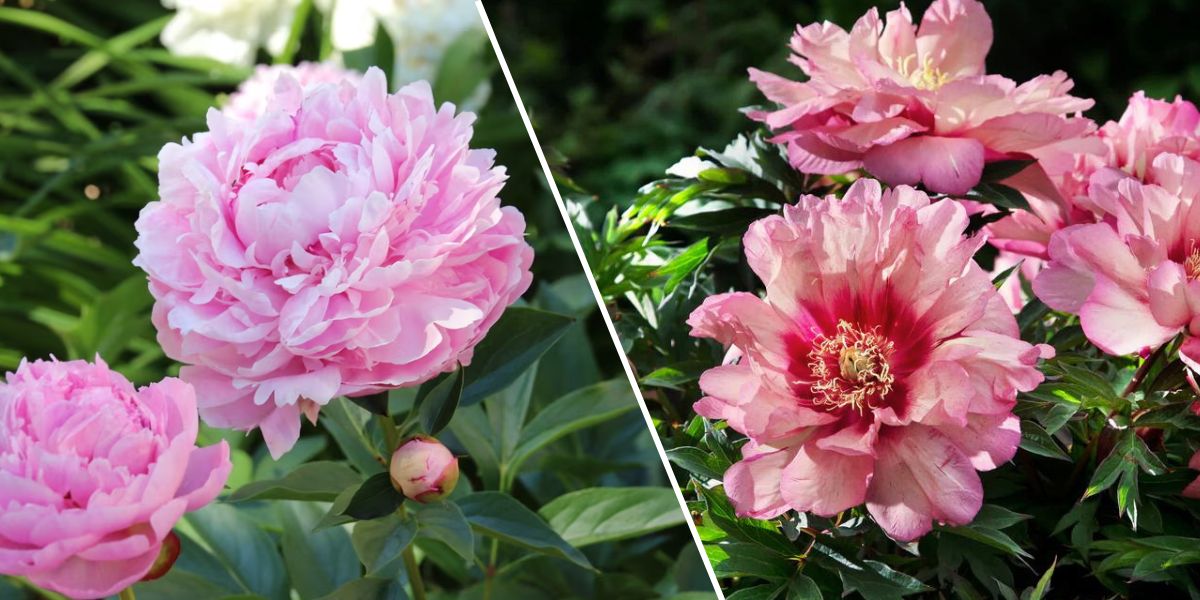
An image split into two shows pink flowers blooming among green foliage: peonies on the left with more petals, and a new peony rose on the market, a different variety of pink flowers with red centers, on the right.

Both types of Peonies are excellent. If you are more interested in having cut flowers and something that is super easy to grow, then go for a Herbaceous Peony.

If you are more wanting a combination of cut flowers and a beautiful bush in the garden, then choose an ITOH Peony.

When they flower you can bring them inside (if they’re in a pot). We recommend cutting off the flowers and putting them in a vase.

Something that is quite lovely to do with the large flowers is cutting them off with a very short stem and then floating them in a bowl of water. It looks very elegant and beautiful.

Garden Styles that Compliment Peonies

A garden with various trees and shrubs around a pond. Pink flowers, including the new peony rose on the market, and fallen petals are visible on the ground near the water.An oriental style garden suits Peonies best. Pick plants like Cherry Blossoms, Japanese Maples, and Plum Blossoms to create a truly exquisite garden.

Other trees that blossom later would also be great choice like Crab Apples and later flowering Cherry Blossoms, as they will flower at the same time as your Peonies.

Japanese Maples with their beautiful red and purple leaves are reaching their best colours at the time Peonies are flowering. The Peony flowering season goes from early September right through to the end of November.

Where Can I Get These Peonies?

Well, by the time this article goes live we’ll have the range of Peonies available on our website. You can check it out here.

We are so excited to share these new varieties of Peonies and can’t wait for everyone to enjoy the beauty of Peonies.


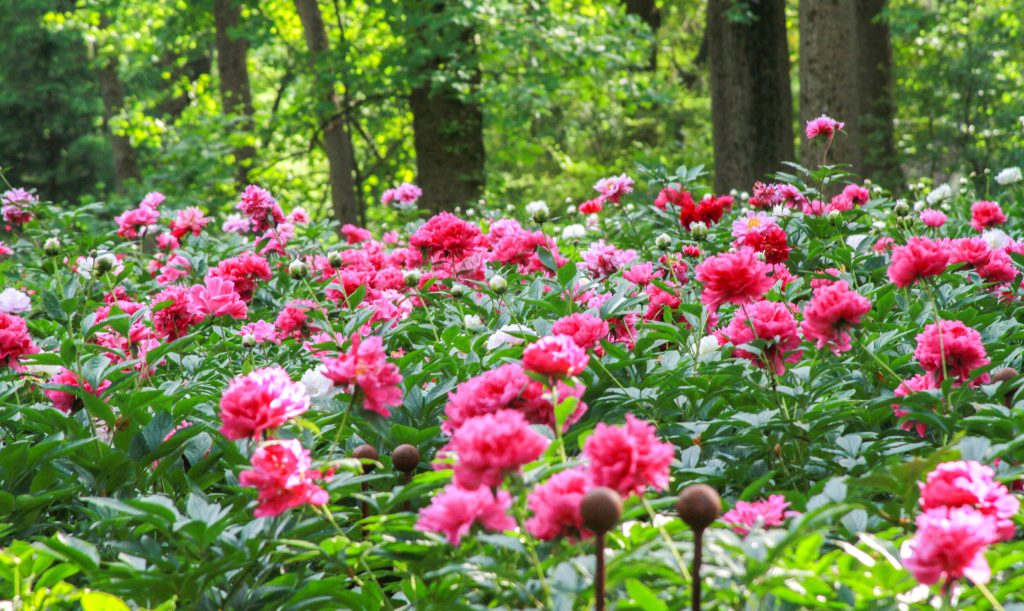
A dense field of blooming pink and white flowers, including the new peony rose on the market, surrounded by lush green foliage and trees in the background.

Feeling inspired to create your own garden, but want some expert advice? Try our one-on-one garden design service with Chris. Together you’ll come up with a selection of plants along with a layout plan that gives you the look you want, as well as being suitable for your local soil and conditions.

get your own tailored modern garden design:


FIND OUT HOW

Articles you may also like

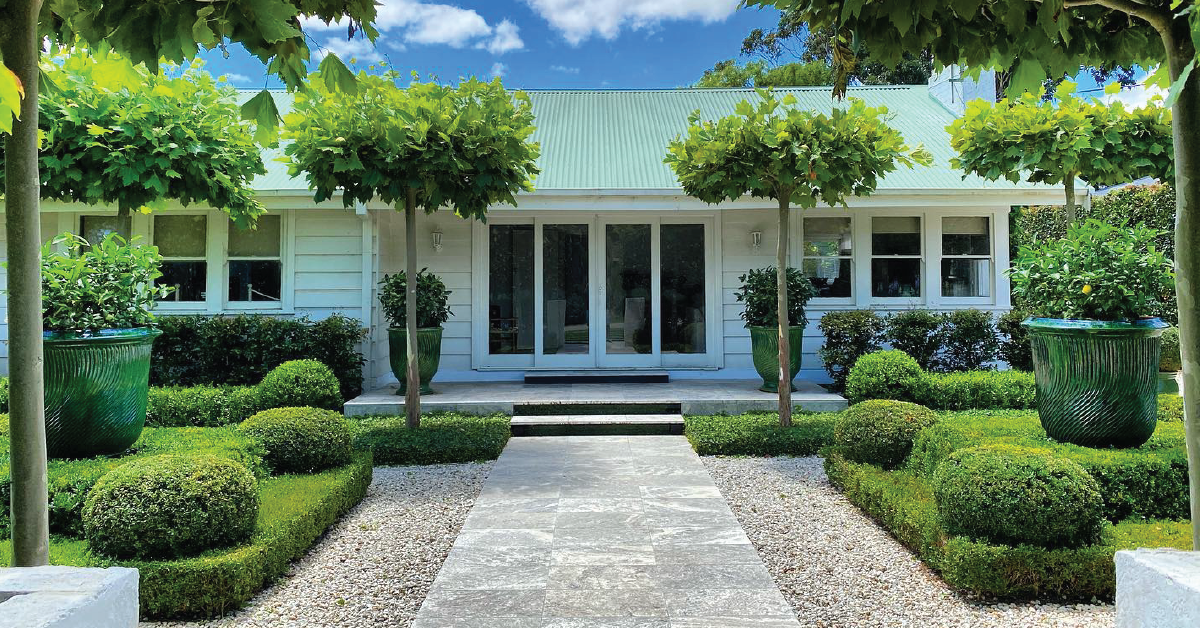
A single-story white house with a green roof and symmetrical landscaping featuring trimmed hedges, topiary, potted plants, and a stone path leading to the entrance showcases expert garden design.

The 7 Most Common Garden Design Problems and Their Solutions

We are writing this article to help people identify and easily fix some of the issues they may be having when coming up with a garden design. On average we do about thirty garden designs a week.

The 7 most common problems we see everyday  in our garden design consultations:

1. Going on the market soon
2. A combination of hot sun and deep shade
3. A need for privacy
4. Needing extra low maintenance plants
5. Having a small garden
6. Having a tight budget
7. Creating a modern style garden for current times

Going on the Market Soon

A "For Sale" sign in front of a suburban house with surrounding garden and neighboring houses in the background.A lot of people come to us wanting help for their garden as they are going to put their property on the market. These are the smart people that know a garden can greatly affect the value of a property.

The standard situation with this is people are on a very tight timeline, where the photographer is coming around the next week.

So the first question that we always ask, and that you should ask yourself now is – when? When will you be putting it on the market?

This is really important because depending on the season, different plants are going to look their best at different times. If someone was selling their property in June – we would not plant deciduous tree. We would be recommending an evergreen. But if it was September, then that Weeping Cherry could be a huge selling point.

Or we might have plants that are in flower right now looking absolutely stunning, but you won’t be going on the market for another six weeks. By that time it’s likely the flowering would’ve finished, and you’ve just spent all this money on something that is bare when it comes to auction day. Not ideal.

Aerial view of a landscaped garden featuring thoughtfully planned pathways, various flower beds with green and blooming plants, and a gazebo in the right corner showcasing exquisite garden design.

Planning ahead of time is ALWAYS the best method. The earlier you start planning, the more money, time and effort you will save. For example, if you had months before selling than you can buy quite small plants and give them time to grow and flower.

But we get that life doesn’t always allow for such long planning. So we’re going to focus on the situation where it’s Saturday morning and you’ve got the photographer coming on Tuesday.

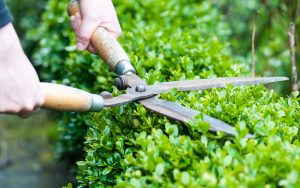
Close-up of hands using wooden-handled hedge shears to trim a green hedge, showcasing expert garden design in action.The first step you’re going to take is subtraction. This is where you want to bring in some outside opinions like your mum, brother, friend, whatever.


The reason for this is when you’ve been living somewhere for a long time you are blind to the ugliness there. But someone with fresh eyes will easily be able to point out the eye sores and ugly points.

Now this could be something like a couple of branches that were roughly hacked off a tree and just need some nice trimming to clean it up. It could be a hole in the lawn, where you need to buy a bit of turf and repair it. Maybe it’s stained concrete needing a pressure blaster to clean up.

Whatever it is, identify it and fix it. Keep picking out all the ugliest things and subtracting them.

But don’t go crazy. You don’t want to overdo it and accidentally remove something that could’ve been salvaged. For example big bushes are quite expensive, so if you have some but they’re looking a bit scraggly, invest some time in trying to get them lush and green again.

A red-brick house with one side showcasing a well-tended garden labeled "YES" and the other side with sparse, dry grass labeled "NO" serves as a testament to thoughtful garden design.

You want to step into the shoes of a potential buyer and imagine what they would be seeing as they drive up to your house. You might have a fabulous kitchen but if their first impression is of a scraggly hideous tree and brown patches of shrivelled up grass… well that’s what they’re going to remember.

A quick good tip for that grass situation – annual ryegrass is a cheap way of covering up holes in the lawn, or wheel marks on the nature strip. Right now it will only take about 14 days to turn it green. Once the weather warms up, it will only take seven days. Pretty impressive.

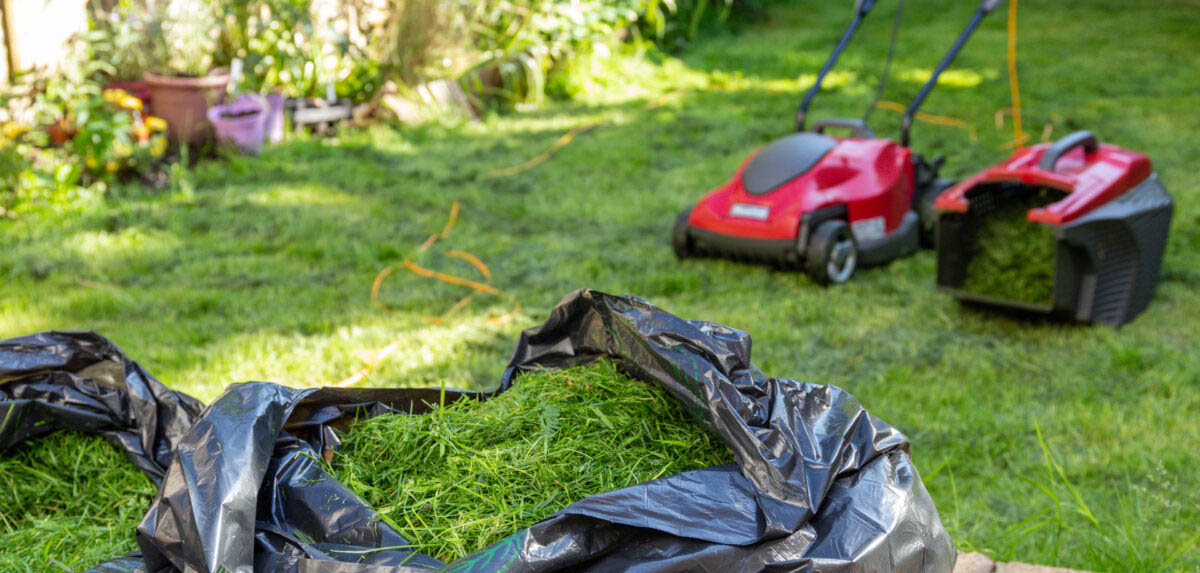
Hello Hello Plants Nursery Campbellfield Melbourne Victoria Australia soil conditioner lawn clippings mowerMow the lawn, rake out a bit of potty mix and then seed the lawn with annual ryegrass. Problem fixed. Also if you have young tender grass, mow it up high and often.


So just get rid of the really ugly things that are devaluing the place.

The next step is to look at what is needed and wanted. A mistake that a lot of people make is buying the plants they really like, but not thinking about the broad market.

For example, you might love a Weeping Peach, but a safer choice would be an evergreen Magnolia which nine out of ten people like. Other good choices are big bushes, Weeping Cherries and English Box.


Promotional graphic for a 2024 winter clearance sale. Text reads "Minimum 25% off. Hundreds of plants on sale, including the best magnolias for early spring." Shows a stylized plant in a shopping cart wearing sunglasses and a scarf.


Illustration with the words "Let's Get Bare Rooted" showing tree roots. Text below reads "for the 2024 garden design season at Hello Hello".

Our next piece of advice is to buy plants on special. Here at Hello Hello we pretty much always have a sale going on. Right now is our Winter Clearance and Bare Rooted specials so it’s a good idea to come check those out. But be clever with what you buy, don’t get something just because it’s on special.

Then finish it off with black mulch, pine bark mulch or pebbles.

A Combination of Hot Sun and Deep Shade

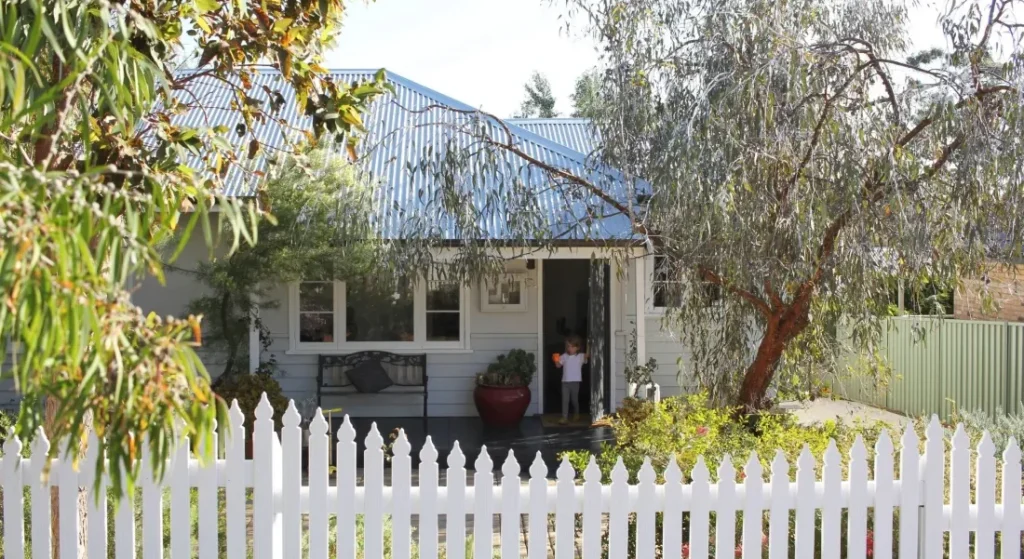
A quaint house with light grey siding, a blue metal roof, and a white picket fence features thoughtful garden design. A child and an adult are standing in the open doorway amidst greenery and trees.

The next problem is a garden that has both hot sun and deep shade, whether that be from a big tree or the neighbour’s two storey house.

The problem with this is that some plants are sun loving, and others are shade loving. So if you try and plant something that covers a large part of the garden, it may thrive in the sun but do terribly in the shade, or vice versa.
Here are the plants that are going to do great in both the shade and sun and give you a uniform look throughout your garden.

A white picket fence with green foliage growing over the top and through its gaps against a cloudy sky backdrop.Viburnum odoratissimum ‘Sweet’
The Viburnum ‘Sweet’ loves the sun and the shade. So if you wanted to make a nice even hedge that ran under a big tree or spot of shade and all the way through to a sunspot, this is a great choice. You’ll find that planting something else could have the hedge flourishing in the sun and then turning scraggly and brown in the shade (or the other way around).

A neatly trimmed, green shrub hedge with small leaves lines a sidewalk. The ground beside the hedge is covered with soil and shows no other plants or grass.Buxus ‘English Box’
Another great option is an ‘English Box’, we’ve seen it grow great in places that have a combination of hot sun and deep shade. We couldn’t see any difference between the sun-spot and shade-spot – it just looked beautiful and lush all over.

Climbing vine with small white flowers and green leaves growing against a textured gray wall.Trachelospermum ‘Chinese Star Jasmine’
The next great example is ‘Chinese Star Jasmine’ for a groundcover. We’ve seen Toorak gardens that have great big trees, with burning hot sun areas next to it. Then they’ve planted Chinese Star Jasmine all throughout, and it looks divine.

Chinese Star Jasmine is great if you’ve got a big area that needs covering, and it also has an incredible fragrance in the summer when it’s in flower.

Now, of course you could just plant a shade-loving plant in the shady area, and then a sun-loving plant in the sunspot. But we find that when you start planting a tonne of different things, your garden can start to look a bit messy and lack cohesion.

This was a bit of a problem back in the 80s where it would be more like a collection of random plants than a garden. Nowadays the modern style is more geared towards less plants, mass planted in the garden.

A modern, white single-story house with a green roof is framed by expertly curated garden design, featuring neatly trimmed hedges, small trees, and potted plants lining a stone pathway leading to the entrance.

Next time you see a nice garden, count how many different plants they have. You’ll find it’s actually not that many. You could have as little as three plants and create a very stylish look or have up to about seven different plants.

So that number limits you from dividing your garden up dependant on where the sun does and doesn’t fall.

Need for Privacy

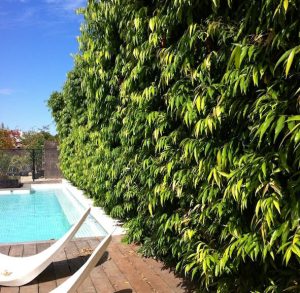
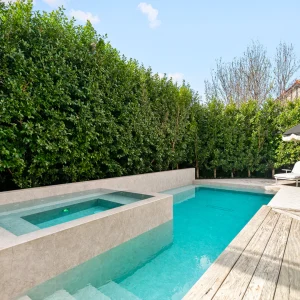
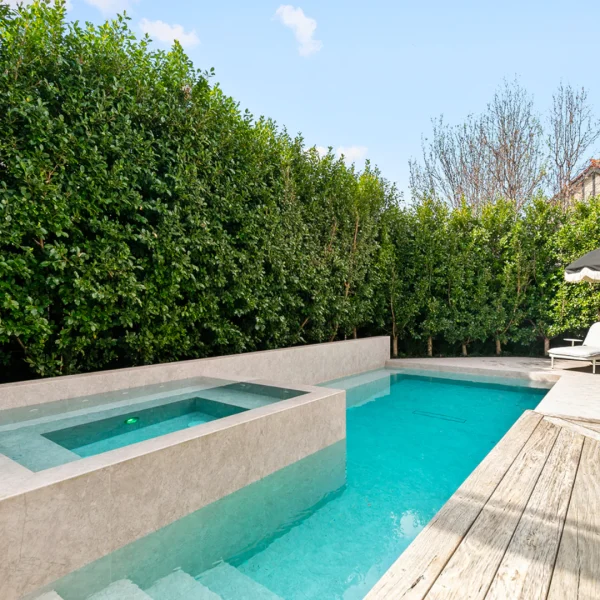
Two white lounge chairs on a wooden deck beside a narrow, rectangular pool with clear water. A tall, dense green hedge runs parallel along the side of the pool.This problem has become much more prevalent nowadays as more two storey houses and units are being built. For example, you may have brought a place 20 years ago but now there is a unit next to you that’s nine metres tall and looks into your backyard pool and you would really like to not have strangers watching you swim. Fair enough.

So the first thing you’re going to look at is going back to that sunshade situation – is the place sunny or shady? Is it a combination of both? If yes, then check above for good plant options.

If it was shady, we would still choose Viburnum odoratissimum ‘Sweet’, it’s the second tallest screen option from our collection here. Our next choice would be Buxus fastigiata ‘Upright English Box’. It’s great in a south facing situation when you need something up against the house, or you just have limited space in the garden. It’s tall, skinny and gives you a bit of height without getting out of hand.

Another option is a Prunus ‘Cherry Laurel’ which is bigger, more aggressive and faster grower. This is the tall screen for a shade spot. Or you have Rhagodia ‘Creeping Saltbush’ with lovely silver grey foliage and grows to about 1.5 metres. It trims and shapes up beautifully.

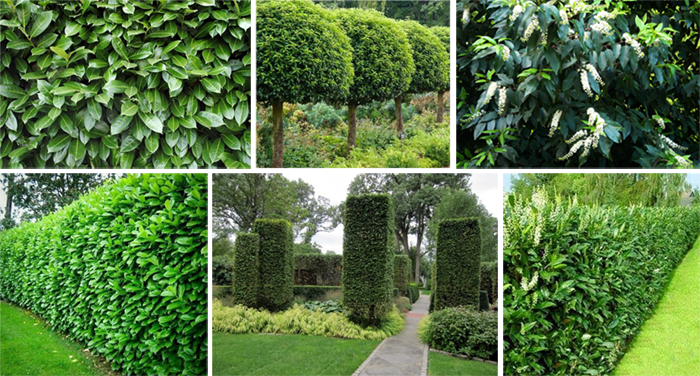
A collage showing well-maintained garden hedges and shrubs, including leafy green hedges, shaped topiary, and flowering shrubs.But let’s say you have a sunny area, a really great and practical option would be a Cupressus ‘Glauca Pencil Pine’. This is particularly good for elderly people or someone who can’t be climbing up tall ladders to trim their hedges.

Within five years, a Glauca Pencil Pine can grow to nine metres tall and block out a three or four storey building, and they have the lush look of a Sweet Viburnum. But what makes them so practical is that once they get up high, they never grow more than a meter wide.

A row of tall, conical evergreen trees stands along a dirt path under a bright blue sky with clouds. An area of green grass is visible in the foreground.They are also super tough, when they’re young make sure to give it plenty of water and fertiliser and you could get a metre and half of growth per year.

If you want something that is a bit wider and not as tall, go with a Juniperus ‘Spartan’ Conifer. It loves a trim, and you can make it thinner or chop the top off. They grow great in small narrow spaces and are both drought and wind tolerant.

The next option is a Cupressus ‘Leighton Green’ Conifer that are fabulous for making a tall narrow hedge. They can get to around seven metres high and stay only a metre wide.

They are very fast growing, you can get a three metre hedge in two years. We actually had a customer experiment with a Leighton Green Conifer, and he got it to grow seven and a half metres in three years. Insane.

So Leighton’s Green is one of the fastest growing and most trimmable Conifers on the market.

Another favourite of ours is a Waterhousia ‘Weeping Lilly Pilly’. They are really easy to manage and trim and look very luscious and nice. Now please note that there is a beetle going around that is eating a lot of the Lilly Pillies, however the Weeping Lilly Pilly is completely fine – the beetle won’t touch them.


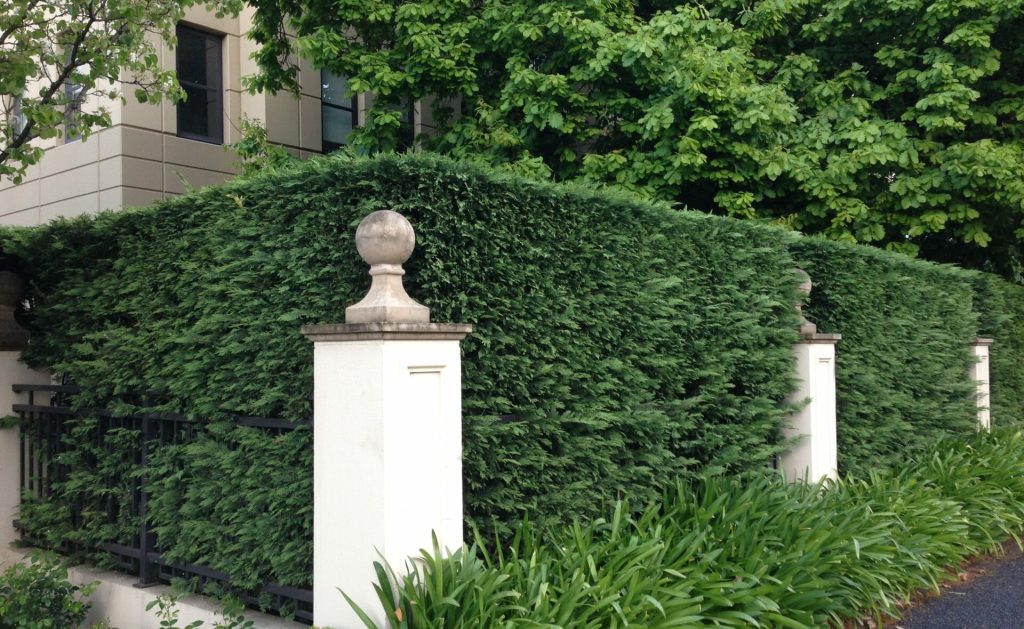
A well-trimmed green hedge stands behind a white concrete fence with stone finials, framed by leafy trees and a flower bed, showcasing impeccable garden design.

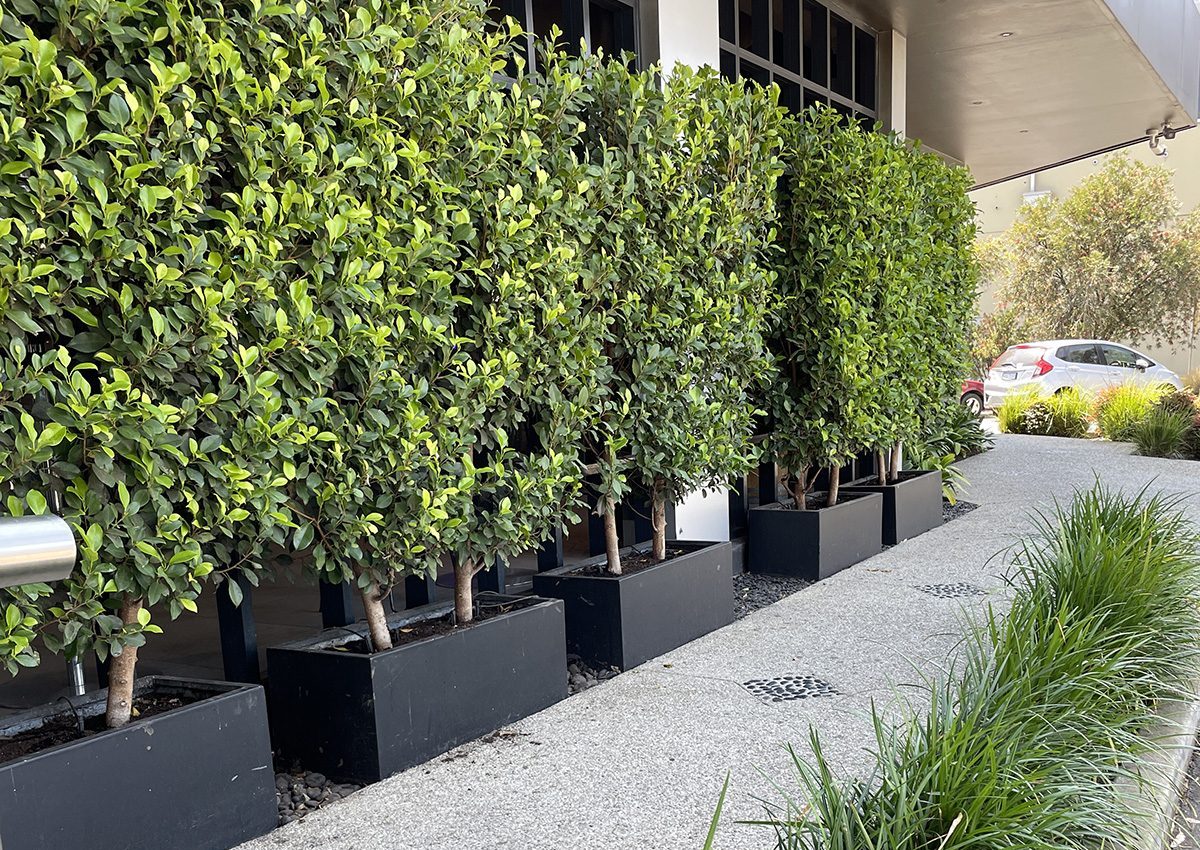
Then there is of course the Ficus hillii ‘Flash’, which is very popular for how fast growing it is. Under ideal conditions we reckon they could grow almost two metres in a year. Be mindful of the fact that Ficus Flash has a bit of an aggressive root system so don’t put it right up against the house and contain it to a reasonable size by trimming it.

Extra Low Maintenance


A man poses with two bush sculptures dressed with bowler hats and sunglasses, kneeling on the ground and smiling, showcasing his unique garden design.

SO many people want low maintenance. We all have busy lives – full time jobs, children, hobbies, multiple commitments, and it’s fair enough that you don’t have the time to be spending hours in the garden.

Also not everyone can afford to have a contractor come in and take care of the garden. So that’s where ultra-low maintenance plants are very handy.

A garden design features five moss-covered mounds, round gray stepping stones, and small gray gravel, with plants along the edges.When we decide what plants are low maintenance, we look for things like are they self-shaping, do they attract bugs, are they disease resistant, do they require a lot of water and so on.
Here is a quick list of some of our favourite choices:

We do have an entire section on the website that is dedicated to low maintenance plants which you can check out here.

Small Gardens and Limited Space


A small, zen-style garden design features a harmonious mix of rocks, gravel, green shrubs, and a delicate tree adjacent to the glass building exterior.

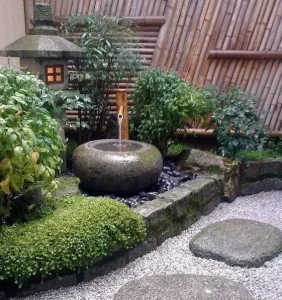
A serene Japanese garden with a stone water fountain, surrounded by green foliage, bamboo fencing, and a thoughtfully crafted stone pathway—a perfect example of exquisite garden design.It’s quite a struggle to find a decent sized garden nowadays, we’ve seen some that are the size of a single car park or a little square of soil at the back of the townhouse.

These are actually quite difficult to design. The first thing we do is ask where they view the garden from – is it a bedroom window or the kitchen or some other room. Then we ask what is important to them – do they want lots of colour or what plants do they really love?

Look, even the tiny handkerchief of a garden can be beautiful – you just have to be tactical about it. We find that a Japanese Zen style garden actually does really well in these micro spaces.

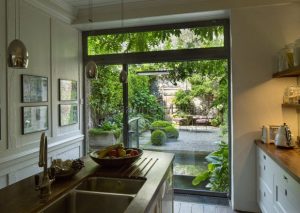
A kitchen with a sink island, countertop appliances, and a window door opening to a lush garden with seating and thoughtful garden design.

The next thing we do is look at the sunshade factor, then we get the budget of the customer.

Let’s say you’ll be looking at the garden through the kitchen – we like to look at the kitchen to see what would compliment or contrast it nicely.

We advise not choosing too many different types of plants to avoid the space looking cluttered. Also be very economical and clever with the decision of what plants. Maybe you have space for just one tree – well then you want a tree that is going to look great for most of the year.

We would not put something like a flowering Cherry there because it may look fantastic for a few weeks in spring, but the rest of the year it can be quite boring.

Our three favourite trees to put in such a space would be a Crepe Myrtle, Senkaki Maple and Princess Gum.

Crepe Myrtle

Crepe Myrtle

What makes Crepe Myrtles so fantastic is the combination of distinctive bark, lush foliage, summer blossoms, and autumn coloured foliage. So you’re getting great beauty all year.

A garden design scene featuring a prominent tree with bright red branches, surrounded by various green shrubs and plants, set against a background of a wooden fence and a river.Senkaki Maple

Senkaki Maples are striking with their red bark and bright green foliage, then in autumn you get a medley of fiery hues. A deciduous tree that still looks fantastic in winter.

A weeping eucalypt tree stands by a bench in a meticulously crafted garden area with a building in the background. The "Hello Hello PLANTS" sign is at the bottom left of the image, showcasing thoughtful garden design.Princess Gum

Princess Gum is an evergreen that gives you gorgeous silver grey foliage all year round. It also has red flowers and big silver nuts that make it even more interesting.

A bush with bright pink flowers and dark green leaves, thoughtfully placed in a garden bed with mulch, exemplifies elegant garden design.Bushes

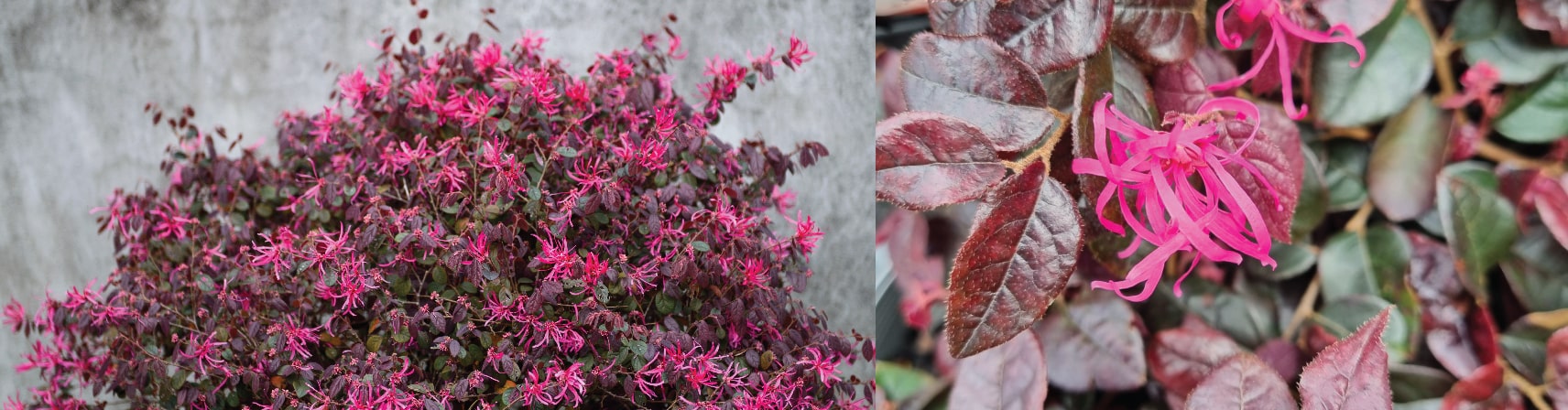
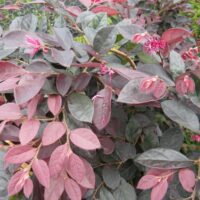
We like to use bushes such as Loropetalum ‘Bobz Pink’ which is round and compact with purple, burgundy foliage and pink flowers. Another great choice is Abelia ‘Kaleidoscope’ (Glossy Abelia) which is a lovely golden green round bush.

Other Plants to Use

Then you could pair it with plants like Ophiopogon ‘Black’ Mondo Grass, Liriope ‘Stripey White’ and Sagina ‘Green Irish Moss’.

We suggest taking your time and being really careful with the plants you choose because a small garden has to work a lot harder than a big garden.

Tight Budget

It’s unavoidable what is going on in the economy and we understand that people can’t fork out a lot of money on a garden, but rightfully still want something beautiful.

We actually love the challenge of a tight budget because it’s where our creative problem solving comes out. Over the years we have done so many amazing cheap gardens, so please never feel that money is a hindrance.

We have an incredible range of three inch pots that are $4.99 each and you can put together a really great garden with these. Of course, it will take longer for these plants to grow nice and bushy, but if you are willing to have patience, you’re going to save big.


A person holds Australian banknotes (five and ten dollars) while standing on a patio, with a white dog enjoying the garden design in a fenced yard nearby.

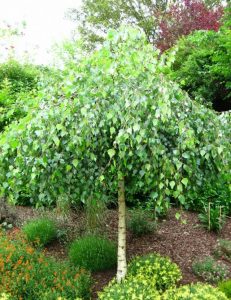
TA small birch tree with a thin trunk and lush green leaves stands gracefully, adding a touch of elegance to the garden design filled with various plants and shrubs.his is a bit obvious but keep an eye out for sales, like we mentioned before, we pretty much always have a sale going on. One of our current ones is a six foot Weeping Birch for $79.99, something that would normally be around $200.

A Silver Birch is a fantastic centrepiece for a garden and can make it look very expensive and elegant, without breaking the bank. Also right now is the BEST time to be buying plants, it is the cheapest you will ever get any plant. Come spring, everything would’ve increased greatly in price.

Hunt down the bargains, take your time and pick up a plant here in that sale and there in that sale and slowly build a beautiful garden. Make it a fun project you chip away at over a few weeks or months, rather than trying to get it done in one day.

Also be sure to follow us on our socials and be notified of any bargains happening.

The New Modern Garden

The whole point of a modern garden is, well, being modern. Something that is current and on trend right now. Of course, garden styles don’t change as quickly as say fashion, but there have definitely been shifts in what is considered modern.

We see ultra-modern gardens as a minimalistic kind of landscape. The advice from a Landscape Architect is “only plant three species in one vista.”


A white building with arched doorways and windows, partially obscured by trees, stands elegantly amidst thoughtful garden design, viewed from across a blue swimming pool.

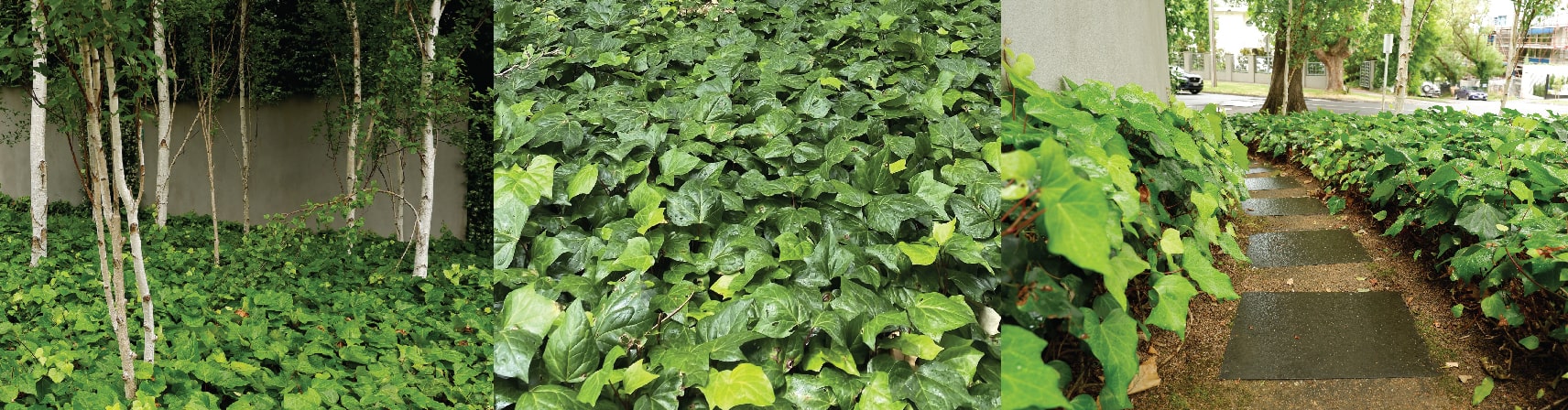
So you have to be very tactical with what three plants you’re choosing. Our recommendation is using Hedera ‘Canary Island Ivy’ all over the front garden instead of having a patch of lawn.

Then you can pair it with a spectacular tree like a type of Crepe Myrtle, perhaps one with gorgeous white flowers, but you have so many colour options.

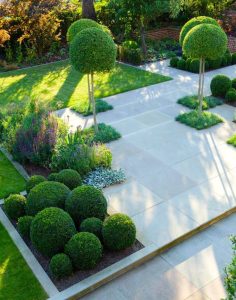
A garden with expertly crafted garden design features, including neatly trimmed bushes, spherical topiaries, and geometric paving stones leading through lush greenery.The final touch would be some English Box topiaries, you could plant a range of sizes, and have fun with what shapes you choose.

This garden is really easy to do and maintain. It’s also not very expensive – but it looks very classy and elevated.

You could drive up Hopetoun Avenue in Toorak and you’ll see quite inexpensive plants like your English Box and Canary Island Ivy, or Chinese Star Jasmine and Silver Birches. For the modern look you should mass plant for a cohesive and slick look.

Another thing we’re noticing is that people are doing lots of sculptures with plants like English Box. But you could also grow a green Coprosma or a Cotoneaster ‘Bearberry Cotoneaster’ and cut it into a large freeform shape. Then plant a couple of Maples in front of it.

Modern garden design with rectangular water features and concrete seating areas. Tall slender trees and various green plants surround the space, bordered by a reflective black water pool.

We’ve also seen gardens where they have pebbles or sand and large, interesting sculptures around it with some Japanese Maples. They look incredible.

When your house also has some spectacular modern architecture, the addition of a modern garden just really sets it off.

The Main Takeaways

So there you have the seven most common garden design problems, and how to go about fixing them. The main thing is to be clever with the plants you choose, plan ahead and take your time, and when in doubt get a second opinion.

Ready to take the next step in your garden plans?

Book a Free Garden Design here.

Feeling inspired to create your own garden, but want some expert advice? Try our one-on-one garden design service with Chris. Together you’ll come up with a selection of plants along with a layout plan that gives you the look you want, as well as being suitable for your local soil and conditions.

get your own tailored modern garden design:


FIND OUT HOW

Articles you may also like

Silver Birch Trees with Chris

Our Favourite Tree, the Silver Birch & a Story For You

Did you know my dad and I planted a forest of Silver Birch trees in Mt Dandenong? You might have visited Woolrich Lookout before, but if you travel a bit further down the road, you’ll find this spectacular grove of Silver Birch trees. Sounds crazy right? You would think that a forest just grows naturally, rather than being intentionally planted by someone. But let me tell you how it all happened.

A grove of birch trees with white bark and green leaves in a wooded area. Sunlight filters through the foliage, creating a dappled light effect on the ground. Silver Birch
Silver Birch Trees with Chris
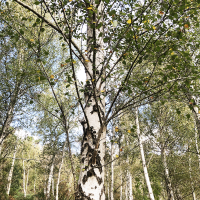
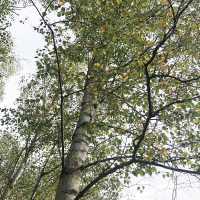
View looking up at a tall tree with a slender trunk and green leaves against a pale sky. Sparse yellow foliage indicates early autumn. Silver Birch
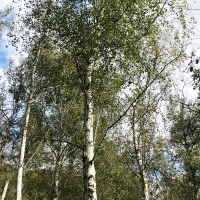
Tall birch trees with white bark and green leaves stand closely together in a forest under a partly cloudy sky. Silver Birch
Silver Birch Trees
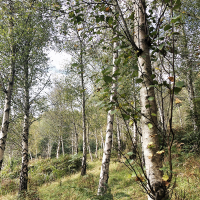
A forest scene with slender birch trees standing closely together, surrounded by green underbrush and lit by soft daylight filtering through the foliage. Silver Birch

So we need to time travel to around 60 years ago when my dad started buying Birch seeds from a seed merchant in Europe. He would have these seeds sent to us by post, where we were currently living in Mt Dandenong. My dad was determined to perfect the art of growing Birch Trees, so he created and followed a really strict process.

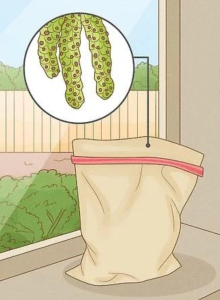
Illustration of a beige cloth bag with a pink ziplock seam, sitting on a windowsill. An inset shows the bag's contents, which appear to be green beans with numerous red spots. Grow Silver Birch TreesFirstly, in the winter he would mix up the seeds with moist peat moss, put it in a bag, and stick in the refrigerator for two months.
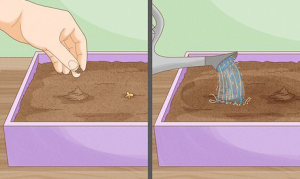
The next step was to spread the seed on soil that had been sterilised with methyl bromide. He would lightly rake over this soil, and then go over it again to make the bed flat and compact the seed into the soil. This made sure that the seed was very close to the surface.

Then he put a timber frame with some hessian over the top of the soil bed to provide shade and contain the humidity.

A hand planting a seed in soil on the left side of the image. On the right side, soil is being watered from a watering can.Twice a day he watered the bed. Once they had germinated and were half an inch high, he would lift the hessian and timber frame to about 50cm off the bed. This allowed for airflow and reduced humidity. Dad also decreased the amount of watering at this point.

An illustrated young green plant with multiple leaves growing in soil, with a textured, gray background. Grow Silver Birch TreesBy the next winter these Birches were about 80cm tall. Now around this time that my dad was perfecting the growing process of Silver Birch Trees, we had a Finish family move in next door to our growing field. It was a husband and wife with ten children! Now the Toorkolas LOVED the Birch trees. They actually took scraps from the Birch Trees and created all sort of things with it such as brooms. They even said that if they were back in Finland, they would’ve made shoes out of the Birches! It was pretty incredible to hear about the other uses of the Silver Birch. Especially because during this era, Silver Birches were one of the most popular ornamental trees in Melbourne. Even now they’re still popular because they grow very vigorously and are a very pretty tree that don’t grow too big.
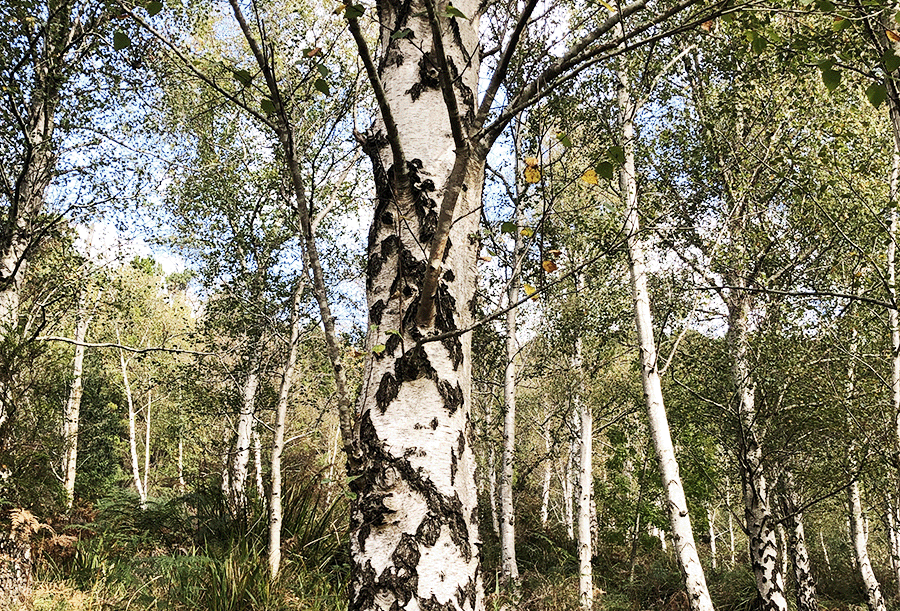
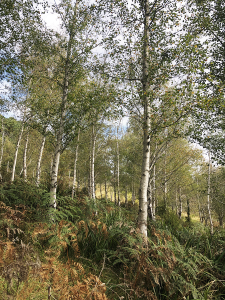
A forest scene showing multiple birch trees with white bark and black markings, surrounded by green foliage and undergrowth. Sunlight filters through the leaves, casting a dappled shadow on the ground during a serene Easter Long Weekend. Silver Birch Trees

A grove of slender, white birch trees with green leaves stands amidst ferns and grass on a sunny Easter Long Weekend day.So my father spent five years figuring out how to grow Silver Birches. His biggest breakthrough was finding out that if you picked seeds locally it was much cheaper and more fertile. Once he had perfected the process, he was getting a yield of about 3000 trees per 50m x 1m seedling bed. This translated to about 100 thousand Silver Birches a year. These would be dug up and used for either potting or further field growing. There were also growers that would graft other cultivars such as weeping or purple varieties.

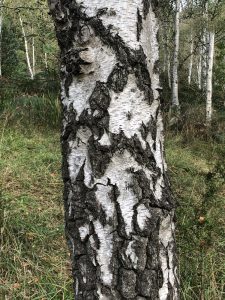
Close-up of a birch tree trunk with distinctive white and dark brown bark textures, surrounded by grass and additional birch trees in the background, evoking the serene beauty typical of an Easter Long Weekend in nature.Let’s fast forward to 1971 where I come into the picture. My dad asked me to go into the one-year-old stock and pick out 200 of the best Birch Trees. Why? Because we were delivering all of them to the RJ Hamer Arboretum. So we sent 200 Birch Trees, and they were planted in this place with fairly acidic volcanic soil, really high rainfall, and a lot of grass and weed competition. They also likely received no care. But over 50 years later and they are doing spectacularly. I was actually a bit surprised. If you’re ever in the area I really encourage you to check it out. There’s a beautiful walking track alongside it that pops out at the bottom of Woolrich Lookout.


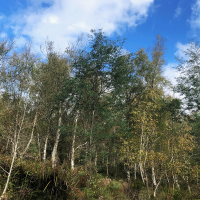
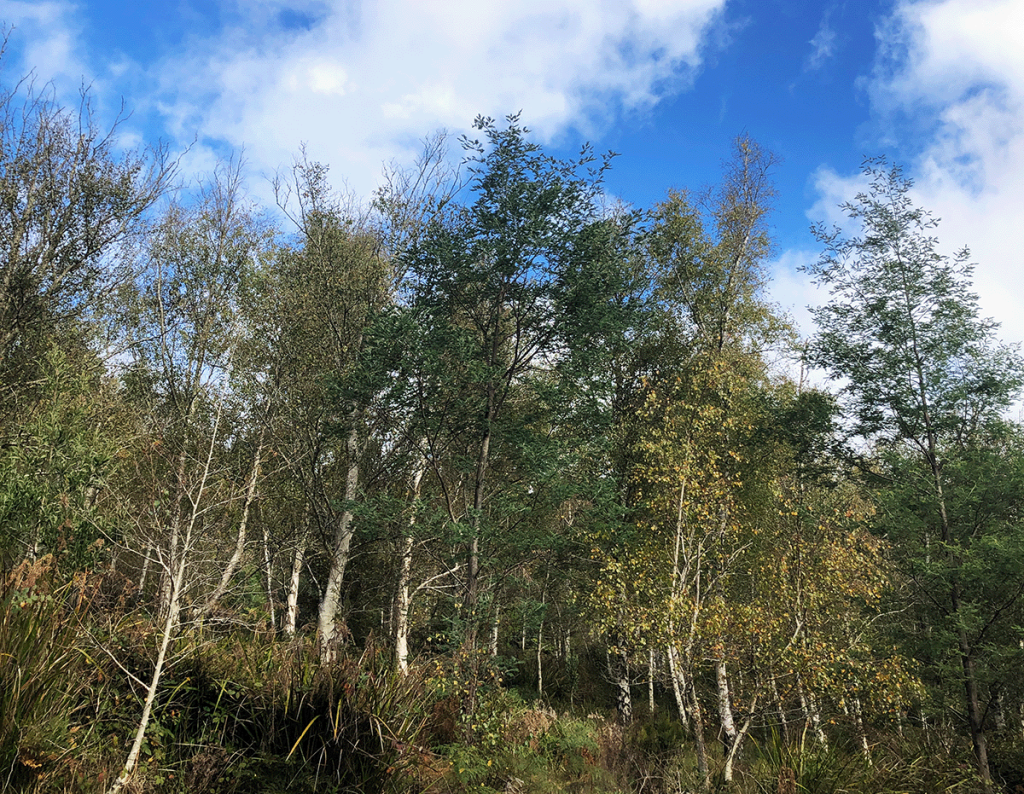
A forest scene with a mix of tall trees and underbrush under a partly cloudy sky. Some trees have green leaves, while others have yellowing foliage, offering the perfect backdrop for an Easter Long Weekend adventure. Siver Birch Trees

Now if I’m being honest with you, I haven’t thought about this Silver Birch Forest in a long time. The only reason I visited it, or am talking about it now, is because of Matti Rousi. He is a Finnish scientist that is writing a book all about Silver Birches. It’s set to be published this year under the title Book of Birch (Past and Present Use and Ecology). Betula pendula is the national tree of Finland and is planted very profusely there.

A snowy forest with numerous bare birch trees standing close together, displaying distinctive white bark with dark markings, offers a peaceful retreat during the Easter Long Weekend.A dense grove of tall, white birch trees with some yellow and green leaves stands in a field of dry, brown grass, ready to welcome the Easter Long Weekend.In his research he stumbled upon our website and was shocked when he discovered that we were growing Silver Birches here. As he details in his email to us “present foresters consider Silver Birch to be strictly adapted to local conditions” and “can be transferred only 200km N or S.” Australia is much further than that. So scientifically you shouldn’t be able to grow a Betula Silver Birch at this latitude. However, Rousi is trying to argue to the contrary, where Betula pendula “is very plastic” and can adapt to other conditions.

An older man in a black jacket stands beside a birch tree in a forest, with his right hand resting on the trunk. The background features various trees and undergrowth, creating an atmosphere that perfectly captures the tranquility of an Easter Long Weekend.This Silver Birch Forest is living proof of that. So not only has this Silver Birch grown without any maintenance, but it also defies what many Finnish foresters believe. If you want to hear more about this, I highly recommend reading Matt Rousi’s book once it has been published.

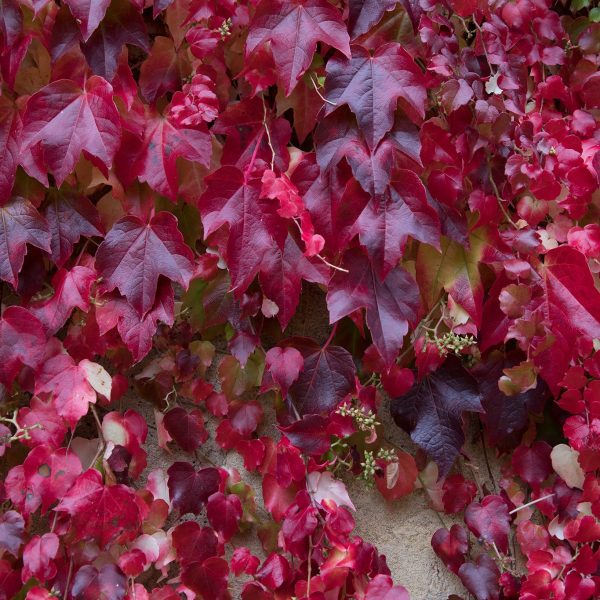
Hope you enjoyed this little trip down memory lane. Goes to show how some dedication and a good understanding of horticulture can achieve the impossible.
Here’s to my dad,

Chris
Aerial view of a dense forest with trees displaying vibrant autumn colors, overlay text reading "top indoor plants with the most spectacular autumn colour.

Plants with the Most Spectacular Autumn Colours

Normally when people talk about autumn colour, they mention the Fraxinus ‘Claret Ash’ Tree or Liriodendron ‘Tulip Tree’. They do have incredible autumn colours, only problem is they grow to about 8-12 metres tall. This would practically overtake a front or backyard of a normal suburban house and likely destroy the courtyard of a unit. A lot of people have smaller spaces, they’re working with balconies, pots, tiny garden beds, courtyards, limited front yard space, and so on. But this doesn’t mean you can’t enjoy the brilliance of autumn.

Bright clusters of red berries hanging amid vibrant red and yellow autumn leaves against a soft-focus background, resembling top indoor plants.

Dense ivy, one of the top indoor plants, with vibrant red and purple leaves covering a wall.

Vibrant red and orange autumn leaves with clusters of black berries on a top indoor plant.

Close-up of vibrant red Japanese maple, one of the top indoor plants, with detailed veins and a blurred background, capturing the texture and color contrast. Acer ‘Shaina’ Japanese Maple leaf

Branches with vibrant red and orange leaves from top indoor plants against a blurred background of green foliage.

Close-up of a shrub with vibrant red and orange autumn leaves, set against a dark background, showcasing its appeal as one of the top indoor plants.

These are the plants that you need to create a garden that is set alight with scarlets, golds, ambers and all those fiery shades during the months of autumn.

13 of the Most Spectacular Autumn Plant Colours

Acer palmatum ‘Japanese Maple’


A vibrant red maple tree, one of the top indoor plants in full autumn color, surrounded by green trees in a peaceful forest setting. Acer palmatum ‘Japanese Maple’

Close-up of vibrant red japanese maple leaves.Also known as your Plain Japanese Maple, this is a great option for those who want a Japanese Maple, but don’t want to spend too much money on it. But this doesn’t mean it’s lacking when it comes to beauty. The fine foliage transforms into a striking red-pink shade that would stop anyone in their tracks to admire. When I was a kid, I actually used to cut big bunches of it and sell them on the side of the road, and people pulled up and bought it like crazy. I don’t know if that would still happen nowadays… but anyways, the great thing about your Japanese Maple is they’ve probably got one of the safest root systems of any plant.


Vivid orange and red maple leaves against a blurred background of top indoor plants, highlighting the change of seasons.

Close-up of green japanese maple leaves with raindrops on them.So you can plant them close to the house or in a little courtyard and having nothing to worry about. They’re very versatile – you can cloud prune them, or you can bonsai them. They’re also a tree you can keep in a pot for years, as long as you properly take care of it. Water and fertilise it enough, with some Osmocote or Dolomite Lime, or it’s going to turn brown by the end of the season. A little tip, if you’re getting early autumn colour then this is actually not a good thing. It’s a sign of stress, dryness and perhaps a lack of nutrients. So just make sure you’re taking care of your Japanese Maple, and it will reward you with brilliant autumn colour.

Acer ‘Senkaki/Coral Bark’ Japanese Maple


Close-up of top indoor plants with a blend of green and vivid orange colors against a soft blue sky.

Of course I’m going to include another Japanese Maple – they’re just too gorgeous in the autumn to not. In perfect conditions they only end up as a four-metre tree, and with a bit of a trim you can keep it down to two and half or three metres. I often tell people to Google Senkaki Maple, so go ahead and do it. A little bit confused? You’ve probably gotten a page of entirely different coloured foliage and you’re thinking whether it’s all the same tree, it is. 


Japanese maple tree, thriving as a top indoor plant with vibrant green leaves and striking red stalks. Acer ‘Senkaki/Coral Bark’ Japanese Maple

Close-up of a Japanese maple tree with vibrant yellow and orange leaves against a blurred background of top indoor plants.Basically Senkaki Maples move through a wide range of hues throughout the year. In winter they’re bare, with that crimson bark on display. In springtime, the softest green foliage comes through, where the crimson branches just peek through. Towards summer you start to get dashes of pink and orange tones that expand as summer goes on. Then by the end of summer and turn of autumn, you have an iridescent gold, with some touches of pink and orange. In the final stages of autumn you get red hues, before the leaves drop. Just magical. This is a tree that is going to provide delight and interest year-round. They also go with almost any style; modern, classical, Japanese, they always look incredible. So if you’ve got a tiny area with room for only one tree – then hands down you have to pick a Senkaki.

Cotinus ‘Grace’ Smoke Bush


Orange and yellow leaves with black spots on a branch of top indoor plants, glistening with raindrops, against a blurred natural background.

Smoke BushesElderly man smiling behind vivid red and orange top indoor plants in a sunny nursery setting. are fabulous plants with a beautiful reddish/purple foliage most of the time. Then in autumn it shifts to orange, red and yellow shades. They love a hot sunny spot and with a bit of a trim can be kept down to one and half metres tall, or grown up to around two and half/ three metres tall. I wouldn’t put them in a pot, rather plant them in the garden bed. They’re a lovely thick bush that also flowers in summer. The flowers are a smoky grey and contrast beautifully with the foliage. What’s great about the Smoke Bush and Senkaki is that they’re not boring all year with only a show of colour in autumn. They give your garden colour for nine months and then have an amazing crescendo of autumn colour too.

Prunus ‘Kojo No Mai’ Ornamental Cherry


A vibrant red-leafed shrub, one of the top indoor plants, stands in the foreground of a lush garden, contrasting with the dark foliage behind it. Prunus ‘Kojo No Mai’ Ornamental Cherry

An elderly man stands in a nursery, holding a small tree with reddish leaves, surrounded by top indoor plants and under a shade structure.A potted plant, one of the top indoor plants, with vibrant red and purple leaves, positioned in front of a person wearing a black jacket and jeans, in a sunny outdoor setting. Prunus ‘Kojo No Mai’ Ornamental CherryKojo No Mai has a curly kind of foliage with beautiful tiny pink-white blossoms during the springtime. It’s grafted up on a standard and you can buy it as a low standard or a tall standard. It’s quite a compact plant that you can grow in a pot, making sure to water and fertilise it well. But you can also grow it in the garden. It looks beautiful year-round, in the summer it has green pine foliage and blossoms, in winter is has interesting curly branches, then come autumn you get magnificent burgundy autumn colour.

Berberis ‘Japanese Barberry’ Purple


Vibrant red bushes line a neat garden path, surrounded by lush green trees and top indoor plants, complemented by a distant ornate brick fence. Berberis ‘Japanese Barberry’ Purple

An elderly man holding a potted red plant at a nursery, smiling, with rows of top indoor plants and trees under a clear blue sky.There are all different types of Berberis with different autumn colours, but today I’m going to talk about the Purple one. You can plant it as a hedge and trim it into a square, or you can trim it into a ball. The Purple Berberis is the most common and popular of the Berberis. As you come into autumn it will be this bright purple that shifts into shades of orange, yellow and red. With a trim you can keep it under a metre, or let it grow to its full height of about two metres. 

Dark purple leaves with clusters of small yellow flowers against a blurred green background make this one of the top indoor plants. Berberis ‘Japanese Barberry’ PurpleYou can mass plant it for a beautiful splash of colour in your garden, or even plant different types of Berberis and have a wide array of shades. For example there is the Berberis ‘Little Favourite’ Barberry that has burgundy purple foliage which changes to a bright red and orange in autumn, with cream flowers during the springtime. I’ve never used them as a pot plant, but I don’t see why you couldn’t, as they’re a hearty and easy to grow plant.
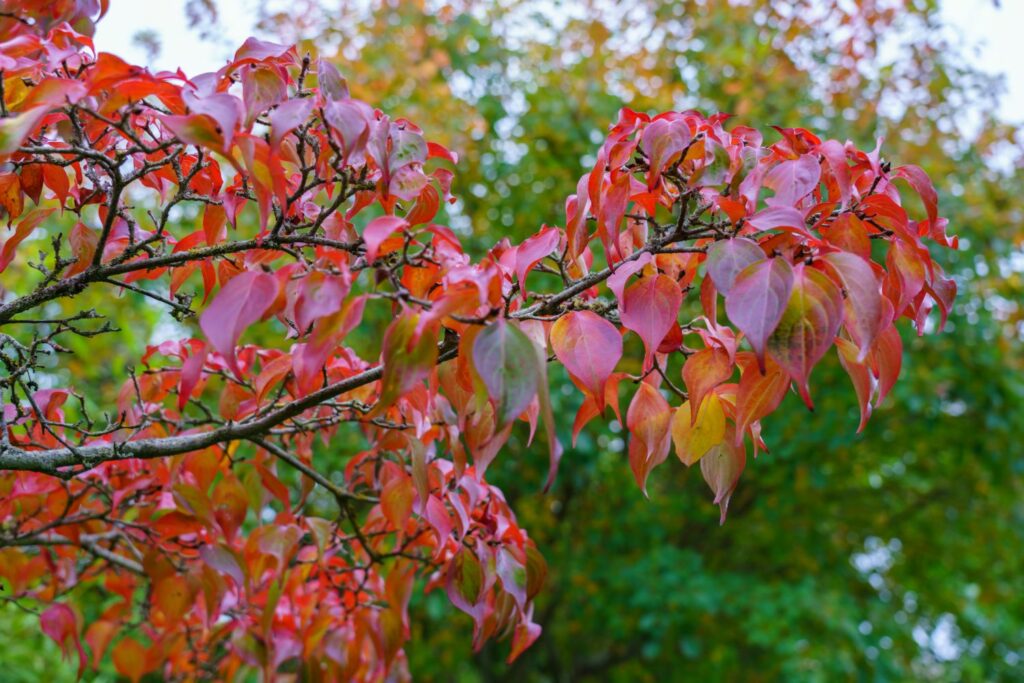

Cornus florida ‘White Dogwood’


Branches with vibrant red and orange leaves from top indoor plants against a blurred background of green foliage.

Elderly man standing among rows of potted red-leafed top indoor plants at a nursery, smiling on a sunny day.

This is the Dogwood that most people know, with its beautiful white flowers and lovely red autumn colour. What’s great about White Dogwood is that it’s quite an exotic looking plant and its autumn colour is long-lasting. You don’t expect a plant that looks so incredible in the summer, with its riot of intricate flowers, to then give you such fabulous autumn colour. Your Dogwood is an understory tree, which means that it naturally grows in the forest underneath other trees. So if you have some great big trees or a two-story house towering over your place, then the White Dogwood will thrive in that shady spot. Just make sure you give it loose soil, bit of water and a bit of fertilizer.

Crepe Myrtle


Close-up of a shrub with vibrant red and orange autumn leaves, set against a dark background, showcasing its appeal as one of the top indoor plants.

Rows of vibrant red top indoor plants in a sunny outdoor nursery setting.Similar to the Senkaki maple, if there was only room for one tree than the Crepe Myrtle is a great option. Your first thought of the Crepe Myrtle is likely the beautiful pink-white flowers, which is quite magnificent. But not long after the flowering is finished, you get the most vibrant autumn colours that lingers for weeks. Some autumn colours are beautiful but fleeting, here today and then gone a few days later. But with the Crepe Myrtle, the autumn colour goes on and on. The different varieties of Crepe Myrtle all have slightly different shades. The Sioux is one of my favourites for its beautiful soft pink flowers and smaller size. Some Crepe Myrtles will grow to four or five metres, but Sioux doesn’t get much bigger than three metres. With a bit of pruning you can easily keep it to one or two metres.

A vibrant red maple tree, one of the top indoor plants, in full autumn color, standing in a grassy area with rocks and trees in the background under a clear sky. Crepe Myrtle autumnAnother great feature is that once they’ve matured, they get this beautiful pattern on their bark. With some flowering trees they’re only pretty in the springtime and boring for the rest of the year, but the Crepe Myrtle provides excitement year-round. If you do have the space, Crepe Myrtles are fantastic mass planted up a driveway or avenue, but even if you just have room for one tree, it’s still going to look fantastic. With beautiful bark, exquisite flowers, and brilliant autumn colours, the Crepe Myrtle really earns its keep as an ornamental tree.

Blueberry Bush


Bush with clusters of blue berries and reddish leaves, showcasing vibrant autumn colours. Blueberry Bush

A person holding two pots of top indoor plants with red and green leaves in a garden center.I never thought that the Blueberry Bush had good autumn colour until Carl, a great nurseryman, brought one of them. This was back when I had a nursery in Emerald, and he would grow a few plants for me. Carl brought in this beautiful bush, about half a metre tall and half a metre wide, and it had the most beautiful autumn colour. I asked him what it was, and he told me it was a Blueberry Bush. I was quite surprised. You can grow it in a pot, or a little corner of the garden, and it’s going to give you cute flowers then fantastic autumn colour. Not to mention you’re also getting blueberries!

Hydrangea quercifolia ‘Oakleaf’


A dense cluster of vibrant, red-veined leaves with clusters of dried, brown flowers, set against a background of green foliage from top indoor plants.

Top indoor plants with red and green leaves in pots at a nursery. Sunlight creates a dappled effect on the foliage.This is one of the most underrated plants for autumn colour. In spring and all throughout summer you have these fantastic flowers. But then with other types of hydrangeas, pretty much straight after Mother’s Day, the leaves would turn rotten and fall off. It would look like something from a horror movie. But your Oakleaf has intense autumn colour, a deep purple shade, and the leaves don’t drop off. They stay there until new bright leaves come in around middle of September, then you have this period of time where green leaves are appearing amongst purple leaves, creating a kaleidoscope of colour. Also compared to other hydrangeas it’s a bit lower and wider growing. They’re my favourite hydrangea because come winter, they don’t shapeshift into a creature from a horror film.

Viburnum ‘Snowball Bush’


Bright clusters of red berries hanging amid vibrant red and yellow autumn leaves against a soft-focus background, resembling top indoor plants.

Sunlit reddish-purple leaves of a top indoor plant, casting shadows on a textured surface, displaying a vivid autumnal color palette.A few decades ago these were the most popular bush in Melbourne and it’s easy to see why. With those clusters of creamy white blossoms, they truly look like snowballs or even clouds, covering the bush. Back then I never noticed how nice their autumn colour is, but I found a patch of them in the nursery today and they look incredible. You’re probably noticing that a lot of the plants on this list aren’t just great for their autumn colour, but rather give you beauty in so many other ways too. It’s because you don’t plant a garden just for one season, you plant a garden to give you eternal wonder and delight. Surprisingly, the Snowball Bush isn’t as common nowadays, so perhaps a resurgence like the ornamental grass is due (stay tuned for an article on ornamental grasses coming soon). They’re super compact so perfect for a tight space. The foliage starts out as a bright green, then with autumn it changes to a gorgeous reddish orange. Even the flowers themselves do some colour-shifting, beginning as an apple-green, morphing to white, and eventually fading to a rosy colour.

Acer ‘Shaina’ Japanese Maple


A lush Japanese maple, one of the top indoor plants, with deep red leaves near a small deer figurine, in a garden setting.

Close-up of vibrant red Japanese maple, one of the top indoor plants, with detailed veins and a blurred background, capturing the texture and color contrast. Acer ‘Shaina’ Japanese Maple leafLook, we could do an entire list on Japanese Maples, but I’m trying to be very selective with which ones I put here, because not everyone wants a Japanese Maple. But the Shaina is really a standout because it’s a miniature Japanese Maple that is perfect for people tight on space. Shaina has very fine leaves and dense foliage which add to the intensity of its red colouring. It’s so small you can have it in a pot and keep it there forever. If you never trimmed it, Shaina would probably end up two metres tall in 10 or 15 years, but if you trimmed it a little bit you could easily keep it a metre tall.

Acer saccharum ‘Sugar’ Maple


A vibrant maple tree with radiant red and orange leaves against a cloudy sky, anchored by supports, in a grassy field with top indoor plants nearby.

Vibrant orange and red maple leaves against a blurred background of top indoor plants. Acer saccharum ‘Sugar’ MapleThe ‘Sugar’ Maple is one of my all-time favourite plants for autumn colour, so I wanted to include this too, however this is quite a large tree. In autumn it is a bright yellow with more subtle tones of orange, pink and red. It almost looks like it is glowing with soft flames. Because of this, it’s typically overlooked, but I love the subtlety.

Parthenocissus ‘Boston Ivy’


Dense ivy, one of the top indoor plants, with vibrant red and purple leaves covering a wall.

The autumn colour of Boston Ivy is unbelievable, not to mention how beautiful and luscious it looks in the summer. Use the right soil, bit of water and fertiliser, and keep it trimmed for the best look. Boston Ivy is a climber so it can really elevate a wall, fence, or the side of the house. Then in autumn the dark green foliage will turn crimson, standing out dramatically against the rest of your landscape.

In Closing

So there are some of the plants with the most brilliant autumn colour. Of course, this list isn’t exhaustive, but I wanted to make this for those who want autumn colour, but are completely overwhelmed by all the choices. You’ve probably noticed here in Melbourne that summer is well and truly gone, the days are getting colder, and the sun is setting sooner. Autumn is officially here. Which means there is no better time to come down to Hello Hello and see for yourself the incredible autumn colour on these plants.

May your autumn be filled with fiery hues,

Chris


Lush garden path lined with vibrant, multicolored autumn foliage and top indoor plants under an overcast sky.

Feeling inspired to create your own garden, but want some expert advice? Try our one-on-one garden design service with Chris. Together you’ll come up with a selection of plants along with a layout plan that gives you the look you want, as well as being suitable for your local soil and conditions.

get your own tailored modern garden design:


FIND OUT HOW

Articles you may also like

A person is excavating the soil using a shovel in a modern garden.

Getting to Know Your Hoe!

The Garden Tool Variety!

Know your Hoe videoIt was only when I was very innocently informing one of my garden design clients that he’ll need to use a hoe for weeds, that I realised not everyone knows what a hoe is. I am sort of old so maybe it is a bit outdated to still call it a hoe. But, well, that’s not going to stop me. Instead I’m going to take you through all the different types of hoes there are because, surprisingly, there are quite a few different types. If you want to wrangle your weeds right, then you better listen up (or, well, scroll down).

Hoes, garden tools

Know Your Hoe video - Part 2Let’s begin with why you should even care about hoeing or what type of hoe to use. Look, you could use chemicals and spray your weeds, but what’s going to happen then is you tend to end up with a hard layer on top of the ground. Your plants will not love this. But, when you hoe and disconnect the weed from its root system, you’re softening up the ground and letting the oxygen in when it rains. Also I’ll let you in on a little secret, I don’t even clean my weeds up once I’ve pulled them out – I just let the sun do its thing. Then all you’re left with are some tiny shrivelled up weeds that can turn into a bit of compost. So the soil ends up really, really good. Now if that’s not enough to convince you then this definitely will – it’s a hell of a lot cheaper than using chemical sprays. Oh, and before you get started about just pulling it out by hand, I have one question for you. How’s your back doing?

Okay now that’s settled, let’s get into the types of hoes:

Push Hoe

Push pull hoe, garden, digging soil

Know Your Hoe video - Part 3First, we’re going to start with the push hoe. Now, the push hoe is perfect for when you only have a small amount of energy and time, and you want to knock over a large amount of sort of small weeds. You’re not cultivating or digging too deep in this case, you’re just going along the ground with the hoe. You can use a push hoe for cleaning up a gravel path or to tidy up the rows in your veggie patch. A push hoe has a flat edge on it which is perfect for this.

Classic Modern Hoe
classic modern hoe

Know Your Hoe video - Part 4You also have the classic modern hoe. It has a nice sharp edge with a solid handle and actually copies the Asian style hoe. If you want visuals of this, head on to our Facebook page where we have a video of all of the hoes I talk about here.

A situation I often see is people making a new garden bed and having it become overrun with weeds in no time after putting all their new plants in. If you want to stop this then go on and reach for that hoe. So, what you’re going to do is – no, put away the spray – okay, you’re going to plant your plants, not too much mulch, and then every two or three weeks you’re going to go in with your hoe and get rid of those nasty weeds. After a couple of weeks or a few months, you’ll find that the weeds stop coming and when the weeds stop coming, then you put your mulch on and it won’t get overcome by weeds. Easy peasy.

Classic Hoe
A garden hoe in the dirt.

Know Your How video - Part 5Next up we have our classic Aussie hoe, the type I had in the shed as a kid. They’re very handy in the veggie patch up and you can use it a bunch of different ways. You can use the corner of it against some hard old weeds, you can hoe nice and shallow with it, or you can chop deep and actually cultivate your ground. If you’re only going to buy one hoe, then this is the one to get.
Okay this is the heavy-duty hoe, kind of the nuclear hoe. I believe it originates in Trojan, but I bought it in Bunnings. It’s a bit of a cross between an Aussie hoe and the Asian style hoe. There’s a lot to like about this hoe, it has a really good heavy handle on it, a good solid blade that’s nicely curved, and overall is very strong and sharp.

Know Your Hoe video - Part 6When there is a serious weed you have to take care of, you bring the nuclear hoe out. Also quick tip – the trick is to try and get under the weed when hoeing it. Now, I remember thinking if I was stuck on a desert island and I could only have one gardening tool what would it be. Well, I honestly reckon it would be a hoe. Also just because this is a heavy hitter hoe, doesn’t mean you can’t also use it against some of the shallow little stuff too.

More to know about hoes:

maintaining hoe, garden toolMaintaining your hoe is very important – the poor thing is being slammed and dragged through the mud, the least you can do is clean it once every while. A good trick is to always carry a piece of broken timber or bit of board with you in your pocket and when you’re catching a breather you can clean your hoe with it. When I was a kid, my dad would have me out hoeing acres of land between veggies and nursery plants and things like that. And if I was out hoeing all day, I’d take a file out with me. And when I got tired, I’d sit down, I’d file a hoe while I was sitting there.



Modern garden styles

Another good habit to get into is to properly irrigate prior to hoeing because the softer the ground, the easier it is to hoe. Now don’t go flooding your garden. Instead, irrigate the land the night before and then when you come in and hoe it the next day, it’s nice and soft.

Lastly, be systematic with your approach – don’t go hoeing there and then hoeing here. Work in neat sections, metre by metre, or you’ll end up with some big scary looking weeds because you missed them in the last hoeing session.

q & a:

Now we always open up for a q & a section so if you have any burning questions about your garden then you should join us for our Wednesday Facebook Live. Here are a couple of questions we got at this week’s one:

Q. Garrett: Don’t the weeds have seeds?
A: Yes, and if you get a heavily seeded weed and you chop him off, he’s going to seed right where he is. And so the trick is to be in there quick before they seed. But let’s say you have a weed seeding, what I recommend is hoeing it off quickly and cleanly and putting the whole seeding weed into the rubbish.

Four different types of shovels in modern garden styles are shown in a black and white drawing.

Q. Roma: How do I remove weeds from my flowered without damaging my plants?
A: In the spaces between your plants, if you use a nice little hoe, you can chop ’em out. You can also use the corner of your hoe to get into the trickier spots. Then if there are places you just can’t get to at all with a hoe, then push through for a minute without the hoe and just use your hands.

In Closing

A man enjoying the tranquility of a modern garden center, as he sits on a bench surrounded by stylish greenery.Did it surprise you how many different types of hoes there are or are you already an expert when it comes to the gardening field? Until next time, keep your weeds wrangled and your hoes in order.

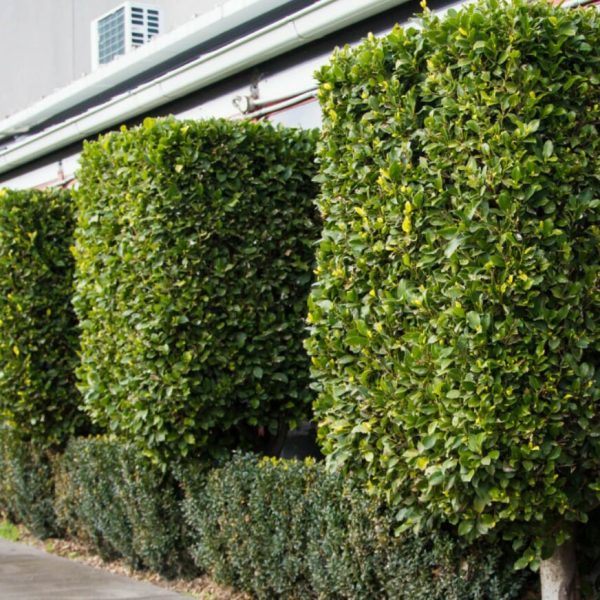
Feeling inspired to create your own garden, but want some expert advice? Try our one-on-one garden design service with Chris. Together you’ll come up with a selection of plants along with a layout plan that gives you the look you want, as well as being suitable for your local soil and conditions.

get your own tailored modern garden design:


FIND OUT HOW

Articles you may also like

Ficus Flash hedge

How to block out the neighbours in a flash – Ficus Flash

Hello, hello! In this article I’d love to talk to you about Ficus Flash and why it is one of the most popular hedges in Melbourne. Now lots of people have lots to say about this but what I’m going to do is clarify how you can make the best use of Ficus Flash and how you can overcome some of its problems and difficulties.


Ficus-1

Ficus-2-header

Ficus Flash hedge in planter box

Ficus-3

Ficus-pleached-2

Ficus-pleached

So how would you like to block out the neighbours, block out the road noise, block out an unsightly vista in a Flash? Well you can with Ficus Flash. And I think that’s why Ficus Flash is called Ficus Flash is because it does do the job in a Flash!

Now we’ve had customers that have blocked out their neighbours in no time at all – as little as 12 or 18 months. They started off with small plants but they soon ended up with this incredible thick, green, luscious, glossy foliage screen in a Flash.

Potted


Now Ficus Flash is an incredibly versatile plant and I think that’s probably one of the reasons why it’s so popular. For example, you can grow Ficus Flash in pots and very often people come in to us because they have a balcony up high or a deck somewhere in Melbourne. It might be facing North or West. It might be in a very, very windy spot, with lots of sun and heat that dries things out. And they say, ”Chris, I’ve got no privacy on my balcony or my deck or whatever. How can I block it so no one looks in on me?” And I’ll always say the answer is Ficus Flash! If you forget to water it, it’s so forgiving. Now if you were to put a Japanese Maple in the same location for example, then the heat and the wind is going to get to it. If you forget to water your Maple the leaves will fall off. And it’s hard to get new leaves on it.

Whereas with Ficus Flash, it’s very forgiving. You can forget to water it occasionally and it won’t drop its foliage. You can forget to fertilise it, it’ll just hang in there. It’ll take the wind, it’ll take the heat, it’ll take the exposure. And it’ll also take coastal exposure. So, you can grow it close to surf beaches and things like that. Now you couldn’t grow it right on the beach, but most coastal spots around Victoria, you’ll find you can grow Ficus Flash quite close to the beach. So you can grow it in pots, you can grow it in planters, you can grow it near the beach.

Now people often put Ficus Flash in an area that’s all concreted and they’ve got a confined root area, but they want something tall and fast to block out the neighbours. In those case I’ll always say grow your Ficus Flash in pots because it’ll stay green, be more forgiving and grow faster than almost any other evergreen that you can get.

Pleached


Now there’s another other thing you can do that’s very popular with Ficus Flash and that is that you can pleach it. Now that’s where you basically create a hedge but it’s a high hedge that’s on long stalks. Now the sneaky way of doing this is, if you come in and buy a standard Ficus with a stem and a ball on top, then over time you trim the ball into a squarer shape, it’ll stop being a ball and grow out into a hedge shape.


Pleaching is where you grow a hedge up on long stalks or stems. It’s ideal if you have a small back garden but you still want something tall to block out the neighbours or a bad view or give yourself some privacy. If you were to grow Ficus Flash or any type of hedge where it grows fully from the ground up, in a small back garden, well it makes your garden look even smaller. But if you pleach it so that all you see is the stalks and you can see your back fence through them, then your yard won’t look so small. Now the other great thing about pleaching is that then you can grow some colourful plants underneath, something low with nice flowers or something else green and lush but down at ground level so you still see the fence. You end up blocking out your neighbours, your garden doesn’t look too small and you have something pretty to look at, at ground level.

Now the great thing about pleaching, with a plant like Ficus Flash is you can make it look very, very elegant. So if you’re looking to create a very smart, manicured, traditional kind of look for your property, then Ficus Flash can be the answer. Often you might combine Ficus Flash with English Box hedges, or Japanese Box hedges, or maybe Asiatic Jasmine or Chinese Jasmine as a ground cover.

Another area where we are putting a lot of pleached hedges in particularly is around swimming pools. Naturally a lot of people are looking to put screens up around their pools for privacy, but you’ve got to have straight stems on the lower part of the pleached hedge that kids can’t climb. What you do is trim up your Ficus Flash with the screen up nice and high with the stems all trimmed so it can’t be climbed by children. This can make it safe and legal for your pool. Whereas you might not be able to just have a bushy hedge around your pool because the kids could use to climp up on and get over the pool fence, you can put in a pleached hedge, and Ficus Flash is great for that.

Versatile


So basically your Ficus Flash is very versatile. You can grow them as a standard plant, you can pleach them, you can grow them in pots, you can grow them in a garden bed and you can grow them in a coastal situation. You can grow them in high wind areas, you can grow them in hot, sunny exposed areas. Basically you can grow them anywhere, where they’re going to experience a little bit of dryness.

I remember one year when we had the bad drought about 10 or 12 years ago. We had a couple of big bushfire days and the temperatures got up around 46 degrees. Everywhere I went around Melbourne, I saw leaves burnt on plants. Some plants had completely defoliated and some plants had even died from the heat. But what I noticed, I had some customers who had Ficus hedges and there wasn’t one single burnt leaf. They were absolutely green and fabulous. So tremendous heat tolerance. Here it was 46 degrees and they had no worries at all.

So where you’ve got a lot of paving and you’re going to get a lot of reflected heat that’s going to make it really, really hot, the Ficus is naturally protected against extreme heat.

So basically your Ficus Flash is a very useful and versatile plant. Now your Ficus does have some limitations and it’s good to know the limitations so that you know how to cope with those limitations.

I remember a famous TV gardener did an “expose” on Ficus. He went and visited a garden where someone had planted a Ficus tree and then had never done anything to it, never trimmed it, never maintained it for like nearly 50 years. And what had happened is that this Ficus tree had grown absolutely enormous and covered the whole front garden. And it had destroyed the brick fence and all the concrete area so the garden looked like it’d been hit by an atom bomb!

But it was a tree that had been completely neglected for 50 years and totally destroyed the garden. Everyone thought it was shocking. But what this TV gardener didn’t actually mention was how it occurred or how you’d prevent it. They just said, don’t plant Ficus, they’re terrible, look what they’re going to do to your property.

The truth about Ficus is that there’s hundreds of thousands of them planted in Melbourne. And when they’re properly managed, they’re not causing a problem at all.

Ficus Koh


A Ficus Koh hedge


The leaf of the Ficus Koh


A layered hedge using Ficus Koh

Now there’s another Ficus on the market, you’ll find it on our website called Ficus Koh. Now where a normal Ficus left to its own devices will grow into a very large tree, the Ficus Koh is actually just a large bush. If you knock one out of its pot, you’ll see it doesn’t have the same roots as the other Ficus. It has a less aggressive root system. So if for instance, you want to plant Ficus in a more sensitive area, like say right next to the pool, by planting the Ficus Koh, you’ll have less of a problem. So in these kind of case, if you plant the Ficus Koh and control its height and width, which is easy to do because it’s not a real big growing tree, you’ll certainly have that problem licked.

Frost

Another problem with Ficus is extreme frost can cause them to go black or brown over the top. In a few weeks after that the leaves will fall off, but then as soon as the weather warms up again, the leaves will grow back again. So basically frost can be a limitation for your Ficus but it will recover mostly. Unless it’s in a really, really frosty area and then your Ficus can actually be killed by frost.
Now I was talking to a nursery person in Mildura recently and she told me that once you get through the first couple of years of frost, your Ficus will become much more frost hearty. Now she grew grew Ficus Flash and Ficus Hillii commercially in Mildura, which has very severe frost down to -4° or -5° or even -6°,. She said that the Ficus Hillii is very frost hardy compared to the Ficus Flash.

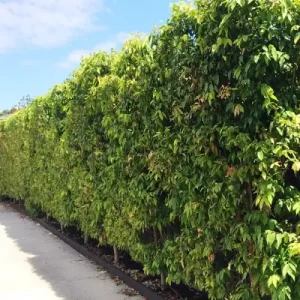

So if you’re in the sort of area where you might be worried by severe frost say in the high country out around Daylesford or something like that where you might be in trouble with Ficus Flash, you may find that Ficus Hillii has got that extra frost resistance you need.

Now the Ficus Koh is also quite frost resistant as well. So in extreme frost areas, you might consider the Ficus Hillii or the Ficus Koh instead of the Flash. The Flash can take quite a bit of frost but not as much frost as the Hillii or the Koh.


Drainage


The next problem that people have with Ficus Flash is drainage. Now where you have very, very bad drainage or where the ground’s likely to become flooded or super duper wet for long periods that’s not good for Ficus Flash. A bit of wet feet can stunt them but a lot of wet feet will actually kill ’em.

So it’s good to put in an agricultural drain or raise the garden bed up a bit. It doesn’t have to be extremely well drained for the Ficus Flash. But they do have to be at least moderately well drained and always be careful not to put them into a really sort of a wet hollow.

Shade

Now another weak point of all of your Ficus is shade. Now if you are planting a Ficus hedge and you have one end that is hot and sunny and the other end is only getting a little bit of sun then what I’d do is plant advanced, well grown Ficus Flash in the slightly sunny area and smaller, less developed ones in the very hot sunny area.

But if you’ve got one end of where you want to plant it that is lovely and sunny and the other end that is always in shade because there’s a 3-storey building next door, well that’s not really a spot for Ficus Flash. This is more a place for something like Sweet Viburnum because it seems to grow quite happily in complete shade, which is where your Ficus really falls down. So if you’ve got no sun at one end of your garden and lots of sun at the other end and you want the same hedge all the way through, consider Sweet Viburnum.
Fertiliser


A person using a shovel to plant fertiliser in a garden.

Another thing to remember about Ficus Flash and this is true of a lot of evergreens, if you’re growing your Ficus in a pot, you’ll find that even though you might be putting fertiliser like Osmocote on it every three months or six months or whatever, you might find that it starts to yellow after a while. So you put on a bit more fertiliser and it doesn’t even pick up and you don’t know what to do.

A bucket of osmocote all purpose.What’s actually happening here is that when you buy a fresh new potting mix its got quite a good dose of calcium in it. Now calcium is represented as dolomite lime or lime. So your fresh new potting mix that you planted your Ficus Flash in had a good dose of calcium in it at the start and evergreens like Ficus need calcium to help them get the nitrogen out of the soil. And then when there’s no calcium left, they can’t have access to the nitrogen. There’s sort of a blockage there.

So if you’re growing Ficus in pots and they’re yellowing and they’re not responding your NPK fertiliser such as Osmocote, what you’ve got is a calcium or lime deficiency. I recommend that if you’re growing them in pots, at least once a year at a minimum and perhaps twice a year, you should put a really good dose of dolomite lime in there. Now don’t do that at the same time as your Osmocote because the calcium and nitrogen tend to conflict a bit with each other.

So if I had some Ficus that had been in say 20 inch or 24 inch pots for a long time and they were yellowing a little bit, not really greening up, I’d put a really big cupful of dolomite lime into the pot and spread it around. Let it soak in for a month or so, and then I’d put my Osmocote on. This will have a good effect and you’ll get them green and growing again.

So basically summing the limitations of your Ficus Flash, there’s your roots, there’s your frost, there’s your drainage, your shade, and also having them yellow through a lack of calcium. But you can solve all of those as I just explained.

Where to Plant it & How Long it Takes to Grow


Ficus Flash Growth, before after

Ficus Flash Hedge pool screeningSo where are the most popular places where you can use your Ficus Flash. The No. 1 use is probably the swimming pool or where you’re wanting some privacy from the road or from the apartments or flats next door and you need it fast. You need it to look green and lush and you want it to look classy. But you don’t want it to be sparse, you don’t want it to be see-through. Well, what you can do is plant your Ficus in a one metre spacing and Osmocote them every six weeks in the warm weather. Really drown them in water once a week and give ’em a few squirts through the week and you can grow them well over a metre a year. Now depending on how high you need them, well in 2, 3 or 4 years you’ll have that problem solved completely.


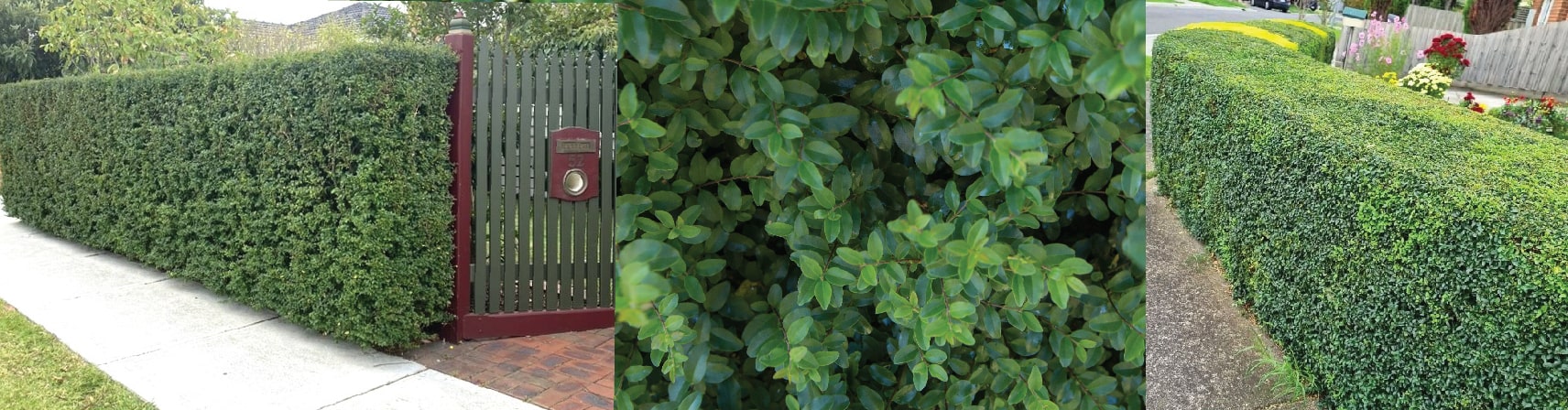
Ficus Flash pots sizesNow some people want to know how fast Ficus Flash can grow in metres. Well that depends. The bigger they are when you get them, the more growth you can get from them. So I’ve seen customers buy the 16 inch pot, which normally would stand about 1.8 meters tall and I’ve seen them grow up to 3 metres in a year. But if you were to get a 6 inch pot, I would say that it would take 2 years in Melbourne conditions to have that up to just over 2 metres tall.

Basically with Ficus Flash the bigger you buy them, the more growth potential they have that year. So if you buy fairly advanced ones, they have the ability to grow more than a metre a year with perfect conditions and lots of sun and lots of heat. Probably the upper limits of what you can achieve is about one and a half metres in a year.

Now if I’m growing Ficus Flash near a pool for a big screen, I’d want them quite tall so I’d probably start with planting 1.8 metre plants in 40-50 cm pots. I wouldn’t go for those big long planters as they will end up too close together and that can be very expensive. Better to have say 40-50 cm cubes and space them out a bit and you’ll get a nice, evenly space hedge.

Now there are some really good videos on Ficus Flash if you just click the video icon at the top right corner of this website page and that will take you to our youtube channel. Just search Ficus when you are there.

Ficus Flash Hedge pool screening

Ficus Ball

1023281401

Hello Hello Plants Nursery Campbellfiled Melbourne Victoria Australia Essence of Toorak Gardens Landscape layering ficus flash hedging boston ivy chinese star jasmine groundcover formal garden topiary cones

Ficus Ball

Hello Hello Plants Nursery Campbellfiled Melbourne Victoria Australia Essence of Toorak layered garden formal garden topiary tree hedging buxus boston ivy ficus

Ficus-1

Ficus-3

Ficus-pleached

Ficus BallAnother popular application for Ficus Flash is using them as standards – say up the side of the driveway or up the side of the garden path, where you want to have something that’s never going to get too big. The old Ficus ball on a stick in many ways beats the standard rose because the standard rose might look fabulous in flower, but it can look pretty spongy in the winter. Whereas your Ficus Flash done as a ball on a stick looks green and lush in summer, maybe not quite as good as a standard rose covered in flowers but nearly as good. But then it looks really good right through autumn and winter and right through spring when the rose is looking a bit yuck.

In Closing

So there you have everything you need to know about the Ficus Flash, where you can use it, it’s limitations and how you can overcome them.

If you want really good deals on Ficus Flash, search this website and you’ll see you can get great prices on all our Ficus range.

Till next time, bye from Chris!

Feeling inspired to create your own garden, but want some expert advice? Try our one-on-one garden design service with Chris. Together you’ll come up with a selection of plants along with a layout plan that gives you the look you want, as well as being suitable for your local soil and conditions.

get your own tailored modern garden design:


FIND OUT HOW

Articles you may also like

Hello Hello Plants 10 Tips to get a garden ready to sell a house

10 Tips to get a garden ready to sell the house

Selling your house? You’ll want to get the most you can for it. And you’ve probably spent a lot of time thinking about how it will look on the inside. Maybe some styling and professional photography. But think about this. What’s the first thing someone sees when they pull up outside your home? Your garden of course. If it doesn’t look like a million dollars, you might be hard pressed getting that figure at sale, even if the inside does look fantastic.

With a lot of competition and many people looking to sell, buyers can pick and choose. When you’re in a buyers’ market like this, you have to do everything you can to make your property as appealing as possible. The garden is one of the most affordable parts of your property to invest money in to create a positive impression and boosting your sale price.

So, what are our 10 tips for getting your garden ready when you’re selling your house?


This article is drawn from decades of experience helping Melbourne property owners prepare their gardens for sale. We have helped thousands (we counted) of people with garden makeovers as part of our Free Garden Design service with Chris! If you are considering selling a property, find out more about this service here.


Top 10 Tips for getting your garden ready to sell

  1. Know when to start
  2. Set a date
  3. Step back and take a good look
  4. First impressions count – don’t forget the nature strip
  5. How’s the lawn looking
  6. Get help to make a plan
  7. Map out the garden beds
  8. Set a realistic budget
  9. Getting the agent in
  10. Don’t forget the finishing touches

1. Know when to start

House for sale in Australia with garden

Getting your garden ready for selling your home can take time. Gardens aren’t as easy to change overnight, like a room. We’ve worked with contestants on reality TV shows like the Block doing garden makeovers, and the five star service, big budgets and magic of television can make it seem very rapid. In an ideal world, you should start work on the garden 3-6 months before you plan to sell your property.

This gives you the time to be able to prepare the garden for sale. It takes time to do things like repair your lawn, get rid of the weeds and fill out the garden with new plants. The plants themselves take time to grow and flower and become their best.

Customers shopping bargains
Use bargains to fill your garden

Plus, if you leave enough time before you sell, you can be looking around for bargains in your local nursery that won’t blow your budget. You can also economise by buying smaller plants that will be nice and bushy once auction day rolls around.

If you have left it to the last minute, we can assure you it can be done (so don’t panic). We always have great bargains available and can help you out with the plant choices that are going to look the best, even if you didn’t leave quite enough time. Consider taking advantage of our free garden design service if this is you.

Back to list: Top 10 tips for getting your garden ready to sell


 2. Set a date

Selling your property garden preparation calendar

When Chris is doing a garden design for someone planning to sell their property, the first question he asks is “when?” Knowing when to start getting a property and it’s garden ready for selling, and exactly what to do with the garden, has a lot to do with the date and season you will be selling in. When doing that long range planning, remember you’ll be selling in a different season to the one you’ll be working in. So how your garden looks now, compared to how it will be looking in 3 months or 6 months’ time, could be very different.

The flower bulbs you plant today might be dead in 3 months. But conversely the shrubs you plant today will be in full bloom then. Or its autumn now and you’re looking at a beautiful red maple but you’re going to sell in June and by then that maple will have dropped all its leaves so it won’t look as gorgeous. So don’t focus on making your garden look wonderful now: think and plan ahead for the season you will be selling in.

Back to list: Top 10 tips for getting your garden ready to sell


3. Step back and take a good look

Chris from hello hello plants surveying the garden work to be done

Now you’ve set a date and before you start actually doing anything to get the garden ready for selling the house, do one thing (but do it carefully). Take a big step back from your house. Stand across the road from it and try to look back at your house, like you’ve never looked at it before. We all get used to seeing our place day after day but try and imagine you’re a new person seeing it for the first time. Try and get the big picture.

What is really obvious about your place and your garden? What really stands out about it? What’s the first thing everyone will see. Is there a big tree that perhaps looks a bit ugly but actually hides an even uglier corner of the house? You might decide that even though it’s ugly, the alternative is worse.

Yes or no, what needs to stay and what needs to go in the garden

What else do you see? A ratty old rose bush? If you trim it up now, will it be in full bloom when it comes time to sell?

You have to be a little ruthless at this point. You can’t keep things just because you like them if they don’t really do anything for the place. But equally, it’s expensive to buy in a fully grown new tree to replace one you chopped down. Better to plan around keeping it, as once you chop something down, it’s very hard to put it back up again.

Back to list: Top 10 tips for getting your garden ready to sell


4. First impressions count – don’t forget the nature strip

Well designed nature strip garden gives curb appeal

You might think that the first impression someone else makes of your property is your front garden. But there’s something else out in front of it that often gets forgotten – your nature strip! So think like this – the front of your property actually starts at the kerb.

Are there big patches in the nature strip that could do with repair or reseeding the grass to get it to grow. How does the grass look? Does it need weeding? Are the edges neat and trim?

What else could you do to make it look even more appealing? It might be something simple like plant some flowers in it. How does the tree on the nature strip look? Is it some terrible old thing the council planted years ago but it looks neglected. Could you shape it into something better, or even rip it out and replace it with something nicer (in consultation with your council of course)?

Back to list: Top 10 tips for getting your garden ready to sell


5. How’s the lawn looking?

Lawn preparation and maintenance

If you’ve got a big front lawn, it’s often the thing that most dominates how your front garden looks. Therefore, repairing or replacing it is vital to get your garden ready to sell. This is another reason to start months ahead, because repairing a lawn can be very cheap if you have plenty of time.

Repairing your lawn

If you have given yourself some months to prepare, you can repair your lawn a couple of ways. The first method is using lawn seed.

  1. Get some topsoil and rake it over the lawn.
  2. Then stab it with a fork to aerate it a bit.
  3. Sprinkle some seed and fertiliser over it.
  4. Bingo, you have repaired your lawn.

After this, the next trick is to get your lawnmower out and cut it nice and high. Most people cut their lawns way too short. If you cut it high, it will be green and luscious after a couple of months. It will also help to even out all the dips and lumps in your lawn.
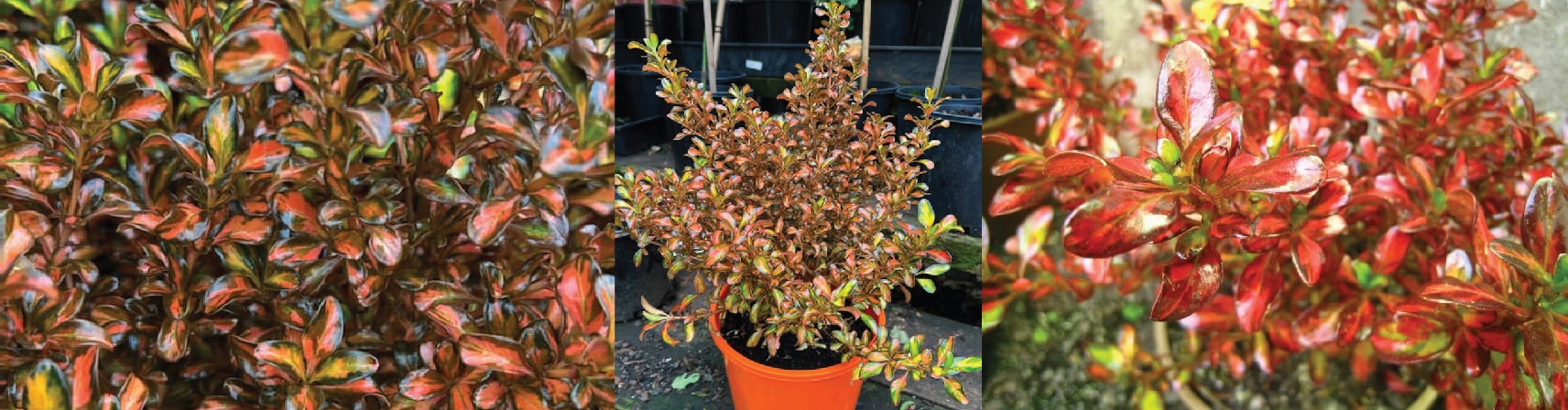
The second method of repair is great if you have some sections of your lawn that are really bad, Lay some strips of turf in them, and in a few months’ time they will have grown into the lawn and it will all blend together. Again, this is why starting to prepare your garden to sell with plenty of time to spare pays off.

Laying fresh turf to replace a lawn

Replacing your lawn

If you want a to create a big impact or don’t have much time to prepare your garden for selling your house, consider replacing your lawn with brand new turf. Some people also opt to replace lawn areas with new garden beds or alternatives such as groundcover lawn alternatives.

Back to list: Top 10 tips for getting your garden ready to sell


6. Get help to make a plan

Chris and Male Customer in garden design area

After you’ve worked out what to do with your lawn and nature strip it’s time to start planning the garden itself. This is where it really helps to get some advice, because it can be a little overwhelming and there are many ways to go wrong.

[one_half]

Chris helps a customer with a garden design

[/one_half]

[one_half_last padding=”0 0 0 20px”]

Once you’ve worked out what you’re going to get rid of and the key assets you’re going to keep, you need to think about what might fill the gaps. Talking to an expert at your local nursery can be vital here, because they can tell you the RIGHT plants to plant, based on your budget, timing of the sale, etc. You won’t waste money on the wrong plants, or get plants that won’t in their best condition for sale day.

We do have a FREE Garden Design Service which many of our customers use at this stage of getting their garden ready for sale. This provides you with expert advice at effectively no cost.

[/one_half_last]

But before you book in for a garden design consultation, there’s one little step you need to do.

Back to list: Top 10 tips for getting your garden ready to sell


7. Map out the garden beds

Reviewing an empty garden

Mapping out the garden beds is an important part of your planning. You need to know how much space you have to fill, and different plants have an ideal spacing. Knowing the size of the beds is key to knowing how many plants you will need, so they don’t look either too empty or too crowded.

Having a sketch of your garden beds with measurements will ensure that any nursery person helping you can give you the best advice. So take a walk around the garden and say to yourself, “OK I’ve got a 3 metre bed over here, and an 8 metre bed down the fence line there and another 2 metre bed over here”… etc etc

Basic garden sketch for planning a gardenDraw out a little plan so that when you do go to the nursery, you can work methodically through what you need for each bed. If you come to see us at Hello Hello Plants for a Garden Design, Chris will happily walk around the nursery with you and show you options for the various different garden beds. If you’ve done a map or sketch it will help you visualise “well this could go there and that could go here”.

If your local nursery person can’t picture how your garden looks it’s harder for them to give you the right advice. Take some photos too, so they can see how it looks now and the gaps or holes you are trying to fill, etc

Back to list: Top 10 tips for getting your garden ready to sell


8. Set a realistic budget

Budgeting for a garden when selling the house

When you’re preparing your garden to sell your house, it’s important to set a realistic budget. If you’ve got a property that’s in the range of $2 million, you’re not going to do it justice with a budget of $1,000. But if you’re just selling a 2-bedroom unit with a very compact garden, that would be more than enough, even too much.

You need to set the budget according to both the quantity AND quality of the plants you might need to buy. Given the total value of your property, the garden is often the best return on investment you’ll ever get. This is because you can spend a comparatively small amount of money and make your place look fabulous from the outside, but you might need to spend 10 or 50 times as much inside to get the same impact.

Big house needing garden makeover
Ensure your garden budget does the property justice for the best sale result

If you’ve mapped out your garden beds, you can basically work out the key types of plants you’ll need. You don’t have to know exactly which plants you’ll be buying, but you should have a good idea in broad terms– something small and pretty here, something big and bushy over there. When you get to your local nursery they will want to know a budget.

If you browse through our website to find plants you like and add them to your cart with roughly the right quantities, it will tally a total for you and you’ll start to see whether or not your budget is realistic. Keep in mind that you may have to opt for larger size plants if your sale date is close.

Back to list: Top 10 tips for getting your garden ready to sell


9. Getting the agent in

Another critical aspect to your timing when getting your garden ready to sell your house, is when you get the agent in to take a look at the place. And remember, the first thing they will see is your garden too. So they will form a very quick first impression of your place and this will influence what they think you can get for it, possibly setting their expectations too low. If you get them in when the garden hasn’t had the work done, they are likely to be a bit down on your place.

The risk here too is that agents will often give you advice on the garden, and sometimes agents don’t make the best gardeners and they might not offer you the best advice.

However, if you get them in when you’re closer to being ready to sell and the garden is starting to look close to its peak, then they will be more optimistic about the sale and set their expectations higher.

Back to list: Top 10 tips for getting your garden ready to sell


10. Don’t forget the finishing touches

Pressure washing to prepare garden for sale

Once you’ve done everything you wanted to do in the garden and you’ve got the lawn looking great, the nature strip too, the garden beds all planted out, don’t forget the little touches as well.

How’s the driveway looking? Could it do with a pressure wash? How about the fence? Any repairs needed there? Missing boards? A coat of paint? The rocks or bricks around the garden beds. Is there some brickwork that needs repairing? Rocks that need replacing or even cleaning?

Just look for anything that brings down the quality of your garden. Sometimes those little extra touches, those 1% things can add 10% to how the whole thing looks.

Back to list: Top 10 tips for getting your garden ready to sell


In summary

So here you have it: Our top 10 tips for getting your garden ready when you are selling your house. Remember that a buyer is going to see your place and quickly form an opinion. First impressions count, and they will quickly pick and choose. If the garden doesn’t look good then you might not even get to first base.

They’ll be thinking “gotta fix the bathroom” “gotta fix the kitchen”… “oh and I gotta landscape the garden… ah too much work!” If you can fix up your garden economically and quickly, a potential buyer can roll up to your place and think “well at least the garden’s done” and hopefully “WOW!”

Gardens don’t fix as quickly as a kitchen or bathroom does with a quick coat of paint and some new handles for the cupboards, so start early. And if you have left it all to the last minute, it pays big time to get some professional advice on the best things to do to prepare your property’s garden for sale.


Articles you may also like

The Top 10 Plants for creating an instant garden transformation

Top 10 Plants for Creating an Instant Garden Transformation

Are you looking for plants to create an instant garden? Or maybe you have a large, blank canvas of an outdoor space and you have no idea where to start in filling it. In this article we have a few quick tips and tricks for instantly filling out your garden space.

The first key aspect of achieving an instant garden transformation is using some fast growing, easy to maintain plants. These are placed to create barriers, borders and edging or, in some cases, shelter or wind breaks to make way for future plantings.

This is where our Top 10 plants for creating an instant garden transformation come in! These carefully selected plants can easily and quickly transform your garden space into a beautiful garden.


Top 10 Plants for Creating an Instant Garden Transformation!

  1. Ligustrum ‘Box Leaf Privet’
  2. Robinia ‘Mop Top’
  3. Cupressus ‘Leighton Green’ Conifer
  4. Glauca Pencil Pine
  5. Canary Island Ivy
  6. Carpet Rose Pink or White
  7. Dietes ‘Butterfly Grass’
  8. Pyrus ‘Everscreen’ Ornamental Pear
  9. Myoporum ‘Fine Leaf’ Creeping Boobialla
  10. Erigeron ‘Seaside Daisy’

Honourbale Mentions


How to use plants in a new garden for an instant effect

Here are some quick tips and tricks for instantly filling out your garden space without waiting years and years to see results.

  • For larger spaces such as rural properties and acre blocks, it is easier start by breaking up the area into smaller spaces, just like building outdoor “rooms”. This is done with hedges, screening trees or avenue style plantings of trees to create green leafy walls. Decide on the garden zones and how they will be used before worrying about the intricacies of individual garden beds. In some cases, you will need established plants around each area first to shelter your more precious varieties from direct winds, hot sun, or extreme weather.
  • In smaller gardens you may want an instant, fast growing hedge. It can also be worth investing in a feature plant or tree with great shape and colour that is already semi-advanced when you buy it. You can balance the budget by surrounding it with smaller but faster growing plants that will still look fantastic themselves in sometimes less than half a year. This makes make the yard instantly more inviting, rather than a blank space of dirt or grass.

[one_half padding=”0 20px 0 0″]

If you have questions about which plants will create the best effect in the shortest possible time in YOUR space, region and conditions and within your budget, try our Garden Design Service. Chris can assist and guide you in your garden make-over, finding the right style of garden as well as the perfect plants with the right maintenance level for your personal backyard space.

[/one_half]

[one_half_last padding=”0 0px 0 0″]

[/one_half_last]


 1. Ligustrum ‘Box Leaf Privet’

When asked for a fast growing box border or medium hedge that doesn’t flower, we always go for the hardy Box Leaf Privet. This tough shrub grows incredibly fast and in almost any soil type. In just one year you can have a 1 metre tall hedge or a 2m tall hedge in 2 years! It’s also very affordable, so you can give yourself a head start by buying larger plants that are already well on their way to becoming a hedge at the time of planting.

Back to list: Top 10 Quick Transformation Plants


 2. Robinia ‘Mop Top‘ 

Robinia ‘Mop Top’ are the perfect feature tree for an instant garden make-over. The soft, delicate foliage creates ample shade during the summer and forms a big, beautiful mop, hence its name! As it is a little bush grafted to the strong trunk of a Robinia, they maintain their moppish shape without becoming overly huge. In just 12-18 months you’ll have a fully established beautiful feature or avenue tree!

Back to list: Top 10 Quick Transformation Plants


3. Cupressus ‘Leighton Green’ Conifer 

Leighton Green

For instant hedging, look no further than the ‘Leighton Green’ conifer! This hardy hedging plant can be trimmed and trained into a 1.5-2m hedge in just under 2 years. ‘Leightons Green’ are evergreen and non-flowering so they create very little mess. They are also very good at blocking out sound, pollution and wind.

Back to list: Top 10 Quick Transformation Plants


4. Glauca Pencil Pine

The Glauca ‘Pencil Pine’ is a traditional Mediterranean or Formal style garden plant that grows 1.5m in a year. They can be used to frame an entrance, as neatly trimmed topiary in pots or containers, as a tall, narrow, low maintenance screen in a tight space or to line an avenue or driveway. Due to their natural tall narrow shape, Glauca ‘Pencil Pine’s draw the eye and can lead someone’s attention to a focal point.

Back to list: Top 10 Quick Transformation Plants


5. Canary Island Ivy

If you’re after a versatile, fast growing climber or groundcover, ‘Canary Island Ivy’ has got you covered! It is a dense, evergreen climbing plant that is often used as a neat, dense groundcover under trees. ‘Canary Island Ivy’ can transform a dull fence, arbour or patch of ground within 2 years!


Back to list: Top 10 Quick Transformation Plants


6. Carpet Rose Pink or White

These low growing rose bushes flower for almost 8 months of the year, flooding your garden with gorgeous colours of white, pink and even ambers, golds and reds! Carpet Roses are semi-evergreen, and only losing their leaves in extremely cold climates (that makes us safe here in Melbourne). They are relatively self-shaping and require very little maintenance once established. Often seen in council plantings due to their hardiness.


Back to list: Top 10 Quick Transformation Plants


7. Dietes ‘Butterfly Grass’

‘Butterfly Grass’ are beautifully hardy clumping grasses that are widely used in council plantings, landscaping and rural gardens due to their neatness and durability. They produce gorgeous white flowers with a splash of purple and yellow on the inside of the petals. Dietes flower for long periods and will fully establish within 1.5 years. They’re wonderful for pots & containers, borders and edging or as garden fillers.

Back to list: Top 10 Quick Transformation Plants


8. Pyrus ‘Everscreen’ Ornamental Pear

Of all the Ornamental Pears, the ‘Everscreen’ or ‘Winter Glow’ is the only one to not lose its leaves in winter, in warmer climates. So in the suburbs of Melbourne these handsome trees maintain their gorgeous glossy foliage throughout the year and produce minimal flowers during spring. ‘Everscreen’ make wonderful avenue and driveway plants as well as screening from the neighbours. Plus their roots are non-invasive.

Back to list: Top 10 Quick Transformation Plants


9. Myoporum ‘Fine Leaf’ Creeping Bobbialla

A beautiful native groundcover and incredibly tough. ‘Fine Leaf’ Myoporum is a dense growing groundcover that is used to retain soil on embankments, help suppress weeds or can even be used as a lawn replacement. It produces tiny white star-shaped flowers during the warmer months and can grow in almost any soil type, including really hard clay!

Back to list: Top 10 Quick Transformation Plants


10. Erigeron ‘Seaside Daisy’

Hello Hello Plants Nursery Campbellfield Melbourne Victoria Australia Erigeron Seaside Daisy Daisyspray

Don’t let the delicate flowers of the ‘Seaside Daisy’ fool you. This Cottage Perennial can grow in most soil and climatic conditions, and require very little maintenance. ‘Seaside Daisy’ will grow to its full size in just 1 year in the right conditions and will flower for 8-9 months. They’re also good for pots, containers, garden fillers and borders.

.


Back to list: Top 10 Quick Transformation Plants


Honourable Mentions for Instant Garden Transformations: 


Populus ‘Crows Nest’ Poplar 

If you want fast screening on a large property, look no further! These are incredibly hardy, tall growing trees that can reach 7m tall in just 2 years! ‘Crows Nest’ Poplars are narrow growing but are good at screening out eye-sores as well as blocking high winds.

Back to list: Top 10 Quick Transformation Plants


Alnus ‘Evergreen Alder’

For hardy screening plants, ‘Evergreen Alders’ are the best in the business. These tough trees handle horrible soils such as hard clay or even soggy, water-logged areas as well as full sun and frost. But for their best performance plant in a loose, well draining soil, water well, and you could have a 5m tall screen in just one year! Their delicate green leaves are similar to that of a Silver Birch, just without the white trunk.

Back to list: Top 10 Quick Transformation Plants


Sign up for our newsletter below

Do you enjoy these garden tips? Be first to know when we publish new articles on plants & gardening, tailored for people in Melbourne and regional Victoria.

We will send you gardening tips, great deals, and exclusive giveaways. Happy Gardening!

Hello hello plants Top 10 Winter Colour Plants Melbourne Victoria Australia

Top 10 Plants for Winter Garden Colour!

Our picks for plants to bring colour to your winter garden. When we think about winter, we think about the cold, rainy days and dull landscapes. Many people prefer to retreat to the warm and cozy indoors since many trees are bare, there are very few flowers blooming, and the garden has lost its usual appeal. If that is the case for your garden, this list is perfect for you! There are so many plants to pop in the garden to make it look great year-round and entice you back into the garden, even on the gloomiest of winter days. These are colourful, winter hardy, and easy to grow!


And don’t forget, winter is the best time to plan and prepare your garden for the warmer growing months. So now is the best time to prepare your soil, get mulching and if you’re really in need of help, book a Free Garden Design with Chris!


Top 10 Plants for Winter Garden Colour!

  1. Dwarf Nandina
  2. Coprosma ‘Pacific Sunset’
  3. Euphorbia ‘Blackbird’
  4. Loropetalum ‘Plum Gorgeous’
  5. Euphorbia ‘Ascot Rainbow’
  6. ‘Sweet Mist’ Flax
  7. Coprosma ‘Evening Glow’
  8. Acer ‘Senkaki’ Japanese Maple
  9. Callicarpa ‘Beautyberry’
  10. Yellow or Red Stemmed Dogwoods


Honourbale Mentions


 1. Dwarf Nandina 

This hardy plant reaches a size of approximately 40 cm x 40 cm and demands minimal maintenance. Nandina domestica ‘Nana’ or ‘Dwarf Nandina’ thrives even in poor soil conditions and colder temperatures, these conditions can often result in an even more vibrant shade of red. Consider utilizing Dwarf Nandina as a border or as infill among other shrubs. When mass-planted, its red hues will warm your garden. 

We have a few different varieties of Nandina available, check them out here!

Back to list: Top 10 Winter Garden Colour


 2. Coprosma ‘Pacific Sunset’ 

This Coprosma provides brilliant red foliage that intensifies as the weather cools down. Reaching a height of approximately 1 to 1.5 m, it serves as an exceptional choice for both hedges and standalone specimens. For an even more striking effect, consider pairing it with Helichrysum ‘Licorice’ or other silver-foliaged plants, this will really make the Coprosma pop.

Back to list: Top 10 Winter Garden Colour


3. Euphorbia ‘Blackbird’ 

As the winter chill sets in, this Euphorbia, known for its compact growth, takes on an even more intense hue of deep purple. In my own garden, I have it surrounded by a low cover of Dimondia ‘Silver Carpet’, creating a beautiful colour contrast where the euphorbia blackbird dominates and stars in the garden.

Back to list: Top 10 Winter Garden Colour


4. Loropetalum ‘Plum Gorgeous’

This slow-growing shrub displays a crisp, deep purple colour that intensifies during the winter months. As winter comes to a close, its deep purple foliage is sprinkled with bright pink, spidery-petaled flowers, creating a striking contrast against the dark purple foliage.

We have more than the ‘Plum Gorgeous’ variety of Loropetalum available too. Check them all out here!

Back to list: Top 10 Winter Garden Colour


5. Euphorbia ‘Ascot Rainbow’

Reaching a compact size of approximately 60 cm x 60 cm, this Euphorbia variety boasts beautiful autumn tones of soft green and yellow, complemented by hints of pink and orange. It looks particularly attractive during the winter season.


Back to list: Top 10 Winter Garden Colour


6. ‘Sweet Mist’ Flax

Many New Zealand flaxes tend to grow to massive sizes, posing potential challenges, however, the ‘Sweet Mist’ variety offers a dependable solution. This dwarf flax reaches an approximate size of 40 cm x 40 cm, and it’s most appealing feature is it’s exquisite purple foliage with pink undertones. Use it as a low border or mass plant them to fill a garden bed with colour.


Back to list: Top 10 Winter Garden Colour


7. Coprosma ‘Evening Glow’

This incredibly resilient plant can be trimmed into a low to medium hedge or, you can let it flourish as a stunning specimen. Its foliage presents a captivating blend of colours, featuring an exciting speckled mix of yellow, pink, green, red, and purple all at once. During the summer, its hues lean towards yellow and green, while the reds and purples intensify as the colder months set in.

Back to list: Top 10 Winter Garden Colour


8. Acer ‘Senkaki’ Japanese Maple

The ‘Senkaki’ Maple is a small, upright tree with a vase-shaped growth habit. Its small, soft green foliage takes on a stunning array of gold, pinks, oranges, and reds during the autumn season. When the leaves fall in late autumn, a brilliant show of bright scarlet red stems and branches is revealed. Feature it in a pot or within a garden bed, and consider adding a spotlight to create a night-time garden spectacle.

Back to list: Top 10 Winter Garden Colour


9. Callicarpa ‘Beautyberry’

This medium-sized bush produces a colourful treasure trove of tiny, brilliant purple berries that glisten under the winter sun. It serves as an excellent choice to create a point of interest in your garden and provide vibrant winter colours.

Back to list: Top 10 Winter Garden Colour


10. Yellow or Red Stemmed Dogwoods

Two popular varieties of Dogwood are known for their captivating winter-coloured stems. Reaching heights of approximately 1.6 m, the Red Stemmed Dogwood, boasts vibrant red stems, while the Yellow Stemmed Dogwood showcases bright yellow stems. These varieties are ideal for incorporating into floral art. By pruning them back during winter, you can encourage the growth of rich clusters of colourful stems, that can create a very strong winter feature.


Back to list: Top 10 Winter Garden Colour

Hello Hello Plants Nursery Melbourne Victoria Australia Acer palmatum Senkaki Coral Bark Japanese Maple Winter Red Stem

Honourable Mentions for Winter colour: 


Oak Leaf Hydrangea 

A colourful, winter joy, this hydrangea holds a special place as my favourite. Its charm lies in its low-growing nature and the combination of interesting, large, lush green oak leaves and elongated white hydrangea flowers. As summer and autumn unfold, the flowers gracefully fade, and the large oak leaves take on various shades of burgundy. These colourful leaves persist, adding vibrancy to the garden until the arrival of spring when the rich burgundy foliage is replaced with lush green growth.

Back to list: Top 10 Winter Garden Colour


Viburnum ‘Awabuki’

This vigorous, medium-growing evergreen shrub is popular to plant as a medium to tall hedge. Throughout the spring and summer seasons it showcases large, deep green, glossy foliage. During winter this plant is adorned with clusters of vibrant red berries. Additionally, a small percentage of the foliage turns a glossy, brilliant red that persists until spring, when new shoots emerge. The combination of these stunning elements—a sprinkling of brilliant red leaves and berries among the rich, glossy green foliage—creates a truly beautiful and interesting feature.

Back to list: Top 10 Winter Garden Colour

Here are some more articles you may like:

Sign up for our newsletter below

We will send you gardening tips, great deals, and exclusive giveaways. Happy Gardening!

Select the fields to be shown. Others will be hidden. Drag and drop to rearrange the order.
  • Image
  • SKU
  • Rating
  • Price
  • Stock
  • Availability
  • Add to cart
  • Description
  • Content
  • Weight
  • Dimensions
  • Additional information
Click outside to hide the comparison bar
Compare