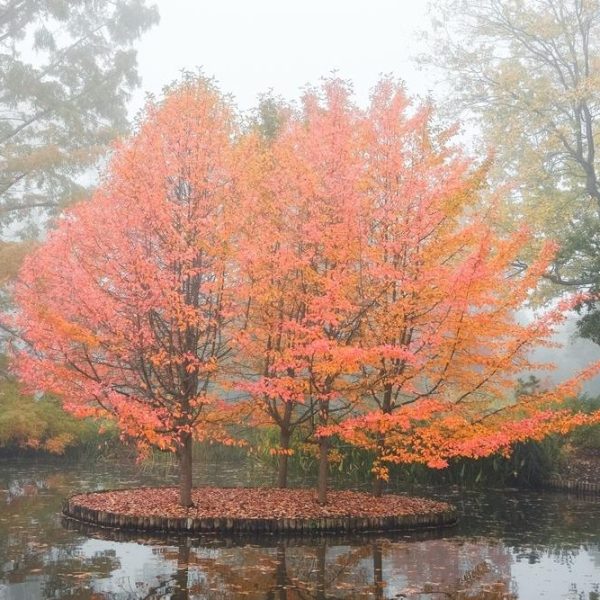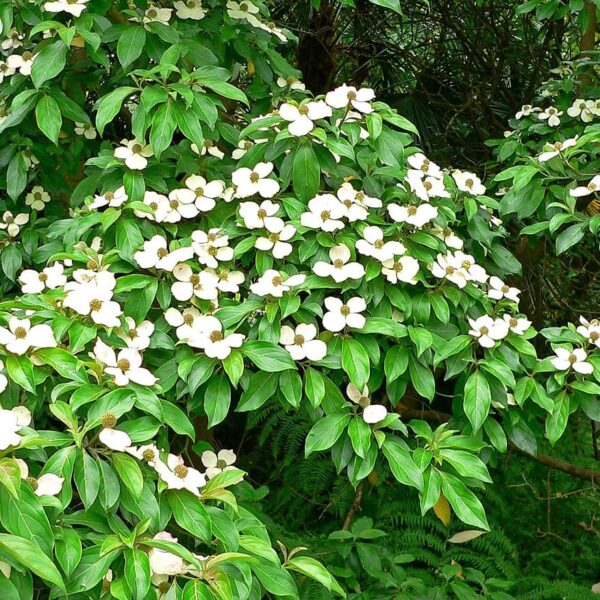
| Description | Nyssa sylvatica
Beautiful deciduous specimen tree with pyramidal shape. A magnificent tree in autumn when the leaves turn orange to scarlet. Likes moist , moderately fertile, well drained soil in full sun. Tolerates wet conditions well. Also names the Black Tulepo, has a fast growth habbit and is a spectacular feauture tree.
6"/14cm pot | Cornus capitata
Also known as an Evergreen Dogwood, Cornus capaitata is an evergreen, rounded, low branched tree with dense, oval, lanceolate, grey/green foliage. In spring it produces bracts of creamy to lemon-yellow flowers which turn to large, juicy, scarlet fruits (but they are tasteless). They attract lots of birds when in fruit and are generally a very attractive and hardy garden specimens. An excellent ornamental specimen tree best suited to medium to larger gardens, as the look really good at a distance as well as up close.
8'' pot | Cedrus deodara
Himalayan Cedar is an evergreen conifer with gracefully spreading branches that grows to 20 - 40 meters in height. It has a fast growth rate initially but slows with age.
Himalayan Cedar Trees are hardy once established and require minimal water too. Grows best in a position of full sunlight. Ideal for golf courses, large gardens and parks. | Chrysanthemum cinerariifolium
Pyrethrum Daisy or sometimes called Dalmation Daisy is a fragrant, perennial herb with perfect little white daisy flowers. It is a wonderful Cottage garden shrub, attracting many bees and butterflies as well as fending off predatory pests in the vegetable garden.
Pyrethrum is a hardy little plant, thriving in full sun positions, tolerating most soil types (except soggy soils) and requires moderate to low water once established. Prune after flowering to keep neat and to reduce spread as they can self sow their seeds after flowering. | Metrosideros collina
Little Dugald is a new variety and a close relation of the Meterosiderous Fiji Fire and Thomasi (New Zealand Christmas Bush) Its better than these as it flowers and flowers and did I say it flowers !!! Frequent flushes of bright red bottle brush like flowers. The little birds love them. It is a tougher plant and for all the right reasons is becoming more popular than it’s Meterosiderous relations, it is good for smaller to medium hedging applications
6''/14cm pot size |
| Content | | | | | Metrosideros collina 'Little Dugald'
Little Dugald is a great plant for a low to medium sized hedge, growing between 1-2m high x 1m wide. It is an extremely versatile shrub that can withstand a light frost, wind and salt tolerant (making it ideal for exposed coastal situations), can be grown in full sun or part shade and is drought tolerant once established. It produces masses of bright red flowers toward the end of Spring right through to the end of Summer which provide plenty of nectar for the local native birds. Prune lightly after flowering to keep maintain it’s shape and compact growth. An application of slow release fertiliser at the start of Spring will encourage new growth and guarantee flowers at the end of Spring. |
| Additional information |
|
| |
| Botanical Name |
Chrysanthemum cinerariifolium, Tanacetum cinerariifolium
|
| Other Common Names |
Dalmatian Chrysanthemum, Dalmation Pellitory
|
| Origin |
Balkans
|
| Plant Type |
Perennial Shrub
|
| Life Cycle |
Perennial
|
| Sunshine |
Afternoon Sun, Full Sun, Part Shade
|
| Tolerances |
Pollution Tolerant, Poor Soil Tolerant, Heat Tolerant, Drought Tolerant
|
| Soil Type |
Clay, Loam, Loamy – Clay, Sandy, Sandy – Loam
|
| pH |
Acidic, Alkaline, Neutral
|
| Water Requirement |
Low
|
| Fertilise Me |
April, May, October, September
|
| Fertilizer Frequency |
When needed
|
| Best time to plant |
|
| Planting Distance |
2 – 3 per metre
|
| Max Height |
0.5m
|
| Max Width |
0.5m
|
| Growth Speed |
Fast
|
| Prune Me |
after flowering
|
| Size Maintained at |
0.3m
|
| Flowering |
Yes
|
| Flowering Time |
April, December, February, January, March, November
|
| Flower Colour |
White
|
| Fragrance |
Strong
|
| Foliage Colour |
Green
|
| Autumn Colour |
|
| Fruit / Seed |
No
|
| Attracts |
Bees, Butterflies
|
| Toxic To |
Non-toxic
|
| Uses |
Fragrance, Attracts Butterflies, Cut-Flower, Insect repellent
|
|
|