| Description | Sophora japonicum pendula
The Weeping Pagoda tree, known sometimes as the Weeping Japanese Pagoda tree or the Weeping Chinese Scholar, is a beautiful ornamental tree of small size. It's branches droop delicately, and sometimes as they grow they twist, adding yet another aesthetic appeal. The leaves have a light-coloured almost feathery appearance from a distance, and they turn a pretty yellow before they fall in the Autumn.
These Weeping Pagodas are grafted varieties with a tall straight main trunk. This means they will not grow beyond a total height of roughly 8-9ft. Perfect for a small garden. Loves full sun and a well-draining soil. | Correa alba
A popular choice amongst council and parks landscapers due to its set-and-forget nature, the Correa is a attractive, hardy and versatile perennial shrub.
• White star-shaped flowers with rounded, velvety leaves
• Will grow in both full sun or part shade, tolerating harsh Australian soil and weather
• Responds well to pruning, making neat hedges or even native topiary | Lavandula angustifolia
Traditionally English Lavender was grown for its heavenly fragrance, used in oils and potpourri.
• Small, slender blue-ish purple flowers on tall stems above the foliage
• Grown in pots, as a hedge or in the cottage garden to attract bees and butterflies
• Tolerates drought and dry conditions, preferring well drained soils
6"/14cm pot | Syzygium australe
Grow a thick, bushy hedge in no time. What you do behind it is your business!
• Thick, glossy green hedging with red tinged new growth
• Australian native
• Easy to maintain and fast growing |
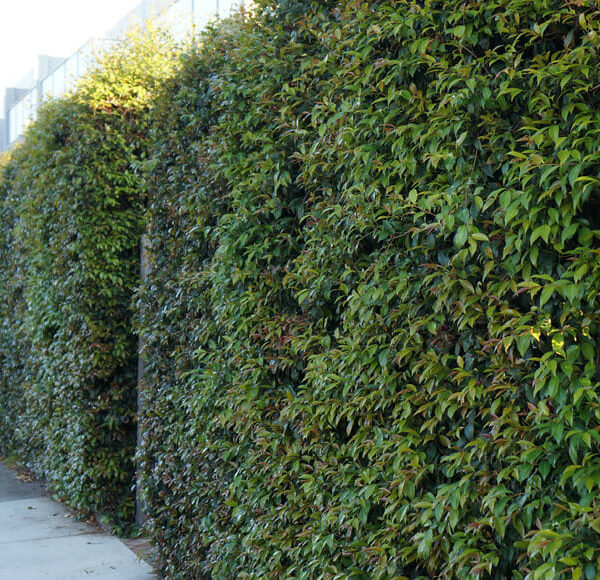
| Content | | | | Neighbours-Be-Gone Trees can grow two or more metres per year once established. Neighbours-Be-Gone Trees have deep green, dense, fine foliage and copper red new growth and can grow two or more metres per year once established, and love to be clipped and shaped. They grow in full sun through to light shade and withstand mild frost, wind, heat and drought. They thrive in almost any soil including heavy wet and occasionally waterlogged soils.
Neighbours-Be-Gone Trees can be used to create tall screens, large hedges and large topiary. They can be planted in pots or confined areas. Although they have the potential to grow into large trees, their size can be contained by regular clipping. The trunk and roots only grow to serve the needs of the crown of the tree, so the trunk and root system will remain small, while the tree is being kept small by regular trimming. Neighbours-Be-Gone Trees are a long living tree that don’t become woody or sick from long-term regular pruning. A well maintained Neighbours-Be-Gone Tree hedge or topiary can last for many decades.
Neighbours-Be-Gone Trees are a select form of Acmena smithii and are exclusive to Hello Hello Plants. They were developed by Chris 20 years ago, and Neighbours Be Gone is actually a trademark that belongs to the Hello Hello group of companies.
Back in 2003 Chris was holidaying in Los Angeles and noticed that the most popular hedge was an Australian Native Lilly Pilly. At that time, the main hedge being grown in Melbourne was the Silver Sheen Pittosporum, and Lilly Pilly's were a product that was shipped down from Queensland. They were expensive, and many of the Queensland varieties did poorly in Victoria.
Chris decided to make a Lilly Pilly hedge that was tailor made for Melbourne. He chose a variety of Lilly Pilly that had been cultivated and had done well in Melbourne for the last 100 years. It grows all year round, is tough, drought tolerant and hedges beautifully. Now the "Neighbours Be Gone" is one of Melbourne's most popular hedges!
For more information on this great hedging and screening plant, see it's Growing Guide. |
| Additional information | | |
| height x width |
1m x 1m
|
| planting distance |
For border: 50cm
|
| features |
Narrow aromatic grey-green leaves and slender spikes of tiny fragrant purple flower spikes during summer
|
| conditions |
Sunny open position in well-drained soil, lavender will not tolerate wet feet, please read Wet Feet Kills, prune after flowering
|
| landscape use |
Borders, hedges, single specimens, containers, cut flowers, pot pourri, oil, lavender sachets
|
|
|