| Description | Centella asiatica
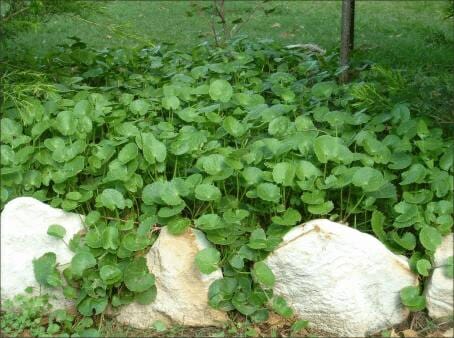
When we think about herbs we think of things like parsley, sage and thyme, which all originate from Southern Europe. We don't hear much about those from Asia, let alone native Australian herbs. "Gotu kola" is more commonly known here as the arthritis plant. This herb has been cultivated in India, China, tropical Asia and Africa for centuries. It comes from the same family of plants as parsley and it has close relatives in Australia. Some of the traditional claims made about the medicinal properties of this plant include ; the extension of life, control of tuberculosis and leprosy, relief of high blood pressure and the pain and swelling associated with arthritis as well as a treatment for cancer and irritating skin ailments. It has also been referred to as Indian Ginseng because of its stimulating effects on many parts of the body. The arthritis herb has been used as a medicine for thousands of years in countries where it grew naturally. It is claimed to have beneficial effect on a number of other ailments including psoriasis, ulcers, rheumatism, acute infections and inflammation, upper respiratory tract infections, diarrhoea, fevers and diseases of the female reproductive organs. Modern clinical tests on humans and animals have confirmed a positive effect in the treatment of skin ailments such as ulcers, burns and wounds. The recommended daily dose is two leaves of 40mm diameter per adult, or the equivalent in smaller leaves. The leaves have a bitter taste particularly if grown in full sun. You may be able to eat the leaves straight from the plant or alternatively they can be chopped up and used like a parsley garnish on salads or mashed potato. It is commonly used to flavour rice dishes in Southeast Asia. A weak tea can be made which you might like to sweeten with honey. The naturally occurring organic chemicals in the leaves include strong alkaloids and a carcinogen called asiaticoside. It is recommended therefore, that you do not exceed this dose as symptoms of headache, dizziness and insomnia have been reported. This plant also goes by the common name of swamp pennywort and this is a clue to its preferred environment, which is shady and swampy. In such a location this plant can grow very quickly. The arthritis plant can be easily grown in the home garden. It thrives under shade in pots, hanging baskets and particularly in bog gardens or by a pond. A good idea is to keep this plant in a confined position such as a tub to prevent it from escaping. And a good potting mix will see this plant take off quickly.
4" pot size. | Betula pendula youngii 'Weeping Silver Birch'
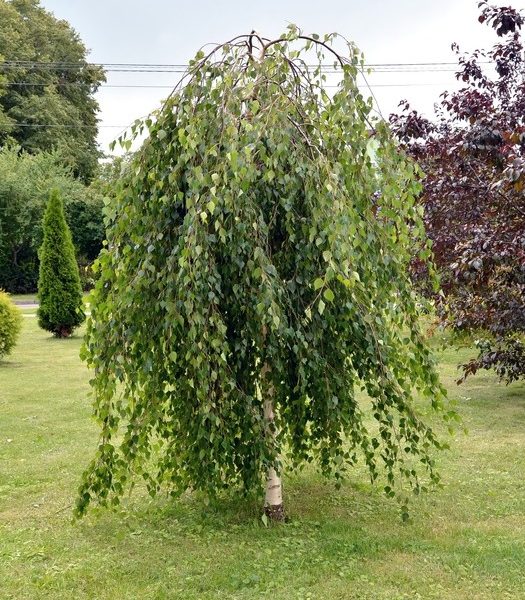
Weeping Silver Birch is a beautiful tree that is medium sized. Grows best in a position of full sun to partial shade. Silver Birch is great for larger gardens and parks etc. It's bark remains white at the base.
This tree is easy to grow and will thrive in most types of soil. This Weeping Silver Birch is deciduous and bears lovely small green leaves.
12" pot size, approximately 6ft tall. | Washingtonia robusta
Common names: Mexican Cotton Fan Palm, Mexican Fan Palm, Mexican washingtonia, Washingtonia palm.
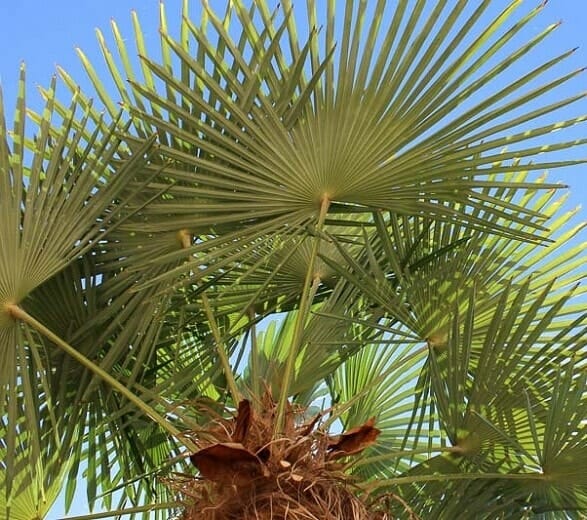
The Mexican Cotton Fan Palm is a medium-tall sized palm originating from Mexico. It can reach a mature height of 7m in Victoria's climate. It has large fan like fronds with remnant threads of foliage that appear like ‘cotton’ hanging from between frond segments. It is tough, drought and frost tolerant when established! It is a perfect addition for features and tropical gardens.
100 litre pot. | Azalea 'Alba Magnifica'
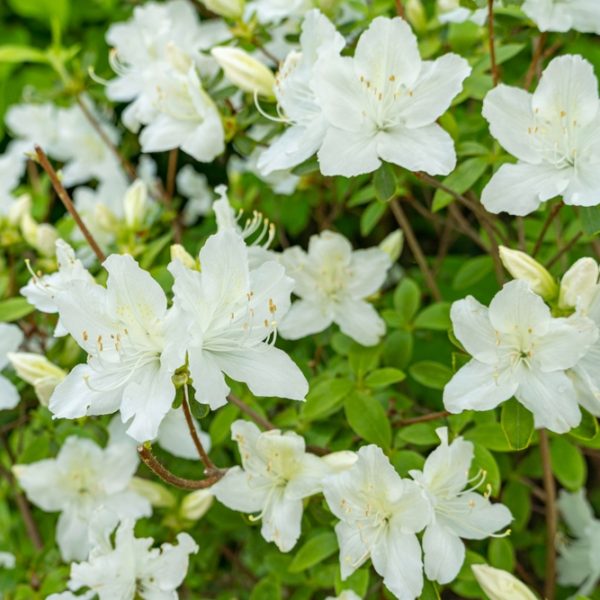
Azalea Alba Magnifica (Magnificent White) is a white flowering evergreen azalea which puts on a nice show in Spring. A great easy to grow flowering border or small flowering shrub, these Azaleas also look great mass planted in a bed.
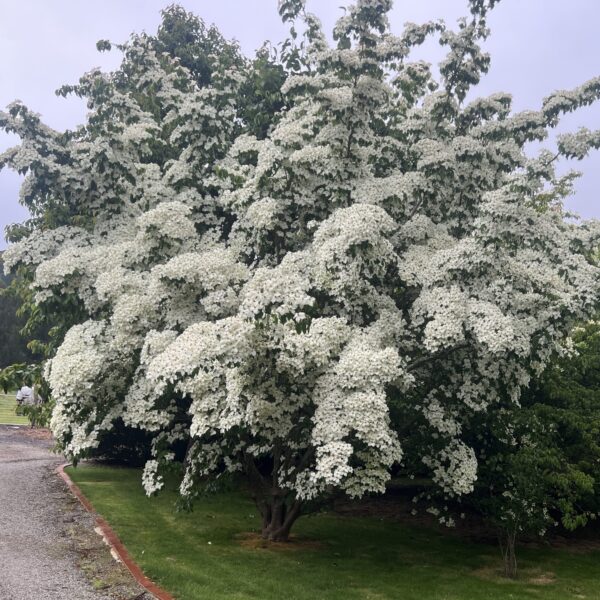
Azalea Alba Magnifica likes full sun or part shade, so it's also good for underplanting trees. | Cornus kousa var Chinensis, Kousa Dogwood, Chinese Dogwood
This is arguably the world's most beautiful dogwood, with a fabulous show of white flowers in spring, and magnificent autumn colour. A beautiful small (up to 4m) deciduous feature tree and is extremely beautiful when in bloom. Flowering season is late spring, weeks after the tree puts on foliage again.
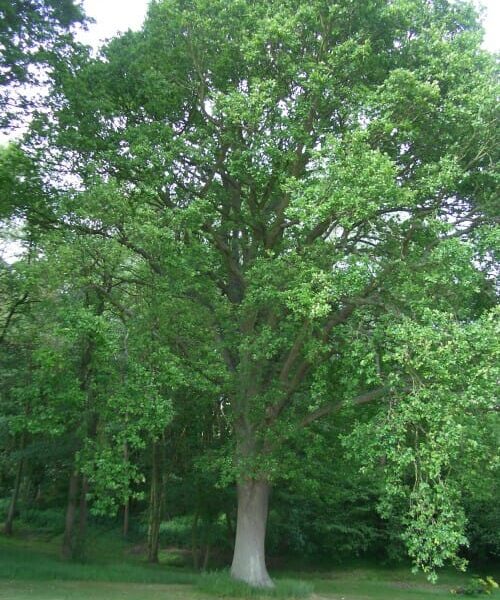
8" pot size | Quercus robur
English Oaks are famous for being solid and strong. The trunk and secondary branches are very solid and are covered in thick blackish-grey bark which makes it quite a sight.
The autumn foliage is a rich, dark brown. As the foliage is smaller than other deciduous trees, fallen leaves are not particularly difficult to eliminate and will not clog drains.
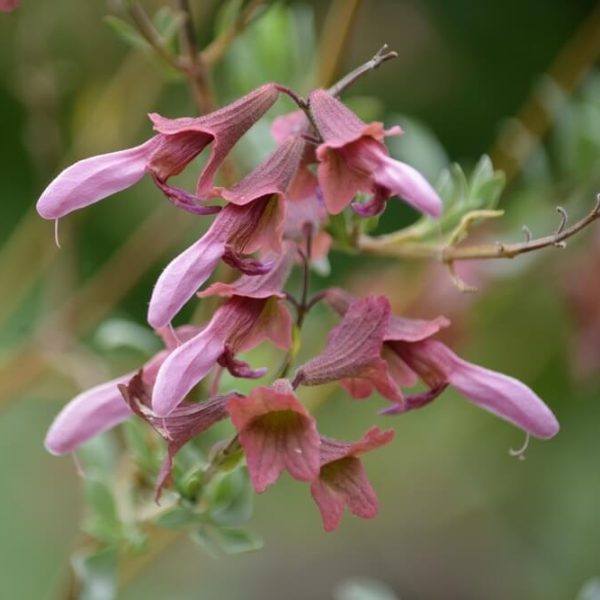
10"/25cm pot | Salvia lanceolata
Salvia ‘Sand Sage’ is a compact, evergreen shrub that features delicate sage-pink flowers and aromatic grey-green foliage, blooming generously from spring through autumn. A magnet for bees, butterflies, and other pollinators, it’s a perfect choice for low-maintenance borders, rockeries, and water-wise landscapes.
- Pale blush-pink blooms with a soft wildflower look
- Long flowering season: spring to late autumn
- Compact, bushy form ideal for small gardens and pots.
|
| Additional information |
| botanical name |
Centella asiatica, or Hydrocotle asiatica.
|
|
| botanical name |
Betula pendula ?Youngii?
|
| height x width |
Height of the standard x 3m at 20 years
|
| features |
Silver/white peeling bark, bright green small leaves, graceful long weeping branches
|
| conditions |
Plant in full sun to part shade in well drained mulched soil
|
| landscape use |
An excellent specimen for any garden, may be trimmed into more of an umbrella shape or left to weep to the ground
|
|
| botanical name |
Washingtonia robusta
|
| height x width |
6-10m tall, slow growing
|
| features |
The shiny bright green fronds are almost circular
|
| conditions |
Full sun in well drained soil, protected from heavy frosts
|
| landscape use |
Specimen, avenue
|
|
| botanical name |
Rhododendron indica 'Alba Magnifica'
|
| height x width |
60cm-1.5m x 80cm-1.8m [Depending on the cultivar]
|
| planting distance |
For border: 40-80cm
|
| features |
Masses of flowers bunched together in reds, pinks, white, mauve, purple, apricot, yellow and multi-colors during winter and spring, they give a fantastic show of color
|
| conditions |
Part shaded position protected from hot afternoon sun in an acidic soil
|
| landscape use |
Shaded areas, features, borders, mixed garden planting
|
|
| botanical name |
Cornus kousa
|
| height x width |
4m x 3m
|
| features |
Dense green foliage and tiered branches, the flower heads with large pure-white bracts appear, each bract ending in an acute point followed by red fruit
|
| conditions |
Sun to part shade in rich well-drained soil
|
| landscape use |
Specimen, group planting, general garden planting
|
| |
|