| Description | Rosa hybrid tea
Just Joey produces sweetly scented large, pale orange double blooms.
Approximately 2ft in height.
| Lavandula angustifolia
Traditionally English Lavender was grown for its heavenly fragrance, used in oils and potpourri.
• Small, slender blue-ish purple flowers on tall stems above the foliage
• Grown in pots, as a hedge or in the cottage garden to attract bees and butterflies
• Tolerates drought and dry conditions, preferring well drained soils
6"/14cm pot | Ginkgo biloba
The Ginkgo or Maidenhair Tree is remarkably known as a 'living fossil', as it is the sole survivor of an ancient group of trees that date back to beyond the time of the dinosaurs. It is a perfect specimen or feature tree due to its long life and showy light green leaves which turn golden in Autumn. The leaves are an interesting ruffled shape.
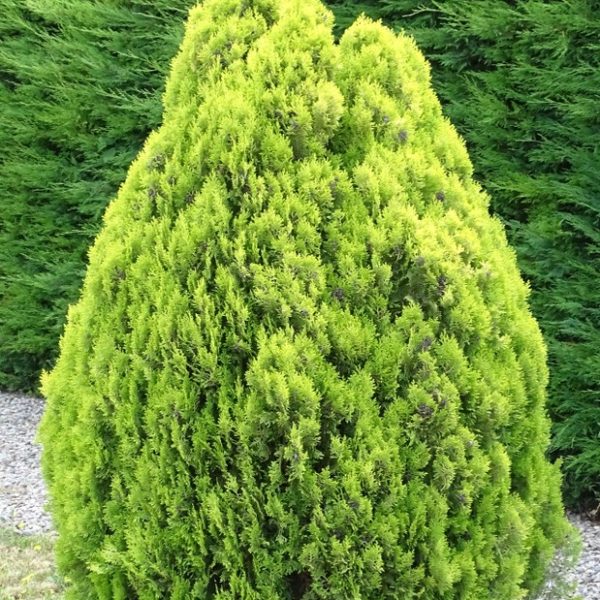
The Maidenhair Tree remains virtually unchanged today and represents the only living bridge between 'higher' and 'lower' plants (between ferns and conifers). Maidenhair trees can be extremely long-lived, the oldest recorded individual being 3,500 years old. | Thuja orientalis aurea nana
Short, stout self shaping conifer
• Soft foliage
• Low maintenance and drought resistant once established
• Ideal for hedging, along walkways and pots |
| Content | Roses are easily one of the most popular and widely cultivated groups of flowering plants. Numerous different cultivars have been produced over the last two centuries although roses have been grown for millennia before their popularity bloomed. Renown for their flowers and beauty they are also loved for other reasons such as their fruit, the rose hip which can be made into an old fashioned jam or for garden uses such as ground covers and hedging.
Roses range in size and variety from your standard and bush roses right up there with your climbers and weeping varieties, amongst all their beautiful colour, variety and hardy nature there is bound to be the perfect rose out there for your garden.
8" pot size. | | | Golden Biota Conifer is a dense dwarf shrub that has a dense form, with smooth edges. It is ideal for pots, walkways, hedging or borders.
A very hardy plant, the Golden Biota conifer does well in well drained soils. In summer the conifer turns to a marvelous shade of bright gold and turns green in the winter.
Being highly resilient to adverse weather conditions like frost, the Golden Biota conifer grows easily in various weather and soil conditions. All you need a semi-clay to well drained soil, adequate water in the warmer months and a yearly dose of all purpose fertiliser to grow a lush, healthy specimen. |
| Additional information | |
| height x width |
1m x 1m
|
| planting distance |
For border: 50cm
|
| features |
Narrow aromatic grey-green leaves and slender spikes of tiny fragrant purple flower spikes during summer
|
| conditions |
Sunny open position in well-drained soil, lavender will not tolerate wet feet, please read Wet Feet Kills, prune after flowering
|
| landscape use |
Borders, hedges, single specimens, containers, cut flowers, pot pourri, oil, lavender sachets
|
|
| height x width |
15m x 7m but slow growing
|
| features |
Lime-green fan shaped leaves with a thick texture that turn golden-yellow in autumn. this is one of the most ancient trees of the world
|
| conditions |
Full sun to part shade in well-drained soil
|
| landscape use |
Specimen, parks, street tree, avenues
|
| |