| Description | Lonicera nitida
Fast growing, fine leaf box hedging and topiary plant with a defined edge.
• Get your box hedge or topiary twice as fast!
• Responds very well to pruning, becoming beautifully dense
• Tolerates very poor soils and hot conditions | Prunus subhirtella pendula 'Rosea'
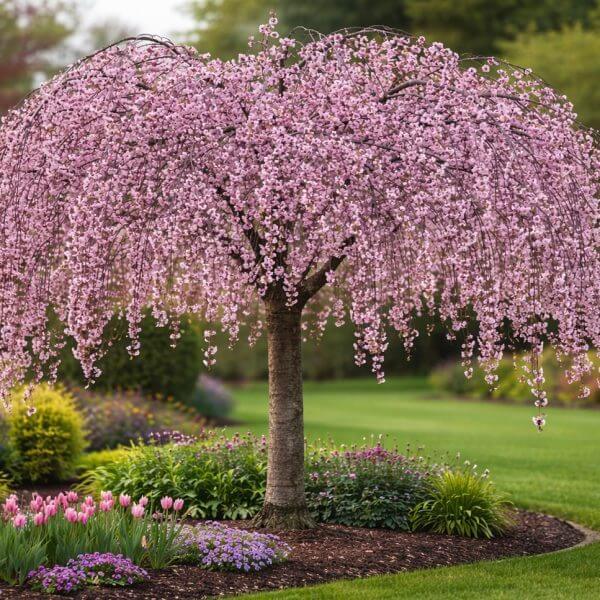
'Rosea' Weeping Cherry is a superb pink-blossoming tree that has both spectacular floral and foliage beauty. And it's adaptable to a wide range of conditions, including heat and moderate drought, the trunk only growing as tall as its graft height. A wonderful little landscape feature!
See our Prunus - Ornamental Blossom Factsheet here for more about the different cherry and plum blossom varieties! | |
| Content | BoxOz Lonicera has been specially developed by Chris, and is our exclusive hedging plant. It has a deeper green foliage, a denser finish and more clearly defined shape than the traditional English Box.
BoxOz Lonicera is the best plant with which to create your perfect hedge or border as it grows quickly and once your hedge has developed its easy to maintain with only a few trimmings a year. New shoots are soft and easy to cut and trimming is an effortless relaxing experience.
Some traditional hedging plants grow only an inch or two a year. BoxOz Lonicera will produce a calf high border in under twelve months, a knee high hedge in around 18 months, and a waist high hedge in 30 months. Almost any soil is suitable, as long as it is not too swampy. Fertilise your BoxOz Lonicera occasionally with a complete fertiliser, and water as required. | These pink weeping cherries are part of the Subhirtella species, which are weeping cherries grow wider than their other relatives. This makes them the best choice for a weeping shade and feature tree. You can literally sit under an umbrella canopy of blossoms in the spring!
The Weeping Cherry tree is a superb blossoming tree that has both spectacular floral and foliage beauty and high versatility. These trees are grafted which means they stay small and do not grow in height once planted. Instead they mature by growing a thicker trunk and a much fuller weeping head.
Highly recommended as a landscape feature plant, with masses of flowers in spring. It’s adaptable to a wide range of conditions including heat and moderate drought. Good disease resistance, flowers best in full sun.
The 'Rosea' pink weeping cherry is best kept out of the wind so as to retain the blossoms and autumn leaves for longer. Weeping cherries don't like soggy roots so plant in well draining soil or in a mound above the soil line to assist with drainage.
It's worth mentioning that weeping cherry trees are a type of ornamental cherry, which means they don't produce edible fruit but instead put their energy into beautiful flowers. | |
| Additional information |
| height-x-width |
Up to 1.2 metres, or trimmed lower
|
| planting-distance |
For border: 5 per metre For dense bushy hedge or border
|
| features |
Small attractive deep green leaves, fast growing
|
| conditions |
Full sun to part shade in well drained soil, trim regularly to promote bushy growth and maintain formal shape
|
| landscape-use |
Hedges, borders and topiary
|
|
| Botanical Name |
Prunus subhirtella pendula 'Rosea'
|
| Other Common Names |
Pink Weeping Cherry, Rosea Weeping Cherry
|
| Origin |
Japan
|
| Plant Type |
Weeping Tree
|
| Leaf Drop |
Deciduous
|
| Sunshine |
Full Sun, Part Shade
|
| Tolerances |
Pollution Tolerant, Poor Soil Tolerant, Soggy Soil Sensitive, Frost Tolerant, Heat Tolerant, Drought Tolerant
|
| Soil Type |
Loam, Loamy – Clay, Sandy – Loam, Well drained
|
| pH |
Acidic, Neutral
|
| Water Requirement |
Moderate
|
| Fertilise Me |
October, September
|
| Fertilizer Frequency |
Annually
|
| Planting Distance |
Min. 3m away from any other plant or object
|
| Max Height |
3m
|
| Max Width |
4.5m
|
| Growth Speed |
Moderate
|
| Prune Me |
after flowering, Only if required
|
| Flowering |
Yes
|
| Flowering Time |
August, November, October, September
|
| Flower Colour |
Pink
|
| Fragrance |
None
|
| Foliage Colour |
Green
|
| Autumn Colour |
Orange, Red, Yellow
|
| Fruit / Seed |
No
|
| Attracts |
Bees
|
| Toxic To |
Dogs
|
| Uses |
Feature Tree
|
| |