| Description | Pyrus calleryana
A narrow, upright form and an excellent choice for space-restricted or compact areas. Glossy green leaves in Summer, Plentiful white flowers pop up in spring and autumn colour of Reds, Oranges and Purples.
Great for fence lines, tree lined driveway, street planting or parks.
Grows in a column shape.
Can average 8-10m tall. Can be trimmed to keep at 6m if required.
16''/40cm pot | Lavandula angustifolia
Traditionally English Lavender was grown for its heavenly fragrance, used in oils and potpourri.
• Small, slender blue-ish purple flowers on tall stems above the foliage
• Grown in pots, as a hedge or in the cottage garden to attract bees and butterflies
• Tolerates drought and dry conditions, preferring well drained soils
6"/14cm pot | Anthriscus cerefolium
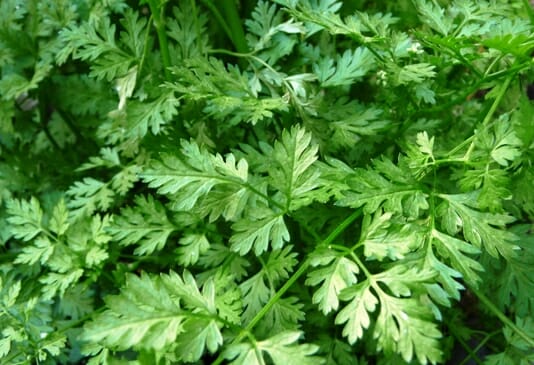
Chervil, sometimes called garden chervil or French parsley, is a delicate annual herb related to parsley. This plant is a native to the Caucasus, which is a mountainous region between Turkey and Russia. Chervil was spread through Europe by the Romans, and is now naturalised. The plants can grow up to 70cm tall and 30cm wide, and produces small white flowers. This herb is referred to as gourmet's parsley, and is used particularly in France to season poultry, seafood, spring veg, soups and sauces. It has a faint taste of liquorice and aniseed. Chervil is one of the four French "fines herbes" which are essential to French cooking. The other three are tarragon, chives and parsley. Unlike stronger herbs like thyme and rosemary which can withstand long cooking times, these "fines herbes" are added at the last minute. Traditionally, chervil has had many medicinal uses. It has claimed to be used as a digestive aid, for lowering blood pressure, and used infused with vinegar for curing hiccups! It has also been used as a mild stimulant. It prefers a cool and moist location, and regular harvesting of leaves helps to prevent it rapidly going to seed, which will bring the plant to the end of its production. | Aesculus hippocastanum
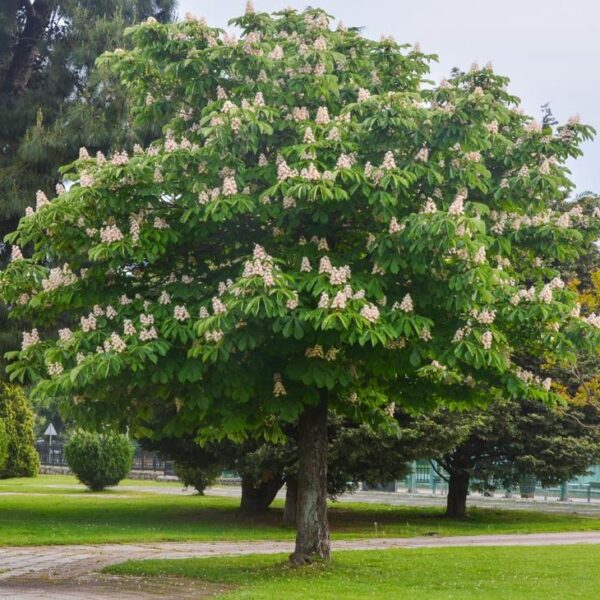
The Horse-Chestnut is a large domed, deciduous tree that is popular in the parklands of Europe and is also fairly common in the cooler areas of Australia. The leaves are large and palmately compound, while the creamy white flowers have a pink spot. They make excellent summer shade trees and are a handsome addition to larger spaces where you can appreciate their outline and attractive foliage which turns russet brown in early autumn, making a wonderful autumnal sight. These trees are best known for their spikey green fruit that contain shiny dark brown nuts or 'conkers'. Conkers particularly when fresh and young contains toxins and should not be eaten.
45 litre bag | Nandina Domestica "Blush"
Blush is a medium sized dwarf Nandina that is known for producing red new growth in Spring and Autumn. During Winter its foliage turns vivid red all over. This plant has a height and width of approximately 60cm.
Blush loves a locale of full sun to part shade. It tolerates drought and frost plus a range of different soils. Perfect height for fences, borders or hedging. Requires less water once established. | Sedum spurium
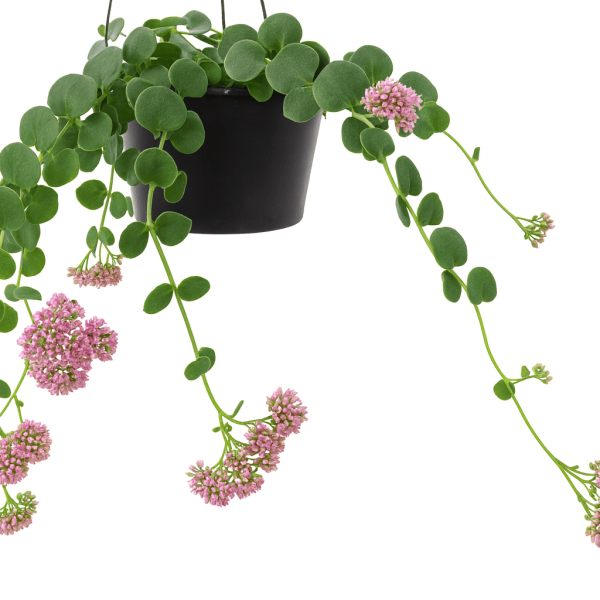
Add effortless charm to your indoor or outdoor space with Sedum ‘Trailing Pixie’, a delightful succulent known for its cascading stems and clusters of soft pink blooms. This compact, easy-care plant creates a beautiful waterfall effect, perfect for hanging baskets, balconies, and sunny patios.
- Compact trailing succulent with plump green leaves
- Produces soft pink flowers in warm months
- Perfect for baskets, balconies, or bright spots
5" / 12 cm pot (hanging basket) |
| Content | Ornamental pear trees are fast growing, tolerant of most soil types, including heavy and poor soils, and best of all they come in a range of shapes and sizes to suit your landscaping requirements.
Check out our Ornamental Pear Tree Factsheet for more info. | | | | | |
| Additional information |
|
| height x width |
1m x 1m
|
| planting distance |
For border: 50cm
|
| features |
Narrow aromatic grey-green leaves and slender spikes of tiny fragrant purple flower spikes during summer
|
| conditions |
Sunny open position in well-drained soil, lavender will not tolerate wet feet, please read Wet Feet Kills, prune after flowering
|
| landscape use |
Borders, hedges, single specimens, containers, cut flowers, pot pourri, oil, lavender sachets
|
|
| botanical name |
Anthriscus Cerefolium
|
|
| |
|