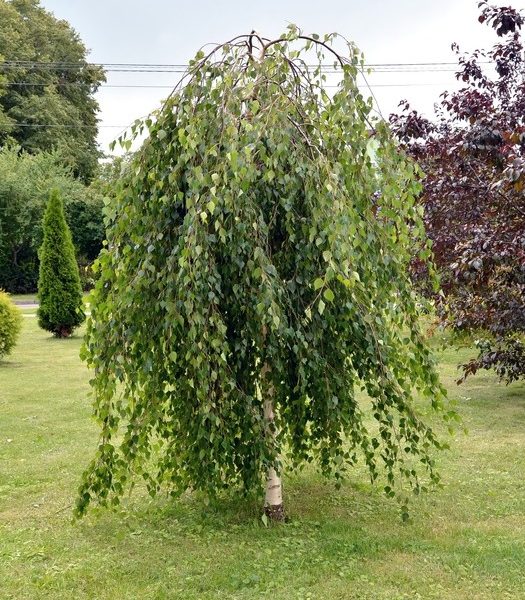
| Description | Betula pendula youngii 'Weeping Silver Birch'
Weeping Silver Birch is a beautiful tree that is medium sized. Grows best in a position of full sun to partial shade. Silver Birch is great for larger gardens and parks etc. It's bark remains white at the base.
This tree is easy to grow and will thrive in most types of soil. This Weeping Silver Birch is deciduous and bears lovely small green leaves.
12" pot size, approximately 6ft tall. | Syzygium australe
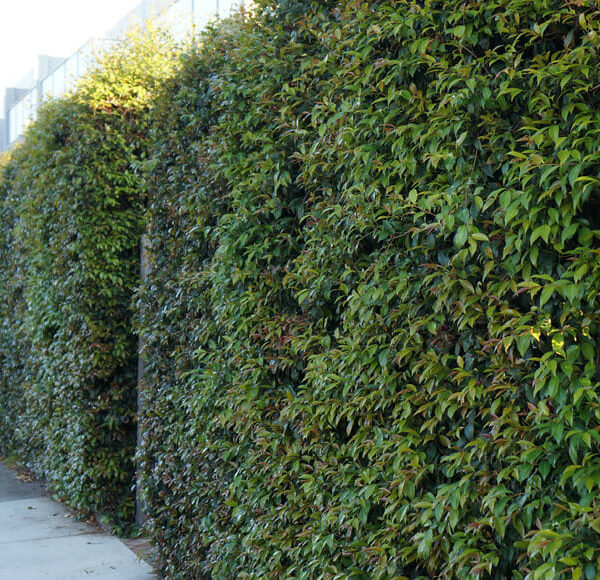
Grow a thick, bushy hedge in no time. What you do behind it is your business!
• Thick, glossy green hedging with red tinged new growth
• Australian native
• Easy to maintain and fast growing | Nandina domestica 'Nana'
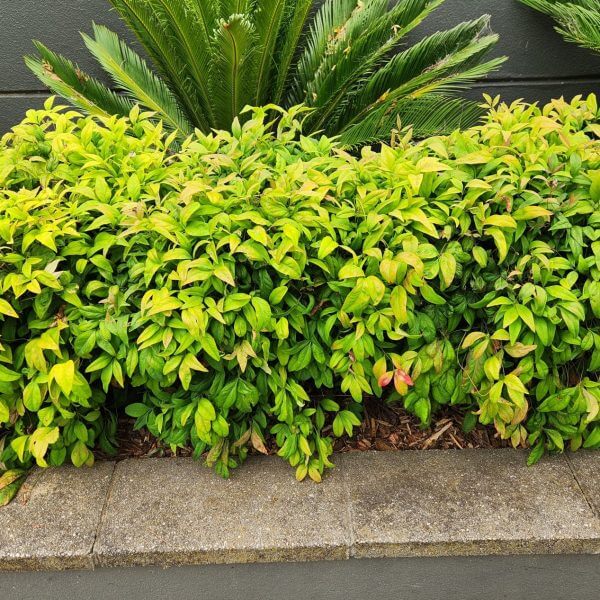
Dwarf 'Sacred Bamboo', commonly known as Dwarf Nandina, is a small self shaping, non-flowering shrub with colourful foliage.
• Green foliage in summer that changes to vibrant red in winter
• Very low maintenance and incredibly hardy
• Perfect for borders, edging, pots & containers | Agapanthus praecox minimus
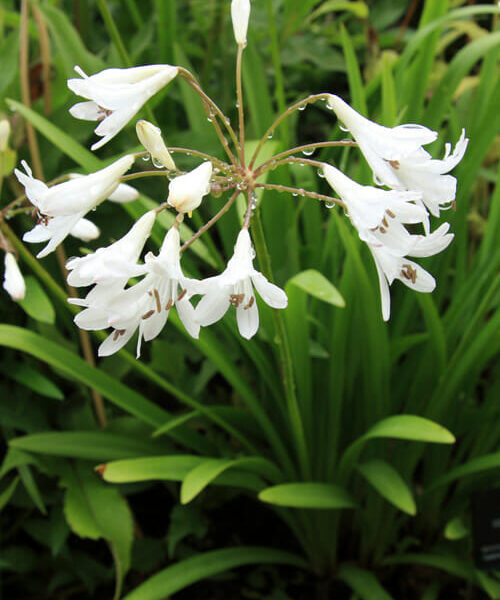
Dwarf Agapanthus are smaller and more compact, great for narrow borders and gardens with less space.
• Fine, strap-like lime green foliage
• White umbel flowers appear on tall stems above the foliage
• Extremely hardy, tolerating poor soils and drought
6"/14cm pot size. |
| Content | | Neighbours-Be-Gone Trees can grow two or more metres per year once established. Neighbours-Be-Gone Trees have deep green, dense, fine foliage and copper red new growth and can grow two or more metres per year once established, and love to be clipped and shaped. They grow in full sun through to light shade and withstand mild frost, wind, heat and drought. They thrive in almost any soil including heavy wet and occasionally waterlogged soils.
Neighbours-Be-Gone Trees can be used to create tall screens, large hedges and large topiary. They can be planted in pots or confined areas. Although they have the potential to grow into large trees, their size can be contained by regular clipping. The trunk and roots only grow to serve the needs of the crown of the tree, so the trunk and root system will remain small, while the tree is being kept small by regular trimming. Neighbours-Be-Gone Trees are a long living tree that don’t become woody or sick from long-term regular pruning. A well maintained Neighbours-Be-Gone Tree hedge or topiary can last for many decades.
Neighbours-Be-Gone Trees are a select form of Acmena smithii and are exclusive to Hello Hello Plants. They were developed by Chris 20 years ago, and Neighbours Be Gone is actually a trademark that belongs to the Hello Hello group of companies.
Back in 2003 Chris was holidaying in Los Angeles and noticed that the most popular hedge was an Australian Native Lilly Pilly. At that time, the main hedge being grown in Melbourne was the Silver Sheen Pittosporum, and Lilly Pilly's were a product that was shipped down from Queensland. They were expensive, and many of the Queensland varieties did poorly in Victoria.
Chris decided to make a Lilly Pilly hedge that was tailor made for Melbourne. He chose a variety of Lilly Pilly that had been cultivated and had done well in Melbourne for the last 100 years. It grows all year round, is tough, drought tolerant and hedges beautifully. Now the "Neighbours Be Gone" is one of Melbourne's most popular hedges!
For more information on this great hedging and screening plant, see it's Growing Guide. | Reasons to buy Dwarf Nandina
Loved for its attractive colourful foliage, Dwarf Nandina is one of the most popular varieties of the Nandina (Sacred Bamboo) family. Extremely versatile, and wherever you choose to plant it, its gorgeous colours will create a bright spot in any garden. Dwarf Nandina does not flower, and is loved mostly for its exotic coloured foliage. You will delight as its green/yellow foliage transforms through blush pinks in summer, before bursting in vibrant reds during winter.
Nandina grows quite low, remaining roughly as wide as it is tall which in the Dwarf (Nandina domestica nana) varieties is not much more than about 50cm tall. (It does also come in larger varieties, which we call Tall Nandina.)
Dwarf Nandina is quite a hardy plant that is suitable for most climate types. After establishing itself, it enjoys both lots of sun or partial shade, with a high tolerance for different temperatures. It even copes well with drought, but prefers soils with a little acidity that are well-drained and topped with a light sprinkling of compost. A light prune as new spring growth emerges is recommended to keep it neat, but it can do quite well with no trimming at all.
If you plant to buy Dwarf Nandina for planting in pots or containers, beware of overheating in summer. A deep soak every now and then helps. Apart from that it needs minimal maintenance.
It is equally at home in Coastal or Tropical Gardens, Mediterranean Gardens, Poolside, Courtyard and more. | |
| Additional information |
| botanical name |
Betula pendula ?Youngii?
|
| height x width |
Height of the standard x 3m at 20 years
|
| features |
Silver/white peeling bark, bright green small leaves, graceful long weeping branches
|
| conditions |
Plant in full sun to part shade in well drained mulched soil
|
| landscape use |
An excellent specimen for any garden, may be trimmed into more of an umbrella shape or left to weep to the ground
|
|
| |
| botanical name |
Agapanthus "Dwarf White"
|
| height x width |
45-50cm x 45-50cm
|
| planting distance |
For border: 30cm
|
| conditions |
Very hardy, like?s full sun to part shade in well-drained soil,
|
| landscape use |
Borders, general garden planting, pots, foliage contrast, cut flower
|
|