| Description | Prunus lusitanica
If you're looking for a really classy, deep green foliage hedge then buy Portuguese Laurels.
• Perfect for dense or pleached hedging and large standard topiary
• Long, elegant white flowers bloom in the warmer months
• Tolerates most soil conditions, full sun to part shade | Ficus microcarpa hillii 'Flash'
-One of the fastest growing hedges
-Evergreen and no mess from seeds or flowers
-Dense and lush Australian native
-High tolerance of poor conditions | Hybrid tea rose 'Champagne Rose'
A good cut flower with multi budded heads, medium sized blooms of a champagne to cream colour. Available as 2ft standard, 3ft standard and bush rose.
Available online ONLY - Not in store. |
| Content | For a hardy classic hedge or topiary you can't go past the Portuguese Laurel (Prunus lusticana). Portugal Laurel or Portuguese Laurel is a large evergreen bushy shrub that makes a very effective hedge or screen when kept clipped from 1-4 metres. With an inoffensive root system, frost hardy foliage and the ability to withstand harsh dry conditions, it the perfect plant for any troublesome garden.
One of the best reasons to buy Portuguese Laurels to create a medium to large hedge is that almost nothing eats it! No hideous bites will be taken out of the leaves from nasty little garden pests as the leaves have a rather sour taste, so many insects and animals are reluctant to have a nibble.
[one_half]
[/one_half]
[one_half_last]
Ideal for: Hedge, Screen or Pleached hedge
Growth Rate: Moderate- 30-60cm per year
Maintain at a Height of: 1-5m tall
Maximum Height: 4-8m depending on conditions
Soil Requirements: Quite tolerant of most soils, but if you want to pamper it, it enjoys slightly acidic, moderately fertile, moist, well-drained soils.
Maintenance: Low. Twice yearly trimming to keep it neat. Can produce berries that may need cleaning up.
Planting Distance: 60-90cm
Portuguese Laurels adds class and character to the formal or Hampton style garden. Also a popular choice in rural areas due to its hardiness. They like good drainage (find out more about drainage if you're unsure whether you should buy Portuguese Laurels here), otherwise they are very hardy, versatile and easy to shape and maintain.
When buying Portuguese Laurels for hedging and screening, you'll need about three for every two metres of hedge you want to create.
[/one_half_last]
| [one_half]
[/one_half]
[one_half_last padding="0 0 0 20px"]
Why buy ficus hedging plants?
One of the fastest no mess hedges, Ficus 'Flash' are chosen for their rapid growth, lavish green foliage and high tolerance of poor conditions. These gorgeous Australian natives produce no flowers and seeds therefore no mess! And their upright, dense habit lends them to being used as not just solid hedging but as topiary, standards and pleached hedging.
Ficus plants for pleaching
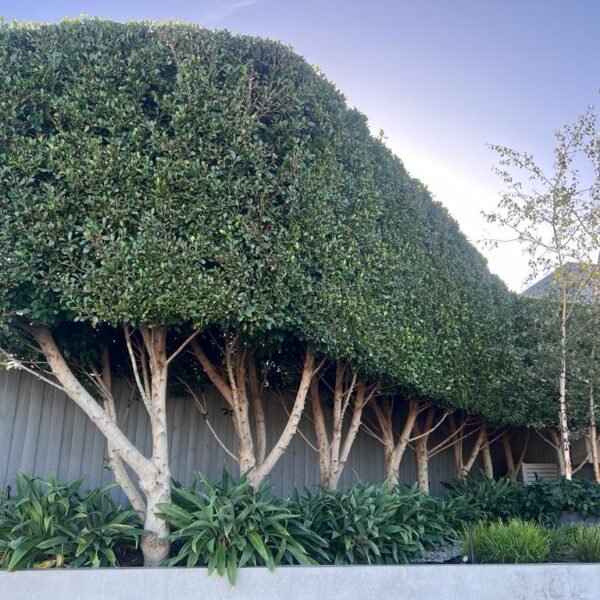
The beauty of the pleached hedge is that it is very good for small gardens as you can do a 2 or even sometime 3 layer effect. It allows for a garden bed underneath the hedge, maximising your gardens beauty, colour and depth.
It’s like having a 2 or 3 story garden as you really get the 2 story effect which is becoming more and more stylish in the modern garden. Pleaching creates another dimension to your garden!
[/one_half_last]
The secret with pleaching is that ficus are evergreen and pleach very easily, and are very lush and are fantastic for doing a pleached hedge.
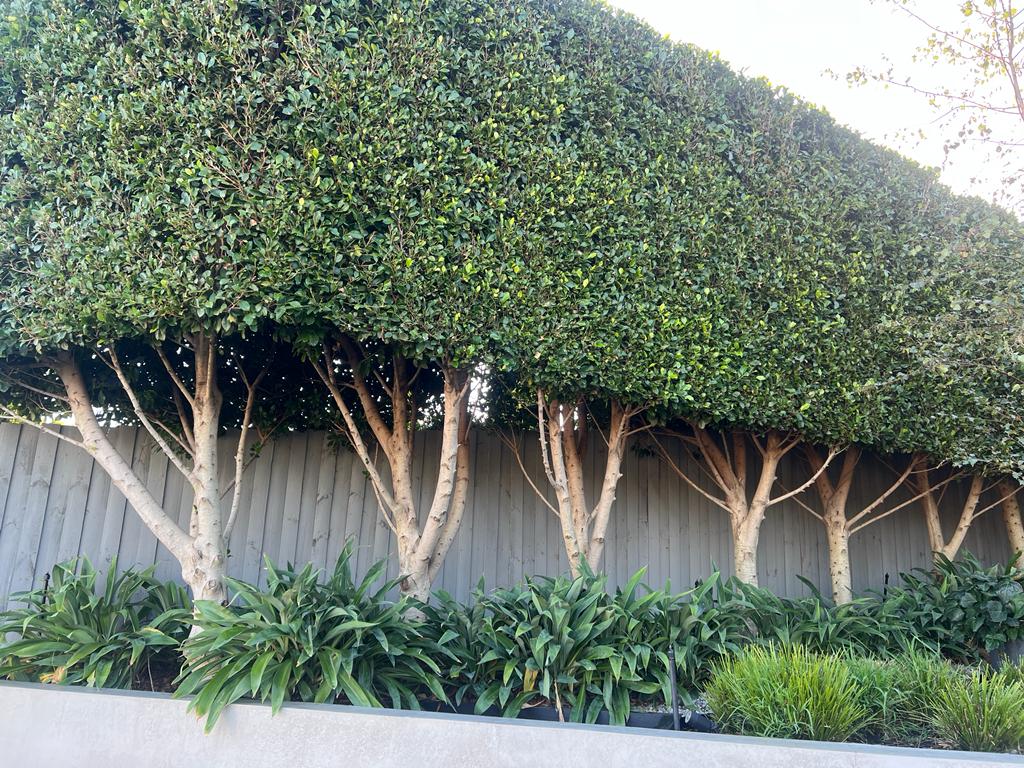 Also as Ficus hedge plants have gotten a bit of a bad name for growing an aggressive root system. The pleaching effect actually keeps the roots under control and allows for you to grow these Ficus in very confined spaces and gardens. These days with the rapid growth of our cities, lots of people are having smaller and smaller gardens!
See our Ficus Hedging & Screening Factsheet here for more about the different Ficus varieties!
Also as Ficus hedge plants have gotten a bit of a bad name for growing an aggressive root system. The pleaching effect actually keeps the roots under control and allows for you to grow these Ficus in very confined spaces and gardens. These days with the rapid growth of our cities, lots of people are having smaller and smaller gardens!
See our Ficus Hedging & Screening Factsheet here for more about the different Ficus varieties! | Roses are easily one of the most popular and widely cultivated groups of flowering plants. Numerous different cultivars have been produced over the last twu centuries, although roses have been grown for millennia before their popularity bloomed. Renowned for their flowers and beauty, they are also loved for other reasons such as their fruit. The rose hip can be made into an old fashioned jam. Roses range in size and variety from your standard and bush roses to climbers and weeping varieties. Amongst all their beautiful colours, varieties and fragrances there is bound to be the perfect rose out there for your garden. For more information on selecting and growing roses, visit our Rose Factsheet. |
| Additional information | |
| Other Common Names |
Evergreen Fig
|
| Origin |
Australia, Pacific
|
| Plant Type |
Tree
|
| Leaf Drop |
Evergreen
|
| Sunshine |
Afternoon Sun, Full Sun, Part Shade
|
| Tolerances |
Frost Sensitive, Pollution Tolerant, Poor Soil Tolerant, Salt Tolerant, Heat Tolerant, Drought Tolerant
|
| Soil Type |
Clay, Loam, Loamy – Clay, Sandy – Loam, Well drained
|
| pH |
Acidic, Neutral
|
| Water Requirement |
Moderate
|
| Fertilise Me |
December, February, January, March, November, October, September
|
| Fertilizer Frequency |
Monthly, When needed
|
| Best time to plant |
All Year
|
| Planting Distance |
1 every 80cm, 1 per 1.5 metres, 1 per metre
|
| Max Height |
10m
|
| Max Width |
3m
|
| Growth Speed |
Fast
|
| Prune Me |
3-5 times a year, Only in the warmer months
|
| Size Maintained at |
2m
|
| Flowering |
No
|
| Foliage Colour |
Green
|
| Fruit / Seed |
No
|
| Toxic To |
Dogs
|
| Uses |
Balcony, Fenceline, Hedging & Screening, Standard, Topiary
|
| |