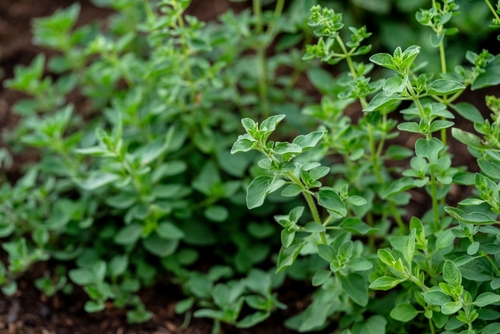
| Description | Sweet Marjoram is a delicately flavoured cousin or Oregano. It has mild pine and citrus flavours. It is native of North Africa, the Mediterranean region and South-Eastern Asia. Although it is a herbaceous perennial, it is treated by most as an annual due to its sensitivity to frost and cold temperatures. It like a sunny well drained position, and regular watering. It can grow up to 50cm tall, but due to its spreading nature is brilliant to use at the edge of large containers to trail, in hanging baskets, in rockeries and for borders. Excluding the roots, all parts of this plant is edible, even the little white or very pale pink flowers. This herb is great used fresh or dried. In the kitchen, sweet marjoram enhances many dishes, and is deceivingly strong. The tender fresh leaves are great in salads, or mixed with spring veggies. And used fresh or dried goes great in any tomato, pork or beef dishes. It also adds a nice flavour to pizza. When adding this herb to a hot dish, add it in the last 10 minutes of cooking. This herb has many remedy uses. It has been used as a therapy for headaches, toothaches, indigestion, asthma, rheumatism, flatulence, earache, epilepsy, as well as for providing relief from labor pains. The oil extracted from this herb has been used as a healing cream for bruises and sprains. Sweet marjoram is an excellent common tonic, and it has a more potent affect on the nervous system than its close cousin oregano. However pregnant women should not take this herb medicinally.
4"/10cm pot | Magnolia grandiflora 'Kay Parris'
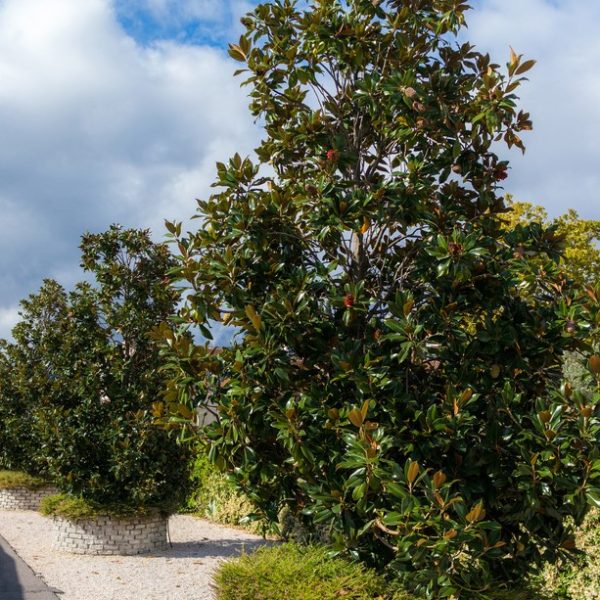
A compact and dense growing tree, 'Kay Parris' is another exemplary Magnolia for pleached screening or as a stunning feature. The glossy green leaves are somewhat more pointed than that of the 'Little Gem' or Alta™, yet it still sports the velvety brown underside one comes to know and love about Magnolia's.
'Kay Parris' large white flowers bloom during the warmer months, exuding that heavenly Magnolia lemony scent.
See our Magnolia & Michelia - Evergreen Factsheet here for more about the different Magnolia & Michelia varieties!
For care instructions, features and more, check out Additional Information below | |
| Additional information |
| botanical name |
Origanum Majorama
|
|
| Sunshine |
Full Sun, Part Shade
|
| Botanical Name |
Magnolia grandiflora 'Kay Parris'
|
| Other Common Names |
Southern Magnolia
|
| Origin |
Southeastern USA
|
| Plant Type |
Tree
|
| Leaf Drop |
Evergreen
|
| Tolerances |
Drought Sensitive, Poor Soil Tolerant, Soggy Soil Sensitive, Frost Tolerant, Heat Tolerant
|
| Soil Type |
Clay, Loam, Loamy – Clay, Sandy – Loam, Well drained
|
| pH |
Acidic, Neutral
|
| Water Requirement |
Moderate
|
| Fertilise Me |
April, December, February, January, March, May, November, October, September
|
| Fertilizer Frequency |
Monthly, When needed
|
| Planting Distance |
1 per 1.5 metres, 2m apart
|
| Max Height |
6m
|
| Max Width |
3m
|
| Growth Speed |
Moderate
|
| Prune Me |
after flowering, Only if required
|
| Size Maintained at |
4m
|
| Flowering |
Yes
|
| Flowering Time |
December, February, January, March, November, October
|
| Flower Colour |
White
|
| Fragrance |
Strong
|
| Foliage Colour |
Green
|
| Fruit / Seed |
Yes – Non-edible
|
| Fruiting Time |
April, March, May
|
| Attracts |
Bees, Birds
|
| Toxic To |
Non-toxic
|
| Uses |
Feature, Fenceline, Bird attracting, Hedging & Screening
|
| |