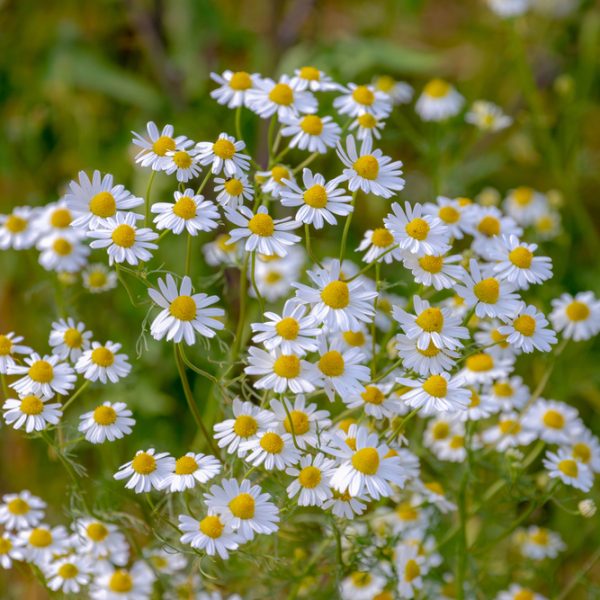
| Description | Matricaria chamomilla
The word chamomile comes from the Greek language, chamos (ground) and melos (apple), referring to the fact that the plant grows low to the ground, and has an apple scent. However, Roman chamomile is low growing, and is used for lawns in England. But German chamomile can grow to 2.5 feet. German chamomile is an annual plant, and likes full sun to part shade. And is perfect for pots. The fragrant flowers of the German chamomile will attract birds, bees and other wildlife. It prefers sandy well drained soils, and will require regular watering, but take care not to over water. Harvest the entire chamomile flower head once it blooms and dry it to make tea. Dead heading (harvesting) the chamomile flowers the day they bloom will provide the best-flavored tea, and will encourage more flowering. Chamomile is one of the most popular wild medicinal plants that can be eaten. It makes a relaxing tea that can help you sleep. It also does wonders for upset stomachs, helps with irritable bowel syndrome, calm frayed nerves, reduce muscle spasms, treat several skin condition, and it can also help with menstrual cramp pain. Research also suggests that it may lower cholesterol. To ingest all of the beneficial oils, steep the tea in a covered cup for 10 minutes. Although they taste quite different, you can also use the leaves. You can also use chamomile flowers in a hot bath!
4''/10cm pot | Prunus persica 'Elberta' Peach tree
Elberta peach trees give you large, sweet peaches that are perfect for canning, snacking and baking. The fruit are beautiful as well as delicious, ripening to a deep, golden yellow with a red blush.
Caring for Elberta peaches isn't hard, the trees are self-fertile, which means that they do not require a second tree for pollination. However, they may produce better if you plant a second tree. The most important thing you need to do to care for Elberta peaches is irrigation. These trees are not drought tolerant and will require regular watering.
10'' pot - Dwarf variety. | |