| Description | Malus purpurea
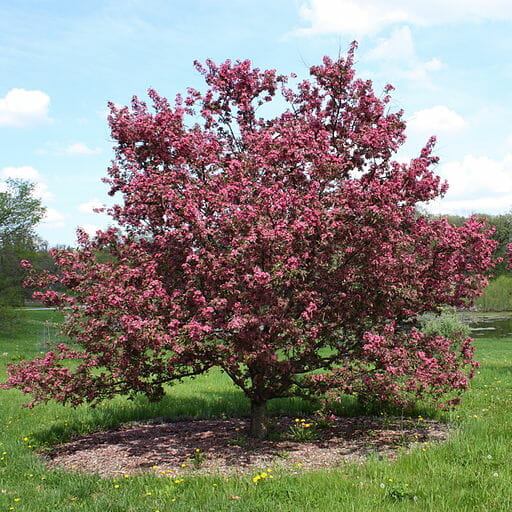
The Purple Crab Apple makes a handsome small tree, quite round topped in maturity. With beautiful flowers which are a deep, red-purple colour creating an effect that looks almost unbelievably rich.
A great specimen tree, in Autumn the Purple Crab Apple has dark purple fruit and leaves which turn shades of yellow and red.
13" pot size. | Nandina domestica 'Nana'
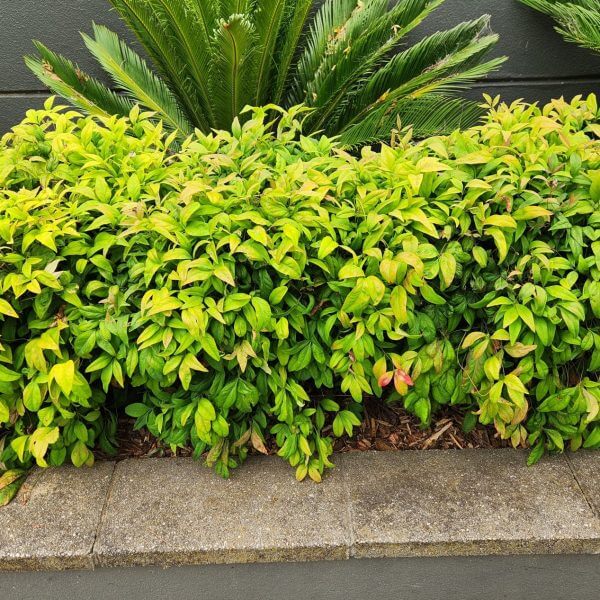
Dwarf 'Sacred Bamboo', commonly known as Dwarf Nandina, is a small self shaping, non-flowering shrub with colourful foliage.
• Green foliage in summer that changes to vibrant red in winter
• Very low maintenance and incredibly hardy
• Perfect for borders, edging, pots & containers | Adenanthos sericeus
Common names: Albany woolly bush or Silver streak plant
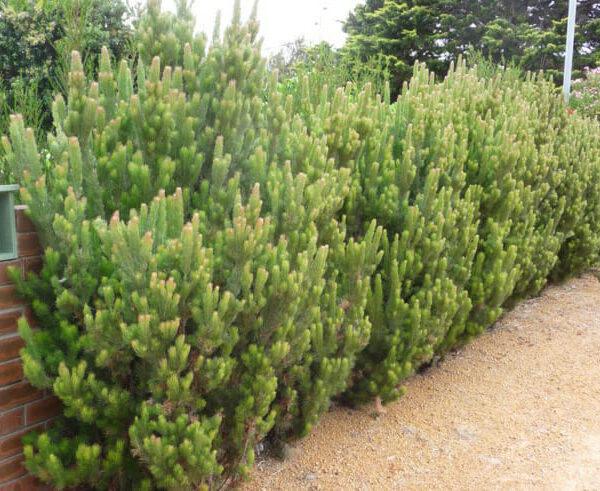
Woolly Bush is a native Australian shrub with a conifer look originating from Western Australia. It gets its name from the silky feel of its foliage, which also makes it popular in the cut flower industry. It is a terrific hardy native screening plant that can grow several meters tall and is drought and also salt tolerant. Woolly Bush looks great in the garden with its lovely silver green foliage that appears to be dusted with snow. | Gaura lindheimeri "Butterfly Bush"
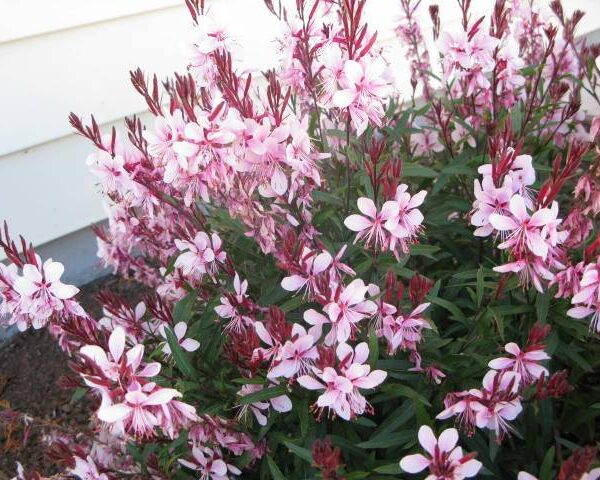
Butterfly Bush is a bushy, hardy perennial shrub with long graceful stems that bloom with pale pink flowers in spring-summer. These stems grow up to 1m long, but can be clipped back shorter, and sway gracefully in the breeze. The name of a popular variety, Whirling Butterflies, perfectly describes the way the plant resembles a cloud of butterflies when swaying in the breeze.
6" pot size. |
| Content | | Reasons to buy Dwarf Nandina
Loved for its attractive colourful foliage, Dwarf Nandina is one of the most popular varieties of the Nandina (Sacred Bamboo) family. Extremely versatile, and wherever you choose to plant it, its gorgeous colours will create a bright spot in any garden. Dwarf Nandina does not flower, and is loved mostly for its exotic coloured foliage. You will delight as its green/yellow foliage transforms through blush pinks in summer, before bursting in vibrant reds during winter.
Nandina grows quite low, remaining roughly as wide as it is tall which in the Dwarf (Nandina domestica nana) varieties is not much more than about 50cm tall. (It does also come in larger varieties, which we call Tall Nandina.)
Dwarf Nandina is quite a hardy plant that is suitable for most climate types. After establishing itself, it enjoys both lots of sun or partial shade, with a high tolerance for different temperatures. It even copes well with drought, but prefers soils with a little acidity that are well-drained and topped with a light sprinkling of compost. A light prune as new spring growth emerges is recommended to keep it neat, but it can do quite well with no trimming at all.
If you plant to buy Dwarf Nandina for planting in pots or containers, beware of overheating in summer. A deep soak every now and then helps. Apart from that it needs minimal maintenance.
It is equally at home in Coastal or Tropical Gardens, Mediterranean Gardens, Poolside, Courtyard and more. | | |
| Additional information |
| botanical name |
Malus ioensis ?Purpurea?
|
| height x width |
5m x 3m
|
| features |
Bronze-coppery green flowers with single showy red flowers with a hint of pink and strong golden stamens from mid to late spring
|
| conditions |
Full sun in well drained soil
|
| landscape use |
Specimen, group planting, floral arrangements, general landscaping
|
| | |
| botanical name |
Gaura lindheimeri
|
| height x width |
1.2m x 1m
|
| features |
Masses of sprays of beautiful white flowers opening from pink buds along the stems are borne from spring to autumn
|
| conditions |
Full sun in light well-drained soil, cut back hard after flowering
|
| landscape use |
Background planting, flower borders, color, general garden planting,
|
|