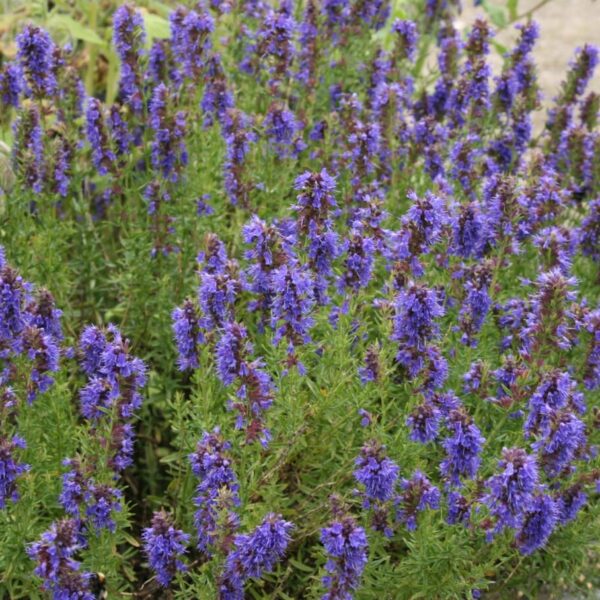
| Description | Hyssopus officinalis
Hyssop is a perennial shrub in the mint family. It is a narrow, upright shrub that grows to about 70cm tall and only about 15cm wide. It loves sun, so a hot sunny position with well drained soil is best. When this plant is nourished enough it will produce small vibrant blue flowers. It looks very attractive in the garden, and bees love it. It's also a favourite with butterflies and hummingbirds. Traditionally Hyssop was used in ancient times as an insecticide, therefore, it makes a very good companion plant. It will repel flea beetles and cabbage moths, so planting near your cabbages and grapevines is a great place for this plant. Hyssop is a flavourful addition to salads soups and stews. Although the Hyssop is not for everyone, as it has quite a bitter aroma and flavour. Extracts of this plant have been used in soaps and perfumes, and to flavour liqueurs, puddings, and candy. When harvesting hyssop, dry the stems indoors away from sunlight, then remove the leaves and flowers. You can then grind these and store in a jar or air tight container away from sunlight. The woody stems lack flavour. To harvest the seeds, let the seed pods brown and dry out, the seeds are then easily removed, also store these in an air tight container out of the sun. Hyssop has expectorant, anti inflammatory and tonic affects. It can also lower fever. The flowers can be used for coughs. And the entire plant is used for fevers, bronchitis, upper respiratory tract infections, and colds. It can also be used to aid digestion, and to ease flatulence and colic. The flowers and leaves are also used on cuts and bruises. And the essential oils of this plant can be added to baths to help chest and bronchial problems. This also helps combat exhaustion. All in all, this herb is a great little all rounder that's easy to grow! | Ulmus parvifolia
The bark of the Chinese Elm is a real stand out feature, as the tree sheds it in patches, creating the effect of a tapestry of varying browns and greys. Foliage is lush, shiny and green, and the tree is semi deciduous, turning golden in autumn, and keeping its leaves in warmer areas. It has also been noted by many Aussie gardeners in recent years that native birds enjoy the fruit of the Chinese Elm. | |
| Content | | Video: Chinese Elms as a beautiful, medium size feature tree for a tough spot
| |
| Additional information |
| botanical name |
Hyssopus Officinalis
|
|
| botanical name |
Ulmus parvifolia
|
| height x width |
8m x 8m
|
| features |
Small glossy dark-green leaves with silvery serrated edges, they are semi evergreen with the leaves turning yellow and staying on the tree until late winter, the bark is very attractive and mottled grey, green, orange and brown
|
| conditions |
Very hardy, prefers full sun in well-drained soil, good for planting in poor soil
|
| landscape use |
Street planting, avenues, urban planting, specimen, group planting, avenues
|
| |