| Description | Rosa floribunda 'Korbin'
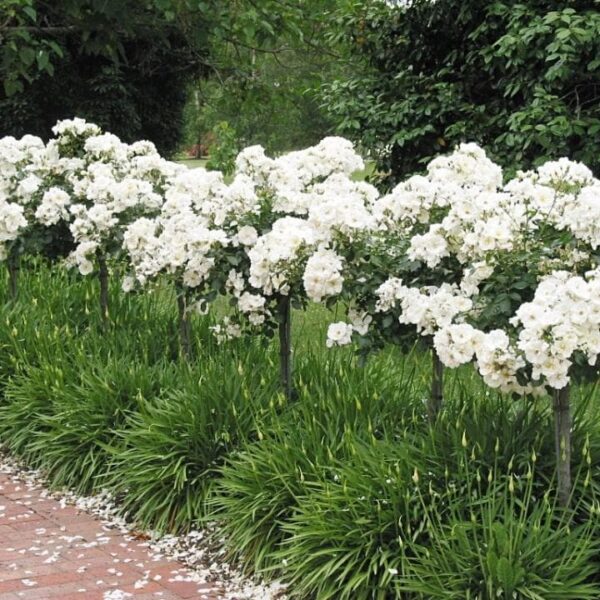
Iceberg roses are the most popular variety in Melbourne! Striking white roses bloom in clusters continually from late spring to the first frosts of autumn.
• Thornless
• Hardy rose, tolerating poor soils
• Disease resistant
8"/20cm pot - approx 3ft tall (90cm) | Penstemon hybrid 'Firebird'
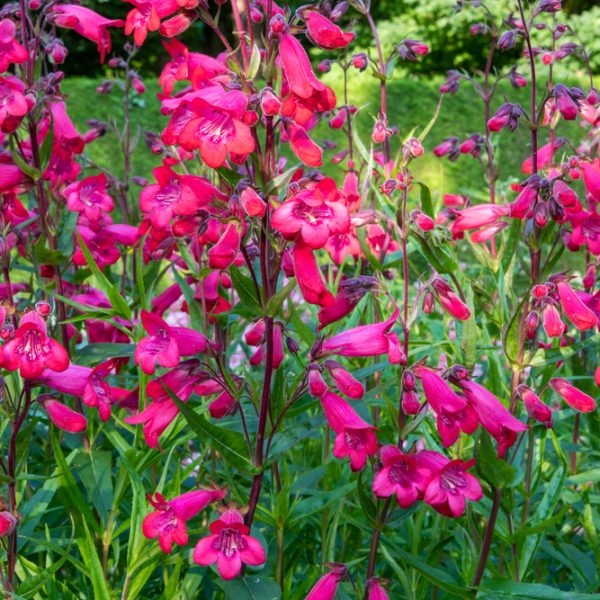
An old and very vigorous variety, Firebird has glowing red tube shaped flowers. Very long lived and hardy. it flowers in summer with masses of blooms; Penstemons are hardy upright plants that will thrive with a minimum of care. Bee and butterfly attracting.
4''/10cm pot | Washingtonia robusta
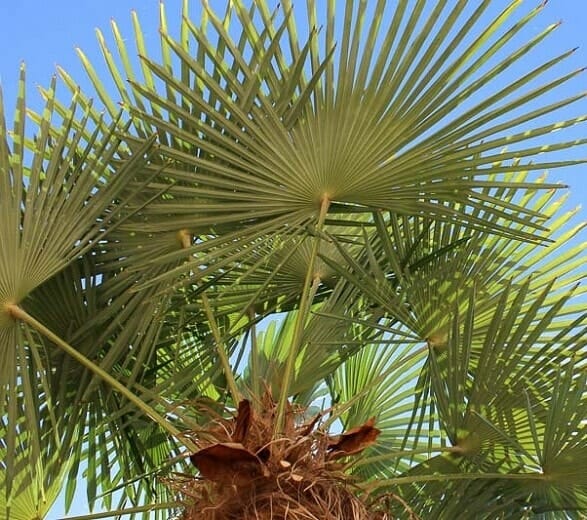
Common names: Mexican Cotton Fan Palm, Mexican Fan Palm, Mexican washingtonia, Washingtonia palm.
The Mexican Cotton Fan Palm is a medium-tall sized palm originating from Mexico. It can reach a mature height of 7m in Victoria's climate. It has large fan like fronds with remnant threads of foliage that appear like ‘cotton’ hanging from between frond segments. It is tough, drought and frost tolerant when established! It is a perfect addition for features and tropical gardens.
100 litre pot. | Rosmarinus officinalis 'Tuscan Blue'
Tuscan Blue Rosemary quickly forms an upright hedge of aromatic needle-like foliage. As it name suggests, it flowers in blue.
Rosemary leaves are great as a flavorful spice in cooking. It takes to pruning well, so is perfect for a medium size if slightly informal hedge. Evergreen. | Rosa banksiae
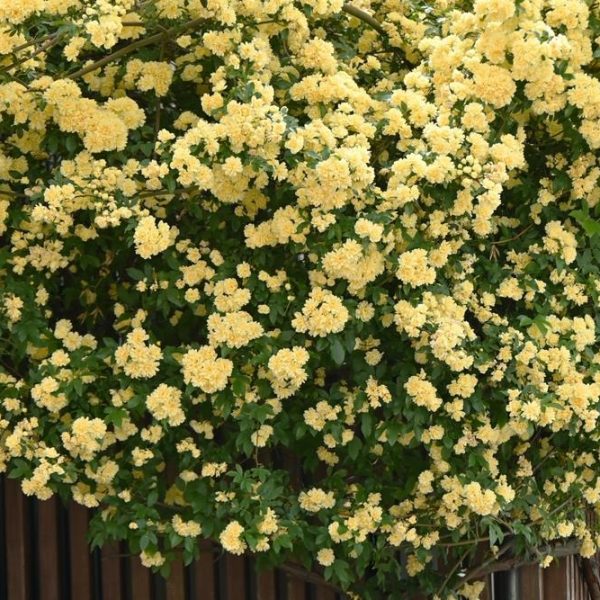
The Banksia Rose is a tough evergreen climbing rose with soft ruffled yellow flowers which appear in Spring. Like Iceberg Roses, it's prized as a disease resistant and hardy rose. It works well as a groundcover rose or a climber when given a support such as a trellis.
The Banksia rose is an incredibly useful and versatile climber or groundcover as it is low maintenance, thornless and tolerates full sun and part shade.
6"/14cm pot size. |
| Content | 3ft Standard Iceberg Roses are our single best selling rose every year, and there's a good reason why.
Why are 3ft Standard Icebergs the most popular roses?
The irresistible pull of the "Iceberg" rose variety
[one_half padding="0 10px 0 0"]
[/one_half]
[one_half_last padding="0 0 0 10px"]
The first part of it probably has to do with the fact that they're "Icebergs", as we affectionately call them. Iceberg roses are a white floribunda rose, which are a family of rose breeds whose name means "flowers" + "abundant". As this name suggests, they have a long flowering season and put out masses of flowers.
The Iceberg rose shot to popularity among all the floribunda roses and became the best selling rose in Australia over the last decade or two, because of 3 key features:
- Iceberg roses are low maintenance because they are incredibly disease resistant, and is much less likely to suffer from black spot, the most common and unsightly rose disease
- Iceberg roses are practically thornless
- Iceberg roses are a lovely bright white, fitting in with almost all garden styles and colour schemes
The only downside of Iceberg roses is that they have no real detectable fragrance.
[/one_half_last]
The fantastic versatility of a 3ft standard rose
Iceberg roses come in a variety of shapes: a bush form, a standard form (as is the 3ft Standard Iceberg rose), and even a climbing rose.
Standard roses grow in a "ball on a stick shape", and their main stem never gets any taller than the height you buy them at. With only their bushy head growing larger and denser, they will never really get out of control and can be easily maintained to a neat shape and manageable size. Standard roses are usually available at a height of 2ft, 3ft and 4ft, these measurements being the length of the main stem, or "cane" as this is called among growers.
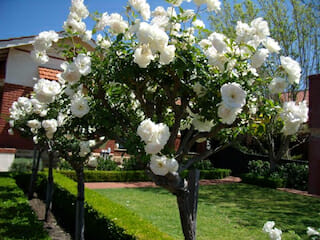 The second factor in the popularity of a 3ft Standard Iceberg rose is that 3 foot (roughly 1 metre) is the most popular size of standard roses. This is a very useful and aesthetically pleasing height for a standard rose that works really well in a variety of garden settings. It's not too tall so that it requires a real heavy duty stake and protection from wind/exposure, and not so short that it can be engulfed by plants planted underneath it.
One of the big uses of 3ft standard iceberg roses is in a bed or row with other plants growing underneath it, in a layered technique called underplanting. Their height makes them ideal for growing other plants underneath.
The second factor in the popularity of a 3ft Standard Iceberg rose is that 3 foot (roughly 1 metre) is the most popular size of standard roses. This is a very useful and aesthetically pleasing height for a standard rose that works really well in a variety of garden settings. It's not too tall so that it requires a real heavy duty stake and protection from wind/exposure, and not so short that it can be engulfed by plants planted underneath it.
One of the big uses of 3ft standard iceberg roses is in a bed or row with other plants growing underneath it, in a layered technique called underplanting. Their height makes them ideal for growing other plants underneath.
For more information on selecting and growing roses, visit our Rose Factsheet.
For other white flowering roses, check out our Guide to Selecting Roses. | | | | |
| Additional information | | |
| botanical name |
Washingtonia robusta
|
| height x width |
6-10m tall, slow growing
|
| features |
The shiny bright green fronds are almost circular
|
| conditions |
Full sun in well drained soil, protected from heavy frosts
|
| landscape use |
Specimen, avenue
|
| |
| height x width |
Climber to 3-4m
|
| planting distance |
For hedge or screen: 70cm
|
| conditions |
Very hardy, likes full sun and well-drained soil
|
| landscape use |
fences, screens, cover unattractive sheds, pergolas, arbors, rotundas, trellis
|
|