| Description | Wisteria sinensis 'Alba'
Chinese White Wisteria is the gorgeous white variety of the highly popular Wisteria sinensis. The sinensis varieties are very popular due to their blooms appearing on bare vines in the spring, before the leaves appear. It makes for a gorgeous feature of solid, fragrant colour.
Wisteria sinensis is a very hardy twisting vine that prefers a full sun position in a moist, well drained humus soil. The gorgeous white flowers of the Wisteria sinensis 'Alba' are slightly smaller than that of the Wisteria floribunda 'Alba', hanging 18-30cm long off the vine.
See our Wisteria Factsheet here for more about the different Wisteria varieties!
For care instructions, features and more, check out Additional Information below | Ulmus parvifolia
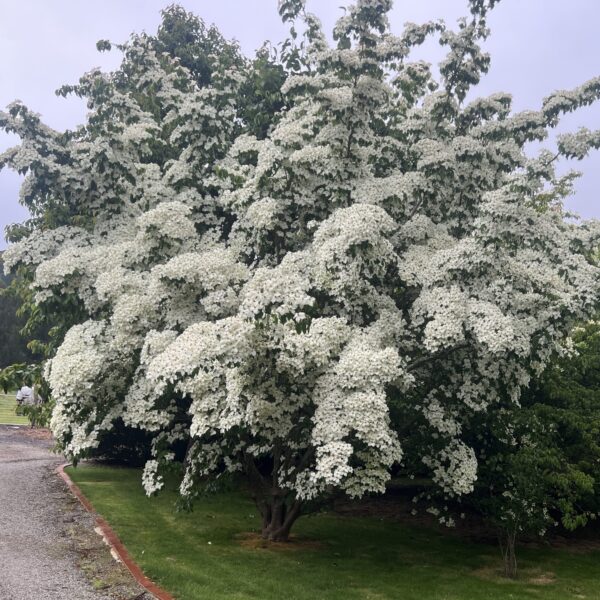
The bark of the Chinese Elm is a real stand out feature, as the tree sheds it in patches, creating the effect of a tapestry of varying browns and greys. Foliage is lush, shiny and green, and the tree is semi deciduous, turning golden in autumn, and keeping its leaves in warmer areas. It has also been noted by many Aussie gardeners in recent years that native birds enjoy the fruit of the Chinese Elm. | Cornus kousa var Chinensis, Kousa Dogwood, Chinese Dogwood
This is arguably the world's most beautiful dogwood, with a fabulous show of white flowers in spring, and magnificent autumn colour. A beautiful small (up to 4m) deciduous feature tree and is extremely beautiful when in bloom. Flowering season is late spring, weeks after the tree puts on foliage again.
8" pot size |
| Content | | Video: Chinese Elms as a beautiful, medium size feature tree for a tough spot
| |
| Additional information |
| Botanical Name |
Wisteria sinensis 'Alba'
|
| Other Common Names |
Chinese Kidney Bean, Chinese White Wisteria, Chinese Wisteria
|
| Origin |
China
|
| Plant Type |
Vine
|
| Leaf Drop |
Deciduous
|
| Sunshine |
Full Sun, Part Shade
|
| Tolerances |
Pollution Tolerant, Poor Soil Tolerant, Frost Tolerant, Heat Tolerant, Drought Tolerant
|
| Soil Type |
Clay, Loam, Loamy – Clay, Sandy, Sandy – Loam, Well drained
|
| pH |
Acidic, Neutral
|
| Water Requirement |
Low
|
| Fertilise Me |
December, November, October, September
|
| Fertilizer Frequency |
Monthly, Until established
|
| Planting Distance |
2m apart
|
| Max Height |
3m, 9m
|
| Max Width |
3m, 6m
|
| Growth Speed |
Fast
|
| Prune Me |
Annually
|
| Size Maintained at |
1m
|
| Flowering |
Yes
|
| Flowering Time |
November, October, September
|
| Flower Colour |
White
|
| Fragrance |
Moderate
|
| Foliage Colour |
Green
|
| Autumn Colour |
Yellow
|
| Fruit / Seed |
Yes – Non-edible
|
| Fruiting Time |
February, January
|
| Attracts |
Bees, Birds, Butterflies, Other Insects
|
| Toxic To |
Cats, Children, Dogs
|
| Uses |
Arbour, Archway, Feature, Fence, Fragrance, Pergola, Verandah
|
|
| botanical name |
Ulmus parvifolia
|
| height x width |
8m x 8m
|
| features |
Small glossy dark-green leaves with silvery serrated edges, they are semi evergreen with the leaves turning yellow and staying on the tree until late winter, the bark is very attractive and mottled grey, green, orange and brown
|
| conditions |
Very hardy, prefers full sun in well-drained soil, good for planting in poor soil
|
| landscape use |
Street planting, avenues, urban planting, specimen, group planting, avenues
|
|
| botanical name |
Cornus kousa
|
| height x width |
4m x 3m
|
| features |
Dense green foliage and tiered branches, the flower heads with large pure-white bracts appear, each bract ending in an acute point followed by red fruit
|
| conditions |
Sun to part shade in rich well-drained soil
|
| landscape use |
Specimen, group planting, general garden planting
|
|