A grandfather, father, and young child are in a garden picking tomatoes. The text "Happy Father's Day" is written with a heart symbol, celebrating the joy of family bonds.

10 Best Fathers Day Plant Presents

Dad

The first man I ever loved, who planted seeds of inspiration, cultivated my aspirations, invigorated my budding ambitions and nurtured my development, growing me into the person I am today. 

Say a great big THANKS DAD to the best Dad ever!

Below are our top picks for Fathers Day. There is sure to be the right plant pressie for your Dad!

10 Best Fathers Day Plant Presents

  1. Roses
  2. Citrus (plus herbs & veggies)
  3. ‘Teddy Bear’ Magnolia
  4. ‘Senkaki’ Japanese Maple
  5. Fern
  6. ‘Vulcan’ Magnolia
  7. Acacia ‘Lime Magik’
  8. Camellia
  9. Weeping Cherry
  10.  Indoor Plants

Limited time offer ! Spend over $1500 and get a Free Weeping Cherry worth $299.99 as part of our Rewards Program! Click here to read more about Rewards!

Gift Vouchers

If you’re really struggling to pick just one plant or the right plant for Dad, why not let him choose for himself and get him a Hello Hello Gift Voucher.

Buy one online or give us a call on (03) 9359 3331 to put any amount onto a Gift Voucher just for Dad this Fathers Day.


1. Roses

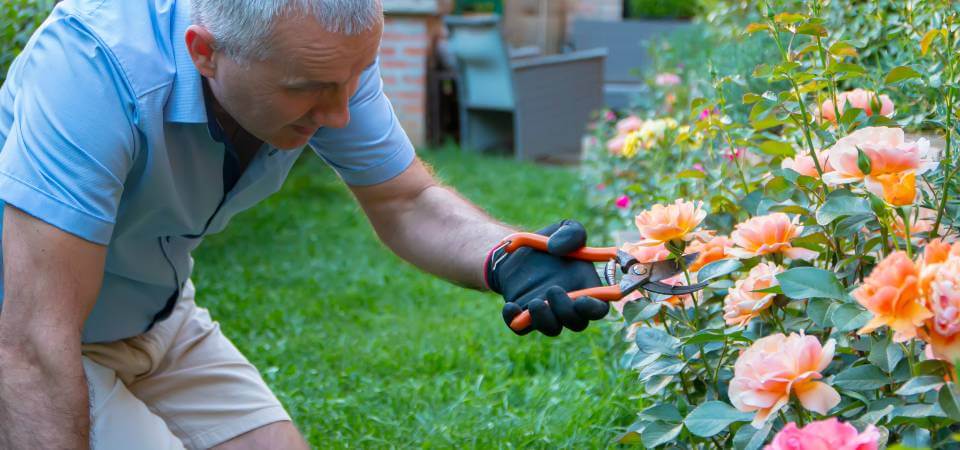
Hello Hello Plants Nursery Campbellfield Melbourne Victoria Australia Man cutting roses banner

The Father of roses, who is hard at work pruning and shaping his rose bushes to produce prize winning blooms will always need another brilliant bloom for his garden. Choose from our wide range of Bare Rooted and potted roses and find that one rose he’s been wanting and missing! We have reduced our 2ft Bare rooted roses to only $15.99! and our 3ft ones from $̶3̶9̶.̶9̶9̶ to only $19.99!
Click here to see all our Bare rooted roses!


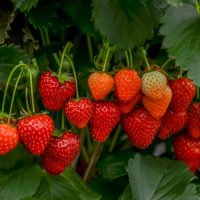
2. Citrus & Berries Hello Hello Plants Nursery Campbellfield Melbourne Victoria Australia Lemon tree boy putting lemon in basket banner
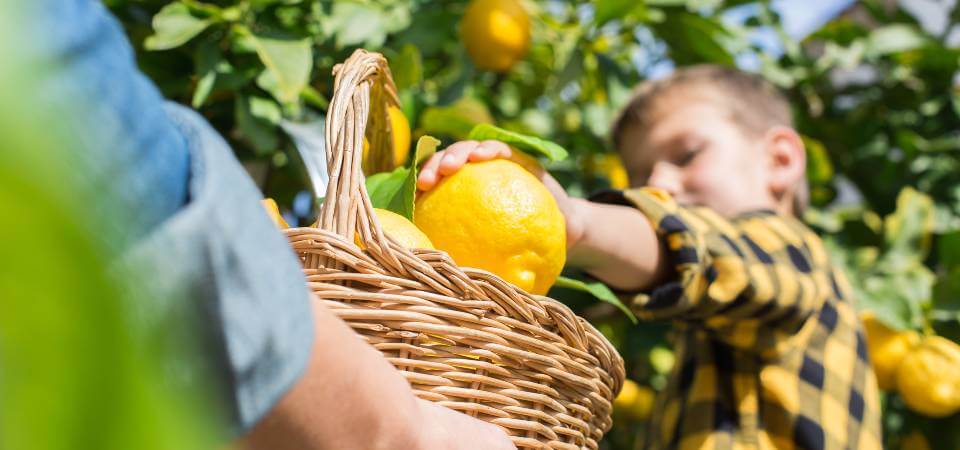
For the Dad who loves to cook! We all know at least one. He’s either tongs in hand around the barbie or rustling up a feast in the kitchen with his freshly grown garden produce. Why not find the plant his culinary garden is missing.

Citrus are a real treat as they are easy to grow, tough and produce a bountiful harvest of delicious citrus fruits! Plus, they benefit from being peed on. That’s right! If Dad is so inclined, he can wee on his new tree every morning, helping it grow big juicy fruits. Thanks….Dad?
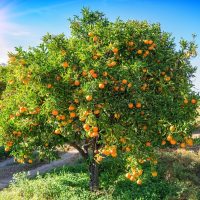
Lets not forget the herbs and veggies too. We have a wide range of edible plants available instore. Why not give dad a plant bundle? Grab 4 assorted herbs or vegetable seedlings for just under $25!

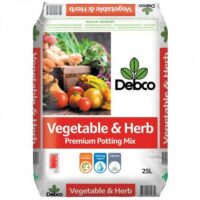
Add in some potting mix, pots and fertiliser and really treat Dad this Father’s Day.


3. Evergreen Magnolia ‘Teddy Bear’ or ‘Little Gem’

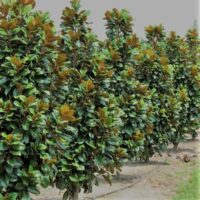
We know Dad as a great big cuddly bear! He enjoys a good snuggle on the couch and a rough and tumble. The ‘Teddy Bear’ Magnolia is the right tree for this hairy bear. A short, stout and rounded tree with gorgeously lemon scented flowers in the warmer months. It fits in pots or in a sunny spot in the garden. A lovely reminder of how cuddly Dad is.
Click here to read more about Evergreen Magnolias!


4. ‘Senkaki’ Coral Bark Japanese Maple

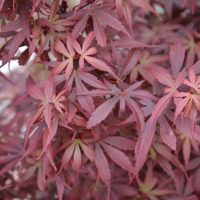
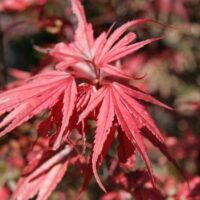
An elegant yet colourful feature tree, sure to make Dad’s garden really pop! ‘Senkaki’ Maples are vibrant green in the warmer months turning iridescent golds in autumn, and finally the striking red bark makes the tree light up throughout winter. It is a very memorable gift for Dad.

And if this particular Japanese Maple isn’t quite Dad, we have many other Maples, weeping and upright for Dad to choose from!


5. Ferns
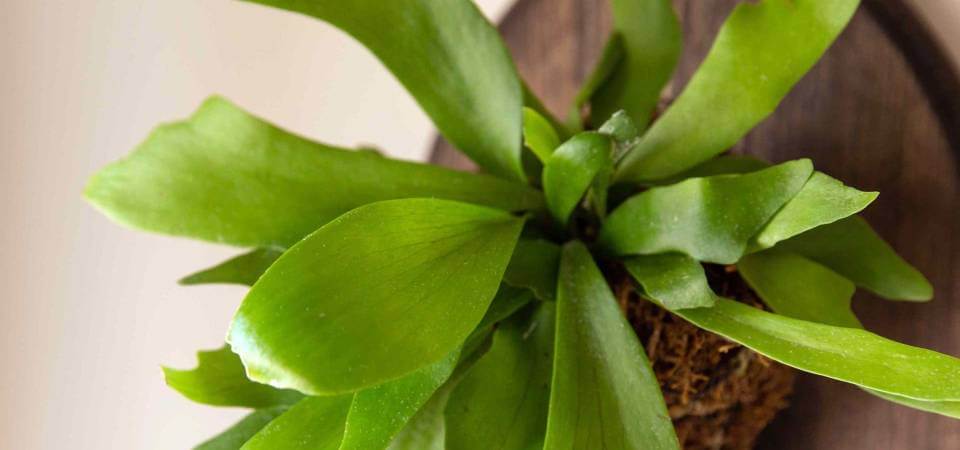
Hello Hello Plants Nursery Campbellfield Melbourne Victoria Australia Elkhorn Staghorn fern on board wall

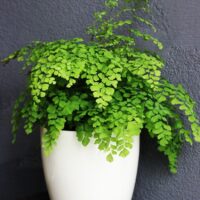
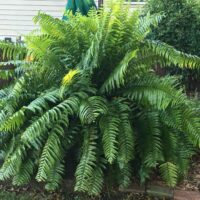
Does Dad need something for his back patio area? Or to liven up the outdoor entertainment area? Or maybe he’s particularly frond of ferns! We have a large range of small and large ferns available for the right spot.

The Elkhorn or Staghorn fern livens up the outdoor living space and can be grown in both pots and as a living wall feature! Plus, they are relatively easy to look after, once you know how.
6. Deciduous Magnolia ‘Soulangeana’, ‘Vulcan’ or ‘Burgundy Star’
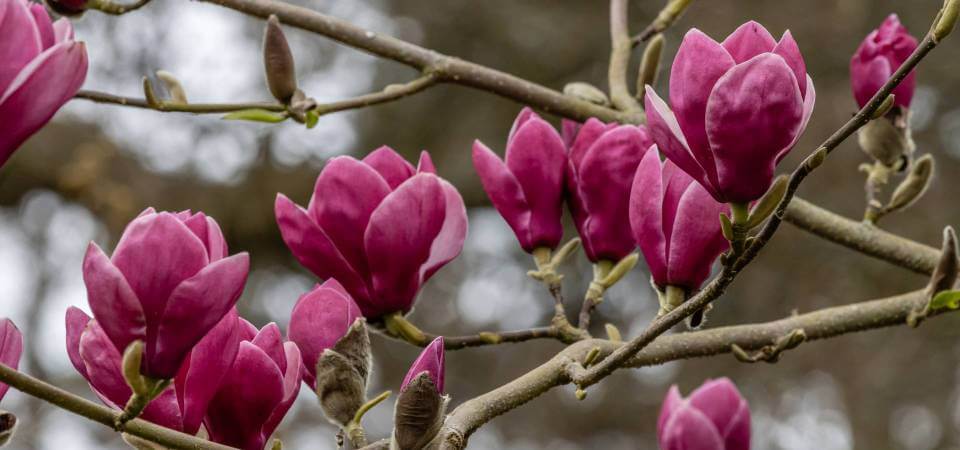
A great big bloom for a great big softy! ‘Vulcan’ Magnolia’s produce massive, deep purple flowers in the spring, perfectly timed with Father’s Day! They make a wonderful shade or feature trees and, should your Dad be a Sci-Fi Trekky fan, it’s sure to make Dad smile!
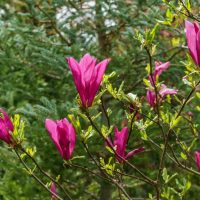
Click here to see all our Deciduous Magnolias!


7. Acacia ‘Lime Magik’

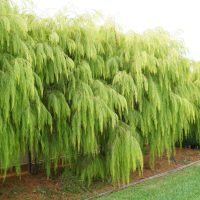
The Dad that loves his natives is sure to love this gorgeous feature tree. Acacia ‘Lime Magik’ is a soft, smooth and flowy feature tree that doubles as a screen or hedge.
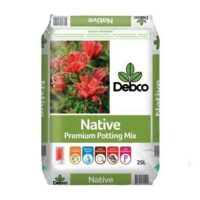
Click here to see all our Acacia Wattles!


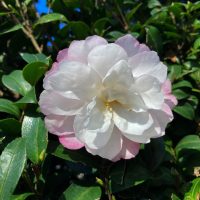
8. Camellia

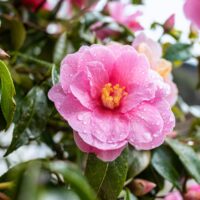
Just like roses, there’s a Dad who loves his Camellias. Or all beautiful, robust flowering plants! But Camellia is no exception and they make gorgeous gifts. They can be grown in pots, as a standard, as a feature tree or topiary, or even as a hedge! They’re so versatile. And the add colour to the garden in winter, brightening up the gloomy weather for Dad.
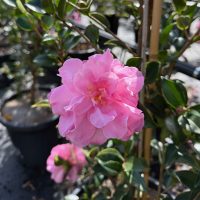
Click here to see all our Camellias!


9. Weeping Cherry

Get one 16″ pot 1.5/1.8m tall worth $299.99 for FREE when you spend over $1500 with our Rewards program!

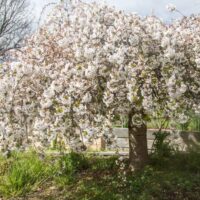
Another fond feature tree to be the star attraction in Dads garden which will remind him of his star child! The Weeping Cherry is one of our most popular suburban garden plants as it is nice and compact, easy to grow and gorgeous all year round to boot. Nothing for Dad not to love, even for Dads who aren’t garden gurus.
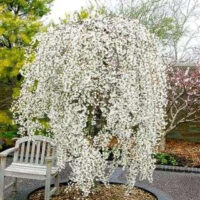
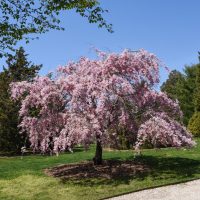
Click here to see all our Ornamental Cherry Blossoms!


10. Indoor

Hello Hello Plants Nursery Campbellfield Melbourne Victoria Australia Man at desk with indoor plants ficus elastica rubber fig

Your Dad might not be a green thumb or even have a garden! But that doesn’t mean he can’t enjoy the gift of greenery in his home office or man cave. Indoor plants lighten rooms, clean air and known to improve mood. Perfect for the hard working Dad!

And there’s many indoor plant varieties to suit your loving father from little desk plants to large potted floor plants.
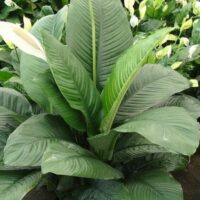
Click here for all our indoor plants!

We hope that this list has inspired you to get Dad a gift that will grow, bloom, fruit and keep on giving for many years!

Please give us a call us on (03) 9359 3331 if you have any questions or want to source a particular plant for Dad!

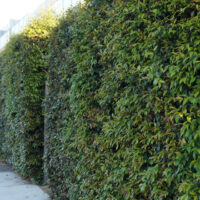
Blog Post Top 10 Australian Native Hedges copy

Top 10 Australian Native Hedges

We find natives are a love ‘em or leave ‘em, hit and miss or sorely misunderstood plant species with many Victorians. But the following list of native hedging plants will make anyone rethink their idea about natives!
Not only do many natives grow extremely well in the varied conditions around Victoria, but they have a certain charm and character, which can be emphasised with a bit of tender loving care. Like most hedging plants, give them a light prune, shape them according to your needs and you will find you will have one of the most unique and hardy hedges on the block!

Top 10 Australian Native Hedges

  1. Syzygium ‘Lilly Pilly’
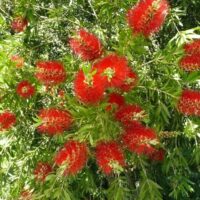
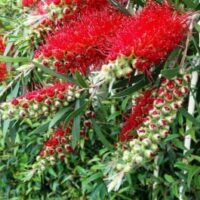
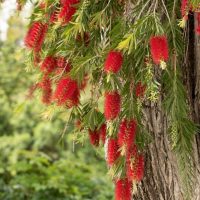
  2. Callistemon ‘Bottlebrush’
  3. Grevillea
  4. Westringia
  5. Correa
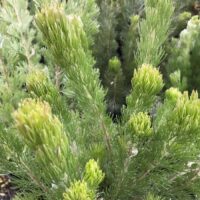
  6. Adenanthos ‘Woolly Bush’
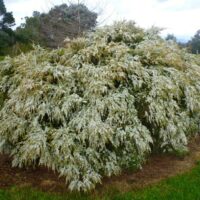
  7. Agonis ‘Willow Myrtle’
  8. Dodonaea ‘Hop Bush’
  9. Leptospermum ‘Tea Tree’
  10. Rhagodia ‘Salt Bush’

Some more options are: 

  • Acacia
  • Prostanthera ‘Mint Bush’
  • Philotheca ‘Wax Flower’


Syzygium ‘Lilly Pilly’

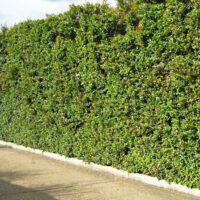
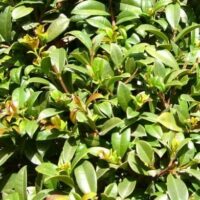
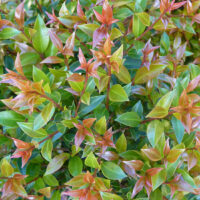
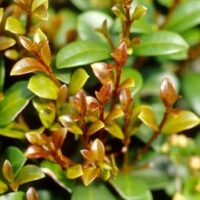
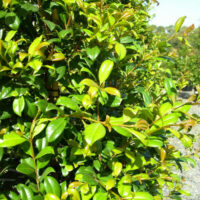
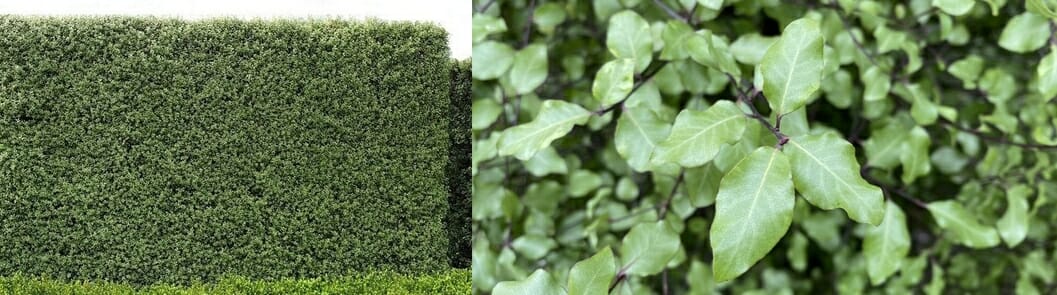
Single-handedly the most popular Australian native hedging plant, and most people don’t even realise it’s a native! Stunning glossy green leaves, tender red new growth and certain varieties produce beautiful flowers and edible berries (Yup! A hedge that provides a great source of fruit!) They come in many shapes and sizes as well including dwarf hedging lilly pilly, columnar lilly pilly, narrow lilly pilly that requires very little pruning and, of course, your big, dense, neighbours-be-gone varieties!


Callistemon ‘Bottlebrush’

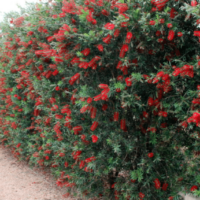
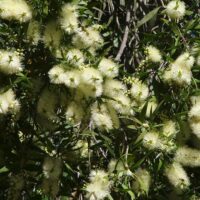
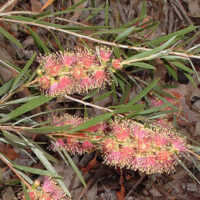
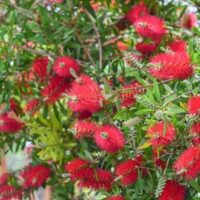
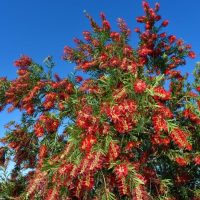
A tough but elegant feature tree that doubles as a hedge or screen! The Callistemon can block out any neighbour in almost any condition. They tolerate heat, drought, frost and coastal conditions as well as clay or sandy soils! Plus Callistemon comes in a variety of floral colours such as white, red, pink, yellow and purple. They truly are a gorgeous native.


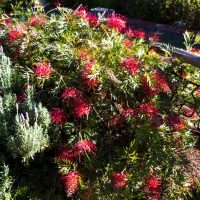
Grevillea

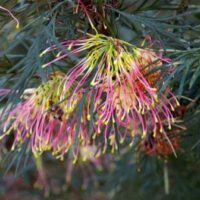
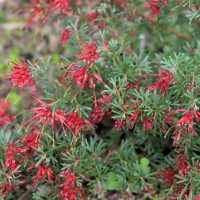
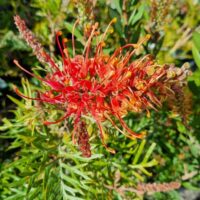
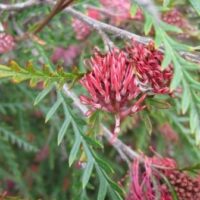
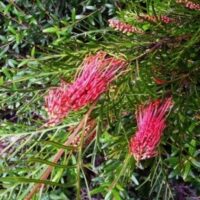
Much like the Callistemon, the Grevillea are another tough contender to the Australian climate. Heat, frost, sandy and clay soils are no issue for Grevillea. And their colourful native flowers are not only loved by many a neighbour but also by the local bird life. Grevilleas come in groundcover forms as well as up to 3m tall, bushy shrubs, making ideal hedges and screens.


Westringia

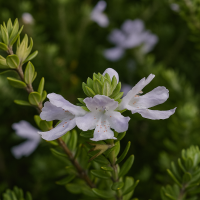
Commonly seen in a lot of housing estates, and for a very good reason! Westringia is one of the best choices for a native box hedging plant. Westringia produces star-shaped flowers in purple, pink or white and when trimmed create a dense, compact habit. They are very easily shaped into square hedging, some have been tried very successfully as topiary!


Correa

The next best contender for native box hedging is Correa. Just like Westringia, it is commonly used in many housing estates, not only for its gorgeous and versatile appearance but also due to its hardy nature. Correa tolerates poor soils, heat, part shade and frost. They, too, come in a variety of sizes and styles, including elongated green leaves such as that on the Correa reflexa or rounded, grey-green leaves like that of Corra alba.


Adenanthos ‘Woolly Bush’

If you’re after super soft, fluffy, dense foliage, look no further! This shrub is like hugging a giant teddy bear plant! It is ridiculously soft, staff and customers can’t help but touch them when they walk past them in the nursery. And they make wonderful hedges! Adenanthos produce little red flowers and tolerate sandy soils, light frosts and full sun.


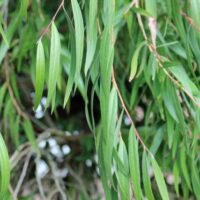
Agonis ‘Willow Myrtle’

Tall, elegant hedging is what comes to mind when Agonis is mentioned. These elegant plants have slightly weeping foliage that comes in greens, maroons and purples. When grown as a large, blockout hedge, they make quite the impact! Tolerating drought, heat, frost and coastal conditions make it a very popular large native hedging plant.


Dodonaea ‘Hop Bush’

Another much like the Agonis but more robust and upright. Dodonaea comes in a variety of colours and sizes and are able to make narrow, low-maintenance hedging right up to large, colourful feature hedges. They, too, tolerate most soil conditions, drought and frost.


Leptospermum ‘Tea Tree’

A native pollinator and bee favourite, Leptospermum ‘Tea Tree’ are popular in every native garden. ‘Tea Tree’ comes in small, low hedging sizes right up to tall, neighbour-screening hedges and there are many colours to choose from in both foliage and flower!


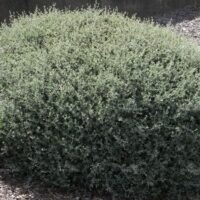
Rhagodia ‘Salt Bush’

A medium to low hedging plant with stand-out foliage! ‘Salt Bush’ are a silver foliage native that respond really well to shaping and pruning. Many councils have taken on Westringia, Correa and Salt Bush as their go to hedging and topiary shrubs in public spaces. In fact many a round-a-bout across Melbourne can be seen adorned with these three plants, trimmed and shaped as if they were your regular English Box shrub! And Salt Bush is as hardy as they come, tolerating all soil types, coastal conditions, frost, drought and heat.


Honourable Mentions


Acacia

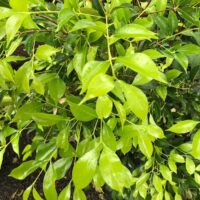
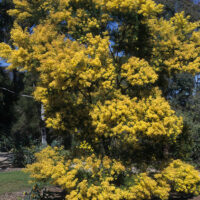
We can’t pass up on mentioning Acacia’s in this list. There are a few varieties that make soft, green hedges and screens. Acacia fimbriata is a gorgeous, tall hedging native that produces the classic yellow pompom flower of the Acacia family. Acacia ‘Limelight’ is a much shorter, hybrid Acacia that is ideal for borders and edging, with soft, delicate, slender green foliage and almost inconspicuous flowers.


Prostanthera ‘Mint Bush’

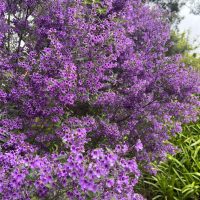
Often overlooked but suddenly makes an appearance in spring to summer when it puts on a spectacular show of purple flowers, covering the entire plant! Often they will be spotted along the roadside in the Wombat State Forest causing drivers to slow down and ponder ‘What is that plant?’ Little do they know it also makes a wonderful hedging and large topiary shrub. If you want a purple hedge, look no further!


Philotheca ‘Wax Flower’

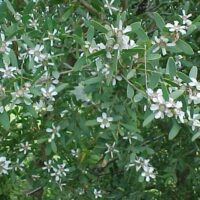
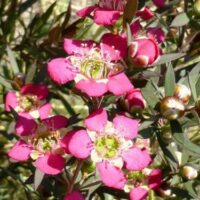
Used for box or medium hedging, or the occasional large topiary feature, Philotheca produces a dense, green habit when trimmed and maintained regularly. Plus, they have a delicate aroma when trimmed. Philotheca ‘Wax Flower’ produce small white flowers and tolerate a wide range of conditions including drought, poor soils and frost.


Here are some more articles you may like:

Sign up for our newsletter below

We will send you gardening tips, great deals, and exclusive giveaways. Happy Gardening!

Top 10 Frost Resistant Hedge & Box Plants

Living in regional Victoria can have some drawbacks in the garden that those in the city may take for granted. Our regional gardens are more susceptible to extreme conditions such as heat, wind, hungry native animals and, in particular, the cold and ice.

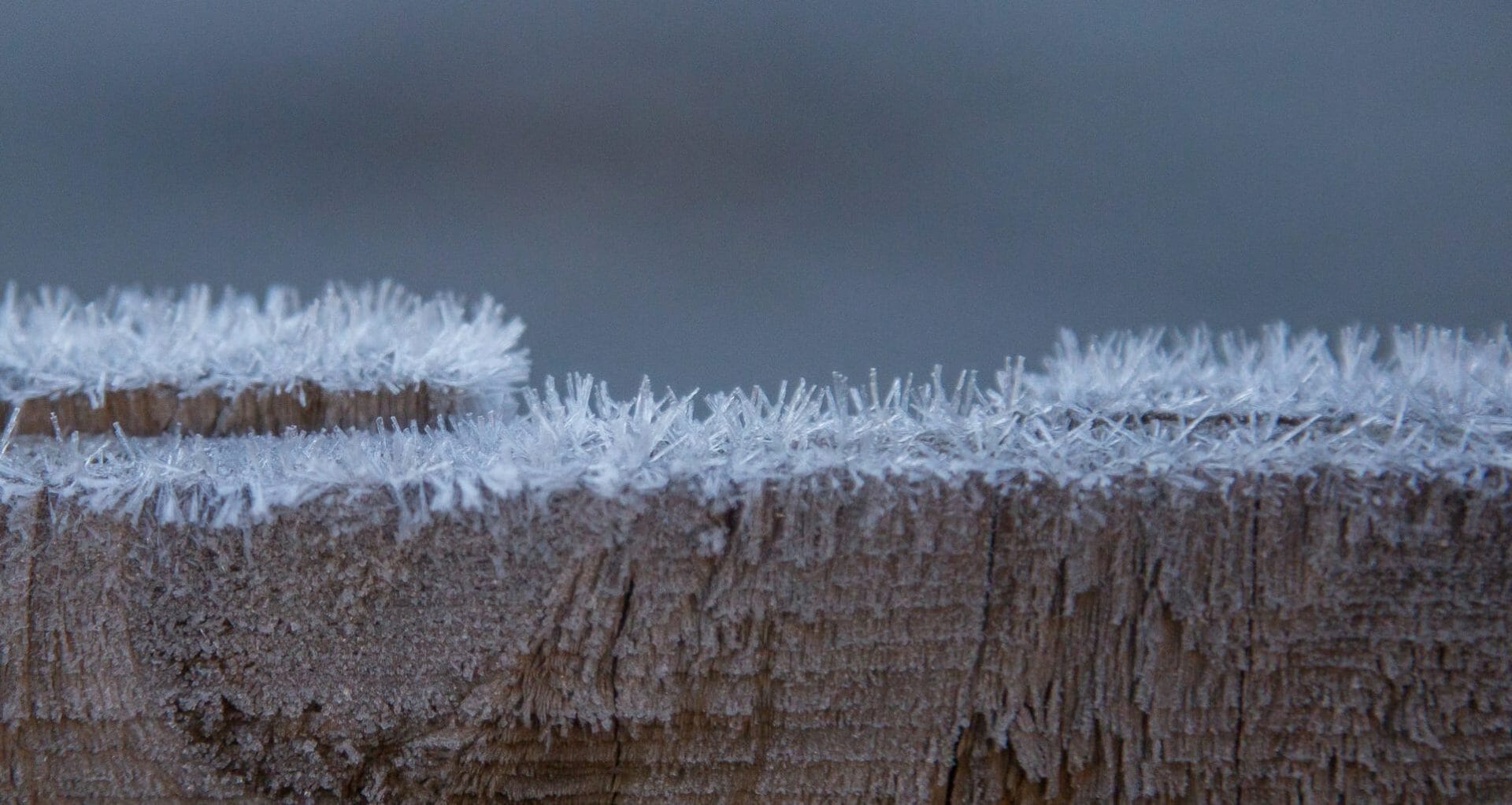
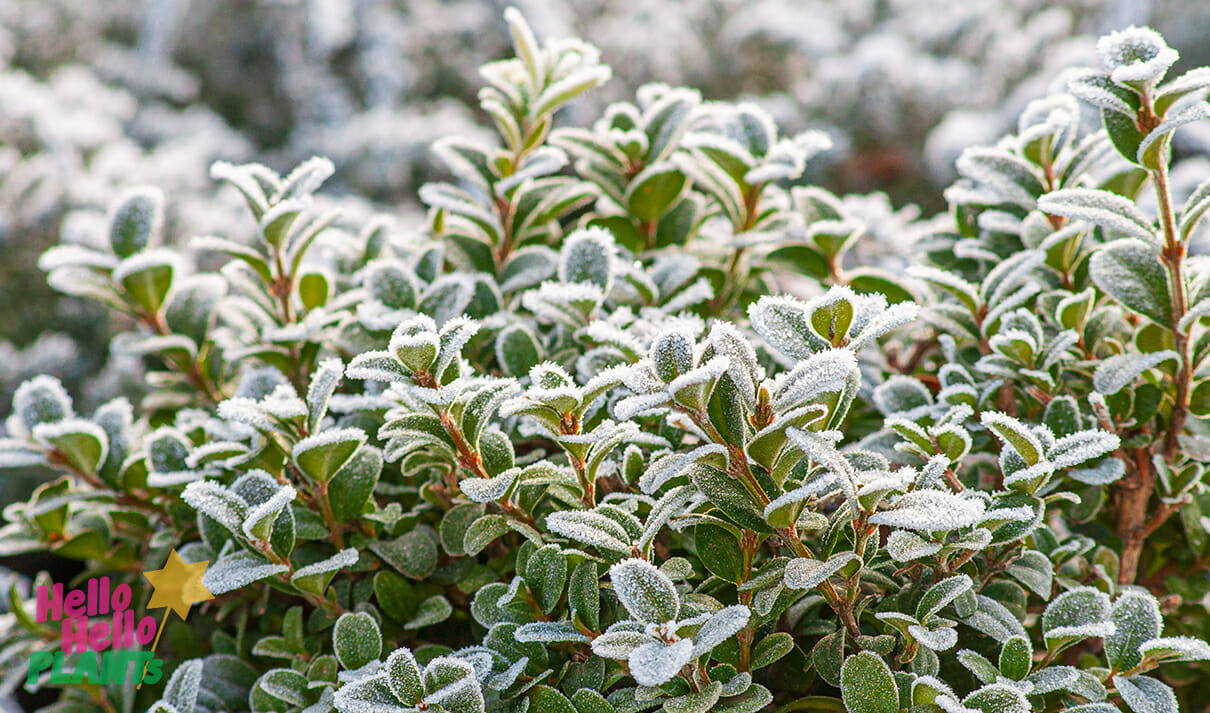
Hello Hello Plants Melbourne Victoria Australia Close up of Frost forming on a fence in Trentham by #arteliz
Frost on a fence in Trentham

To protect your garden from the icy cold of winter, and the frosts of late autumn and early spring, it is wise to create a barrier or hedge. And this hedge has got to be a toughie to block these kinds of temperatures!

Australian Natives are obviously the most suited plant to endure frosts and the Australian climate, having spent centuries acclimatising to this sometimes cruel environment. In fact, we could fill this entire hedging list with natives alone! Instead, here is the list of Top 10 Australian Native Hedges, all of which are frost resistant and perfect for hedging. You’ll find Callistemons, Grevilleas and Westringia just to name a few!

For alternatives to our wonderful natives, here is our list of super tough, built-to-last hedges that can endure the cold.

Top 10 Frost Resistant Hedge

  1. Escallonia iveyii
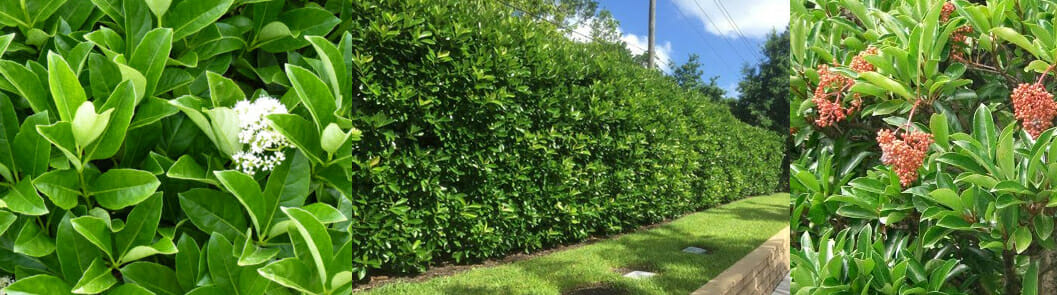
  2. Photinia robusta
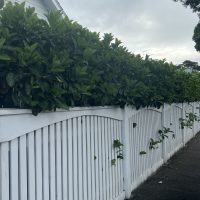
  3. Prunus lausitanica ‘Portuguese laurel’
  4. Prunus laurocerasus ‘Cherry Laurel’
  5. Ligustrum undulatum ‘Box leaf Privet’
  6. Laurus nobilis ‘Bay Tree’
  7. Buxus sempervirens English Box
  8. Hebe
  9. Pittosporum ‘Silver Sheen’ and ‘Tobira’
  10. Cupressocyparis ‘Castlewellan Gold’ and ‘Leighton Green’


Escallonia iveyii

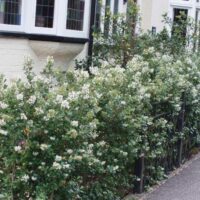
A glossy-green, robust hedging plant with clusters of white flowers that bloom in the summer. Escallonia iveyi are used as medium hedging, formally pruned or in its natural, unkempt form. Known to endure low temperatures, frosts and even light snow! It is suited to Cottage, Formal or Hampton-style gardens.


Photinia robusta

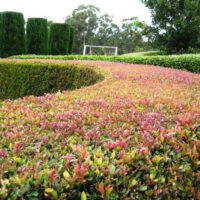
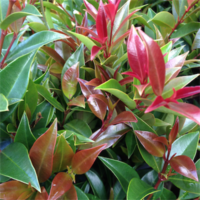
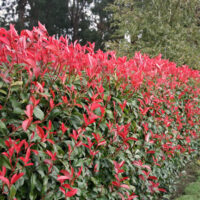
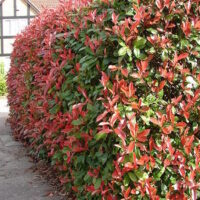
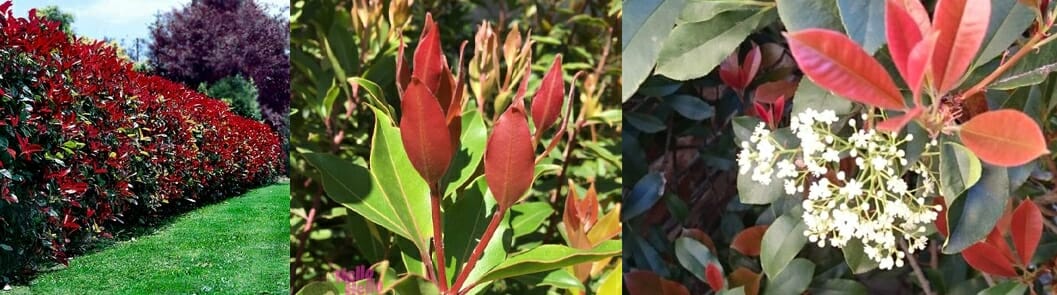
This colourful hedge can be spotted from miles away, with vibrant red new growth. This sturdy plant can be trimmed as a medium or tall hedge, looking quite striking when trimmed into a formal hedge. Photinia produces small, white clusters of flowers in the spring. Suited to Formal or Cottage gardens. There are a few varieties of Photinia, all of which are suited to frost and cold tolerant hedging.


Prunus lausitanica ‘Portuguese laurel’

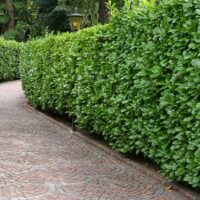
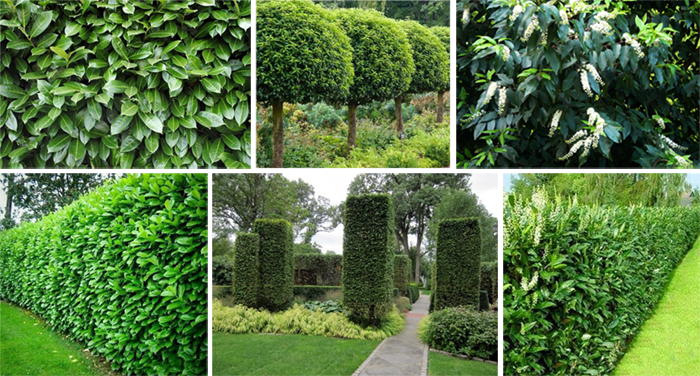
Truly elegant and formal as a hedge, the Portuguese Laurel is a stunning, dark green foliage plant with long, white flowers that bloom in summer. It can be kept as a medium or tall hedge and can also be pleached. Portuguese Laurel does require regular pruning to maintain its shape. It can tolerate a wide variety of environmental conditions, heat, poor soils and light snow included.


Prunus laurocerasus ‘Cherry Laurel’

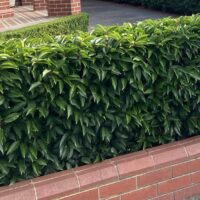
Much like its cousin, Portuguese Laurel, Cherry Laurel is another hardy plant suited to big and medium hedging. Its large, glossy green leaves create dense hedges that block sound, wind and cold. Cherry Laurel also produces white clusters of flowers in the spring that, unlike the Portuguese Laurel, protrude upward in a candelabra-like fashion. Tolerates poor soils, wind, heat, frost and light snow. Best suited to Formal, Cottage, Modern, Lush & Leafy and Woodland garden types.


Ligustrum undulatum ‘Box leaf Privet’

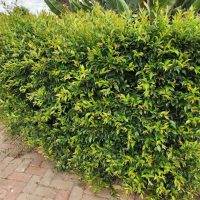
Commonly known as a box hedging plant, this versatile little beauty can also be grown and trimmed into medium and large hedges. It is best kept neatly hedged as it can look quite untidy when left to its own devices. It is a very hardy plant, enduring extreme heat, clay soils and frost. Unlike many other hedging plants, Box Leaf Privet does not produce flowers so it is a wonderful addition to the Low Maintenance garden or Poolside.


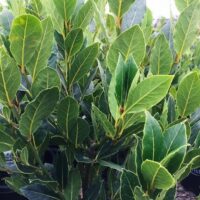
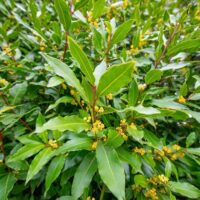
Laurus nobilis ‘Bay Tree’

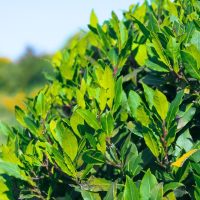
Bay Leaf is not only suited to the culinary garden. Laurus nobilis is a very popular Formal garden addition, often utilised as gorgeous potted standards, topiaries and pleached or full, formal hedges. It is a slow to medium growing plant so it doesn’t take much to maintain and once established, produces little inconspicuous yellow flowers. A great addition to the frost-tolerant garden.


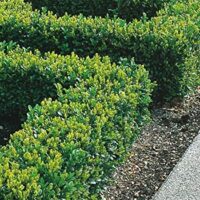
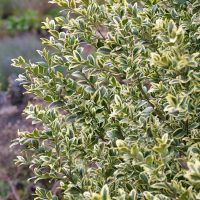
Buxus sempervirens English Box

A classic box hedging plant that can also be used as a medium hedge, English Box is a tough plant. Known to tolerate snow and ice, this slow grower suits almost any garden style from Cottage, Formal to Modern or Woodland. As it’s slow-growing it requires very little maintenance to keep it looking neat and it doesn’t produce any flowers, great for poolside or pathways.


Boxwood plants resistant to frost

Hebe

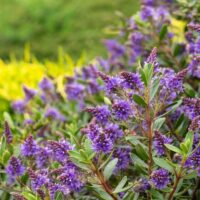
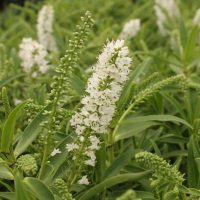
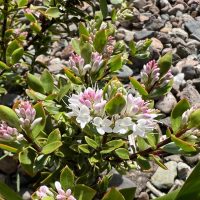
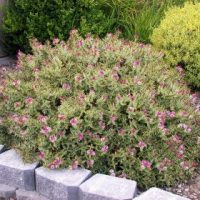
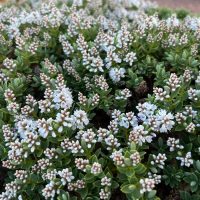
If you’re after that box hedge look but with more colour, look no further. There are many varieties of Hebe available, all of which are frost and cold tolerant. With flower colours ranging from white to pink, purple and almost blue, there are lots to choose from! They are best suited for box or medium hedging and can be formally trimmed or left unkempt. Suitable for Formal, Modern, Pots & Containers, Woodland or Cottage garden types.


Pittosporum ‘Silver Sheen’ and ‘Miss Muffet’

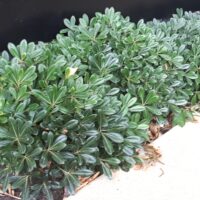
Fast-growing hedging is what Pittosporums are known for and all Pittosporums are cold and frost tolerant. For maximum performance, plant in well-drained, rich soil and you’ll have your hedge in no time! The ‘Silver Sheen’ and other similar varieties have small, rippled leaves but don’t let their size fool you. They can create a very dense and neatly trimmed hedge. But if you’re after a broader leaf variety, the ‘Miss Muffet’ Tobira Pittosporum has a deeper green, a long leaf that can tolerate even snow! Commonly found in Modern or Cottage gardens.


Cupressocyparis ‘Castlewellan Gold’ and ‘Leighton Green’

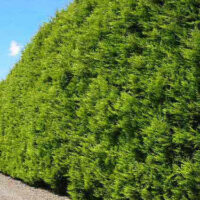
The most popular rural or acreage hedging plant are these big, lush conifers. If left to their own devices they can grow many metres tall and wide but kept neatly trimmed and maintained, they become one of the most stunning, shapely and formal-looking frost tolerant hedges. ‘Leighton Green’ and ‘Castlewellan Gold’ Conifers are best suited for tall hedging and not ideal for the small suburban or unit garden. They produce no flowers and are so dense they block sound and wind too! As mentioned they are found in Acreage style gardens as well as Formal, Hampton or Mediterranean garden types.


Here are some more articles you may like:

Mini screening plants

Sign up for our newsletter below

We will send you gardening tips, great deals, and exclusive giveaways. Happy Gardening!

Top 10 Low Light Indoor Plants

It can be hard to add some greenery to dull, dark rooms in the house but there is hope! Here we have a list of the Top 10 Low Light Indoor Plants that will brighten up your indoor spaces!

Top 10 Low Light Indoor Plants

  1. Sansevieria trifasciata
  2. Aspidistra elatior
  3. Epipremnum ‘Devil’s Ivy’
  4. Chlorophytum comosum ‘Spider Plant’
  5. Bromeliad
  6. Peperomia obtusifolia
  7. Platycerium ‘Staghorn Fern’
  8. Beaucarnea recurvata ‘Ponytail Palm’
  9. Zamioculcas zamiifolia ‘ZZ Plant’
  10. Calathea


Sansevieria trifasciata

Nicknamed ‘Mother-in-Law Tongue’ or ‘Snake Plant’, this hardy often sun loving plant can tolerate very low to no light situations. They’re often found in malls and offices for this very reason! Stunning feature plants, kept on desks or as office plant dividers. Some varieties are grown tall and used as a potted floor plant. In low light conditions they will only need watering every 2-4 weeks maximum as they can suffer from over-watering.


Aspidistra elatior

A stunning foliage plant, Aspidistra, or ‘Cast Iron Plant’ is exactly as its nickname declares. It is a tough indoor or shaded outdoor plant, tolerating a range of conditions. It can be found in two varieties – variegated or solid, lush green. It will require regular watering in high heating or air-conditioned environments so it keeps its lush appearance, though it can also tolerate spells of dryness.


Epipremnum ‘Devil’s Ivy’

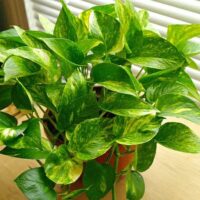
One of the most popular indoor plants and with good reason. Devil’s Ivy can grow in most indoor conditions, growing thick, bushy vines in lots of light or long, beautiful twining vines in lower light. To promote more growth at the base of the plant, trim the tips of the vines. Epipremnum can be kept in hanging baskets, used in green walls or trained up totem poles or even your wall! Some enthusiasts twine the vine around their curtain rods or shelves.


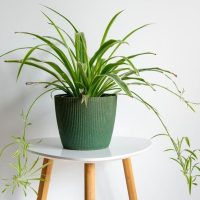
Chlorophytum comosum ‘Spider Plant’

This is a handy little desk or big pot filler. ‘Spider Plants’ or ‘Spider Grass’ are very easy to maintain, enduring low light conditions just as well as part sun positions. They don’t grow overly tall so they won’t get out of control. Their flower spikes gradually turn into ‘pups’ or smaller versions of itself, which can either be potted on and gifted, or trimmed off. If left on the plant it can turn it into a gorgeous hanging feature or in a green wall. Quite a versatile plant!


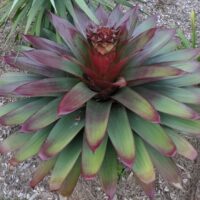
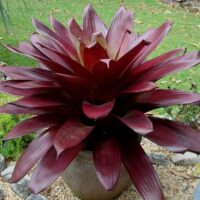
Bromeliad

Often associated with tropical gardens and climates, Bromeliads are surprisingly tough. Outdoors they can endure light frosts and cold temperatures. Indoor they thrive in warm, low light conditions providing the moisture level inside doesn’t get too dry. They will thank you for a light misting spray every now and then from either a humidifier or a spray bottle.

Peperomia obtusifolia

A cute little succulent-like indoor plant is the ‘Baby Rubber Plant’. Gorgeous in little pots as a table centerpiece or on your bookshelf. This little plant can survive in low light but does not like being over-watered, so make sure you monitor the soil moisture levels.


PlatyceriumStaghorn Fern’

This fern is ideal for bathrooms as it enjoys a humid room and can be grown in pots, hangers or more traditionally on a wall hanging! These gorgeous ferns are slow and steady, enjoying low light conditions. However, like most ferns they do not tolerate dryness well so keep them out of dry rooms with heaters blowing.


Beaucarnea recurvata ‘Ponytail Palm’

Ponytail palms are one of the toughest palms, being grown indoors and out. They create a sculptural, bulging trunk which makes for a stunning feature. They also don’t require a lot of water and will suffer from being grown in boggy wet soils.


Zamioculcas zamiifolia ‘ZZ Plant’

‘ZZ Plant’ or ‘Zanzibar Gem’ are another mall and office frequenter, being incredibly hard to kill in these situations. In fact, most reports of ZZ Plants dying are purely from too much love!
They are best suited for desk or bureau pots or mass planted as room dividers in an office. They only require watering every 2-4 months, tolerating air-conditioning and dry air.


Calathea

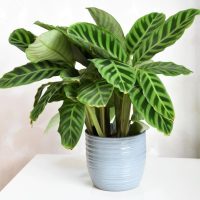
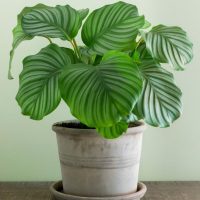
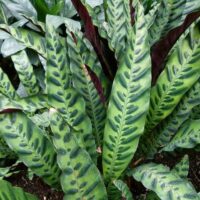
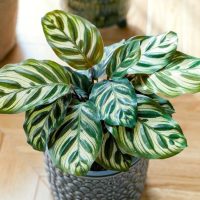
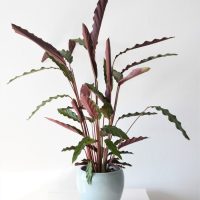
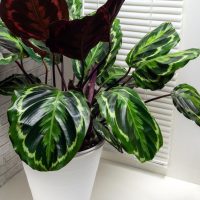
These beautiful foliage plants are happy to spend their time in low to no light conditions. Their gorgeous, round leaves turn upwards at night and back down during the day, giving it its nickname ‘Living Plant’. They will require watering every week, though check the soil before watering as they will not appreciate soggy soils.


Here are some more articles you may like:

For care for your indoor plants, check out Watering Indoor Plants(Coming soon)

Sign up for our newsletter below

We will send you gardening tips, great deals, and exclusive giveaways. Happy Gardening!

Top 10 Plants for Tall Pleaching

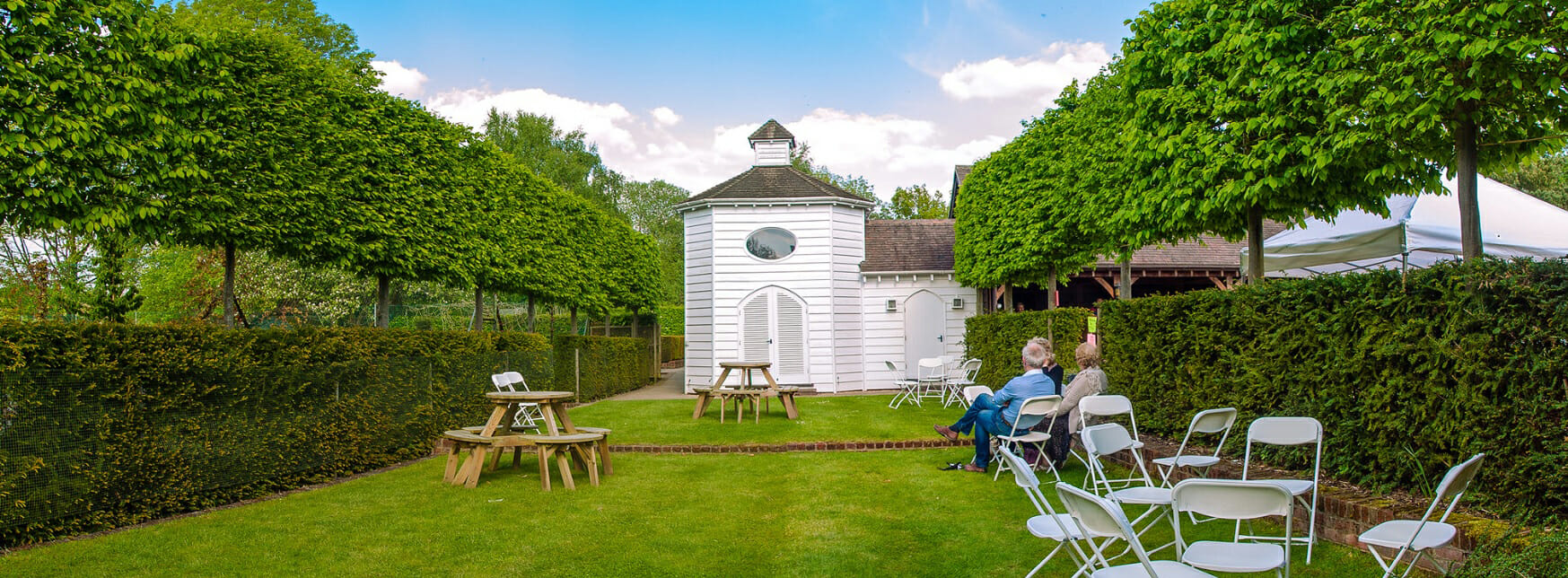
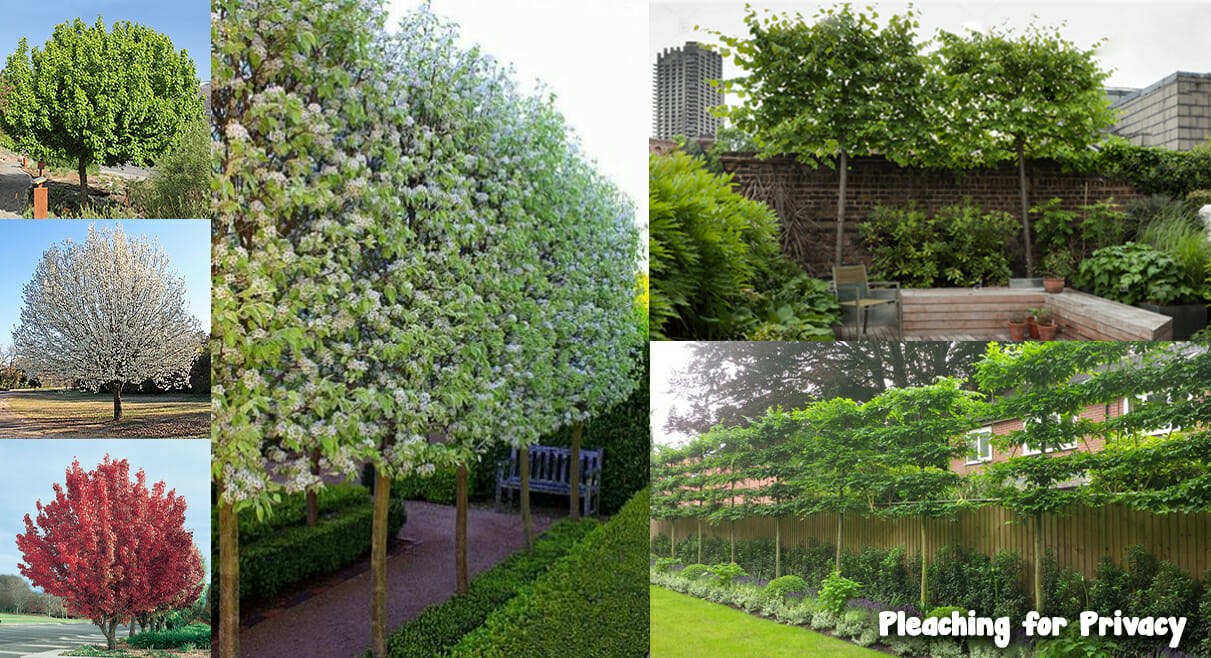
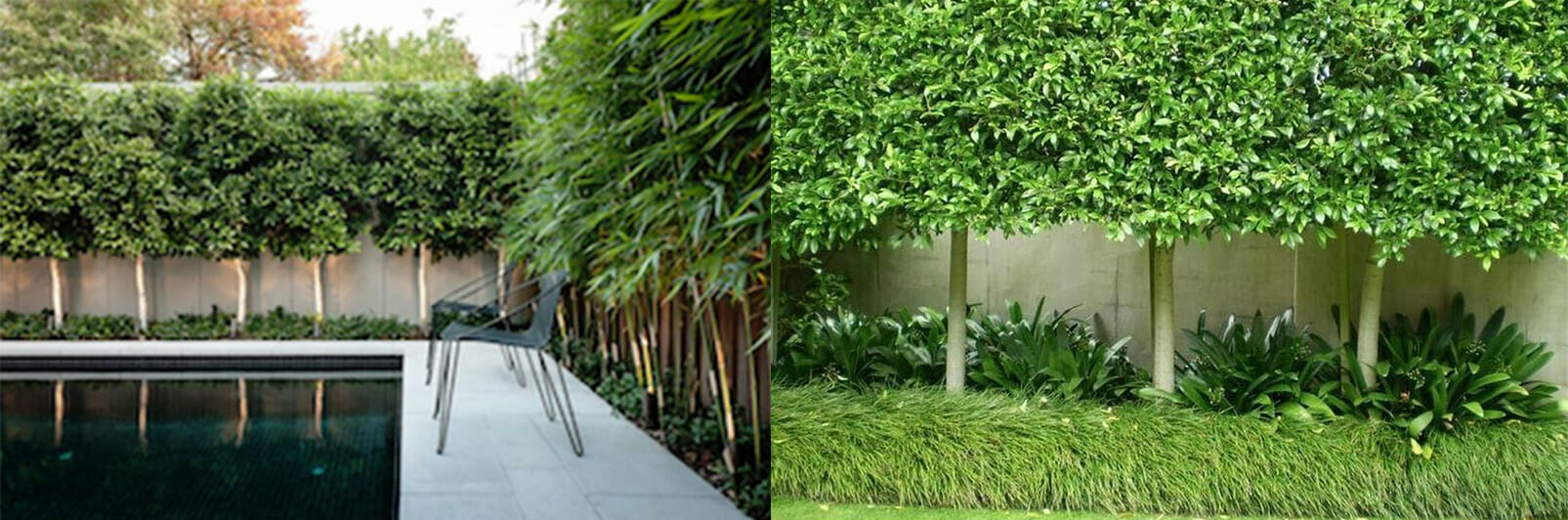
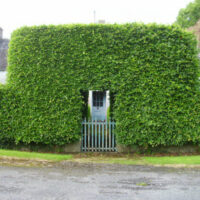
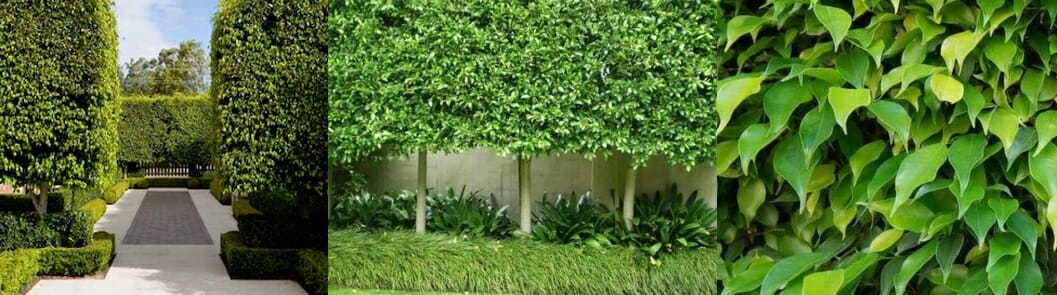
Simply an elevated hedge on clear, strong trunks, pleaching is an elegant style of hedging. As well as making a very dignified garden feature, the pleached hedge has several important advantages in landscape design that a conventional hedge lacks. 

Photo by flicker.com/Anguskirk

Creates space

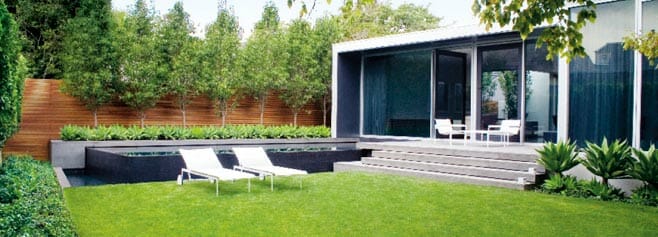
In small spaces, such as a courtyard or townhouse garden, a pleached hedge creates the illusion of space. The cleared understory opens up the possibility of a two-storey garden, where contrasting textures and colours can be artfully planted underneath against the bare pleached trunks.  

Tall yet narrow screening

Pleaching allows large, tall-growing plants to be grown in a narrow bed without looking clumped and crowded. As they require regular maintenance to keep the elegant pleached form it also keeps these large screening shrubs and trees in check. 

A feature with form and functionality

Where a hedge may be necessary to screen out adjacent buildings, roads or neighbouring windows, it turns a boring necessity into a very attractive and functional feature. 

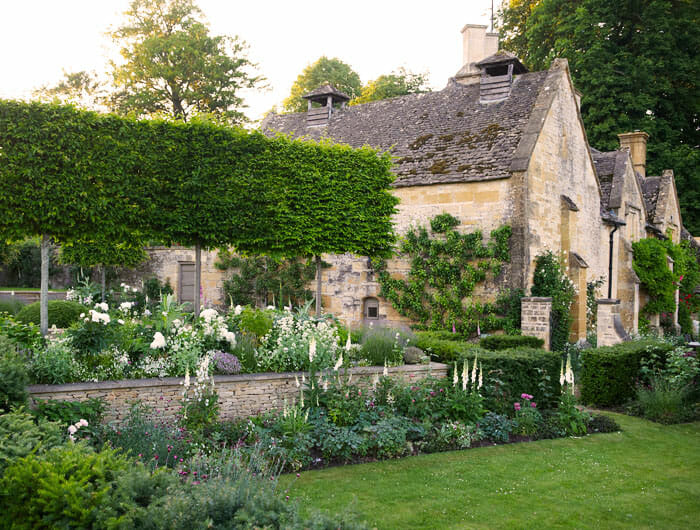
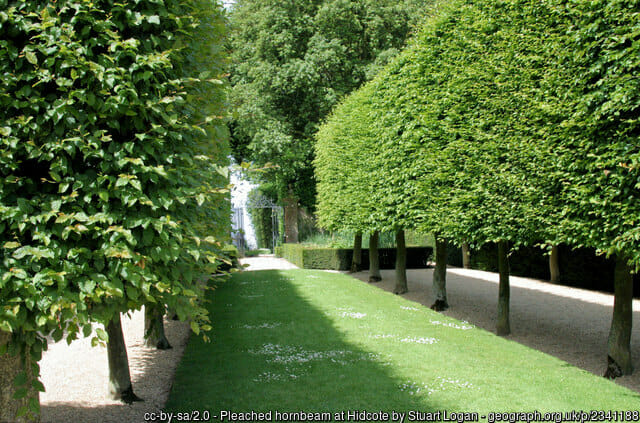
Example of pleached trees in an English cottage garden.

Pleached hedges are suitable for Formal, Modern, Tropical, and even Cottage gardens. What’s important is choosing the right variety of plants to pleach for the particular conditions and garden style.

Here are some points to note when picking the right plant for your pleaching project.

Maintenance
Pleaching requires a regular maintenance to keep the hedge looking lovely and neat, and those bare trunks bare!
Some plants will grow faster than others so you need to make sure you have the time to maintain the look you want.

Trunks
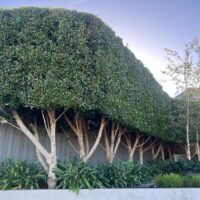
The trunks of the plants are going to be a main feature and thus kept bare. So keep in mind what kind of appearance you want your trunks to have. Usually nice, straight trunks are selected for uniformity. However, some people may like a more twisted or bendy trunk. Or will you might want multiple bare trunks!

And remember to prune the lower branches off neatly. The trunks need to be clean, clear trunks, not bumpy, knobbly ones.


Top 10 Plants for Tall Pleaching

  1. Gracillis ‘Slender Weavers’ Bamboo
  2. Prunus lausitanica ‘Portuguese Laurel’
  3. Prunus laurocerasus ‘Cherry Laurel’
  4. Pyrus ussuriensis ‘Manchurian Pear’
  5. Pyrus calleryana ‘Everscreen’ Pears
  6. Ficus hillii ‘Flash’
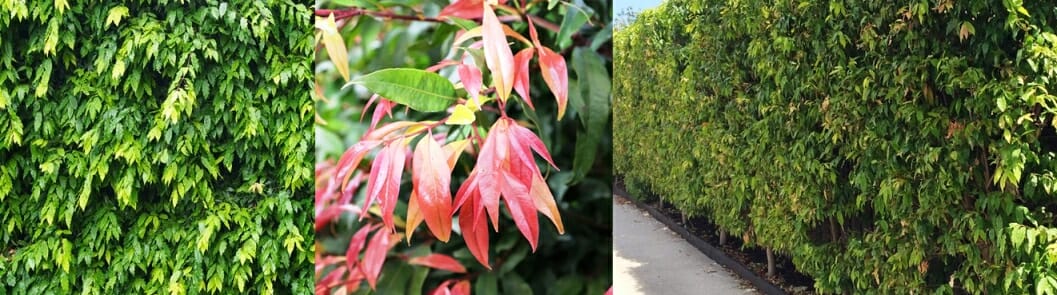
  7. Waterhousia floribunda‘Weeping Lilly Pilly’
  8. Carpinus ‘European Hornbeam’ Tree
  9. Fagus ‘European Beech Tree’ Green
  10. Photinia robusta ‘Red Robin’


Gracillis
‘Slender Weavers’ Bamboo 

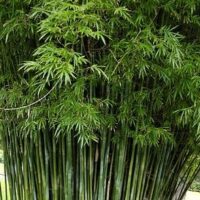
Gracilis is a unique and tall narrow screen for a confined area. It can withstand partial shade and requires regular watering (we recommend a watering system installed). It can look untidy unpleached, making it a fabulous option for pleaching!

It is very easy to trim and train, and unlike conventional pleached hedges will have multiple bared trunks on display.

Plant 1.5m apart. 


Prunus lausitanicaPortuguese Laurel’

With its large, deep green foliage and dense habit, this is an all-time classic for pleaching. It needs good drainage otherwise very hardy, versatile and easy to shape and maintain. Portuguese Laurel is shade and frost tolerant too, being a popular choice in rural areas. It also produces elegant, long white flowers in early summer.

Plant anywhere between 80cm to 1.5m apart.

Beautiful pleached specimens

Prunus laurocerasus ‘Cherry Laurel’ 

Suitable for large or grand pleached hedges with its large, glossy green foliage. It is probably the best plant to be grown in shade or in competition with an existing canopy. Cherry Laurel is very fast-growing, easy to shape and maintain. It is free from pests and diseases and is extremely frost hardy. Another rural property favourite.


Plant anywhere between 80cm to 1.5m apart.

Pyrus ussuriensis ‘Manchurian Pear’

If you want a pleached hedge with real character and interest then pick up the ‘Manchurian’ Ornamental Pear. Their horizontal branch structure makes them the best ornamental pear to be pleached. The ‘Manchurian’ Pear has naked branches covered in white blossom in late winter to early spring. Beautiful lush green foliage appears in spring through summer until late April when it begins its autumnal show. 

Apart from being a colourful character-filled tree, the Manchurian Pear will allow late autumn and winter sun through to the plants and garden beneath it.

Plant 1.5m-2m apart. 

Pyrus calleryana ‘Everscreen’ Pears

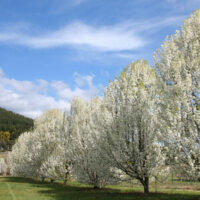
Where a tall, fast-growing pleached screen is required, the evergreen ‘Everscreen’ Pear is a great choice. It is capable of growing up to 2m a year, tolerant of most soil and weather conditions and will maintain its lovely green foliage throughout the winter in warmer climates.

Pleached Pear Trees

In rural Victoria, you can expect to see the leaves fall in autumn. However, within the city of Melbourne, they stay on the tree!

Plant 1.5m-2m apart

Click here to read more about  ‘Everscreen’ Pears 

Ficus hillii ‘Flash’

One of the most versatile and easy to grow pleaching plants, the Ficus ‘Flash’ is simply one of the most popular hedging plants around. Fast, tough, sun-loving, non-flowering, easy to trim and shape, salt, wind and heat tolerant! What more could you ask for!

For best results, Ficus need moderate to good drainage and are best kept away from water pipes and pools. They are also frost sensitive so unfortunately not ideal in rural or frost-prone areas.

Plant anywhere between 80cm to 1.5m apart


Waterhousia floribunda‘Weeping Lilly Pilly’

An elegant Australian native plant with cascading foliage, the ‘Weeping Lilly Pilly’ is a fast-growing and easy to trim pleaching hedge. It is a good choice where a less formal or very modern look is required and, rarely growing flowers, makes it a good choice near pools. Weeping Lilly Pilly can be grown in full sun to part shade positions, preferring well-drained, moist, rich soils.

Plant 1m-1.5m apart


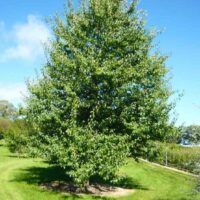
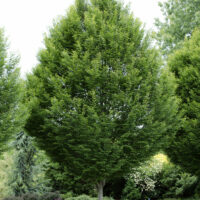
Carpinus ‘European Hornbeam’ Tree

Hornbeam trees are ideal for use as a hedge, screen, or windbreak. They produce attractive leaves that are dark green through the summer and fade to yellow in the fall. They also bear white/cream and grey flowers.

Hornbeams have extremely hard wood which is protected by smooth grey bark. They are narrow and upright when young, gradually widening as they age. Hornbeams are a top tree for pleaching.


Fagus ‘European Beech Tree’ Green

Beeches are an old European classic and are commonly used (but uncommonly known) as gorgeous pleached screens. In fact the tallest and longest hedge in the world is made of Beech! Being a deciduous tree, when it comes to autumn the Beech makes a feature out of the hedge, turning rich golds, highlighting their smooth barked trunks underneath.
Beech should be trimmed during their dormancy as the framework and structure of the tree are more visible at this time.

Plant 1-1.5 apart.


Photinia robusta ‘Red Robin’

If you’re after a bit of colour in your pleached hedge, look no further! Photinia are notorious for their vibrant red new growth, which you can see for miles. The ‘Red Robin’ variety has smaller and more vibrant leaves than the regular robusta, creating a wonderfully compact and dense hedge. The red new growth then turns to a gorgeous, deep green glossy foliage. Photinia are hardy, tolerating frosty and drought conditions. And their bare trunks contrast beautifully against the red or green foliage, being a sooth, light grey.

Plant anywhere between 80cm to 1m apart


Check out some more articles you may like:

Sign up for our newsletter below

We will send you gardening tips, great deals, and exclusive giveaways. Happy Gardening!

Blog Post Top 10 benefits of Indoor plants copy

Top 10 Benefits of Indoor Plants

We know you don’t need a reason to buy another indoor plant but there are those around you who do. We’ve might have heard ‘Don’t you have enough plants already?’ or ‘ANOTHER one? You’ve got enough!’

Well, we say ‘Never!’ 

And here’s our Top 10 Benefits of Indoor Plants to convince your friends and family that that new indoor plant baby needs to come home with you. 

We currently have a big sale with  40% OFF all our Indoor plants, in-store only! Come see us at 1477 Sydney Road, Campbellfield! 
Air purifiers

This isn’t an argument we haven’t heard before. In fact, NASA did an experiment in 1989, detailing how indoor plants clean the air of not only carbon dioxide but formaldehyde and benzene. Plants clean our air outside in the garden and in the wild, so it stands to reason that indoors they will do the same. There are, in fact, certain indoor plants that are particularly good at purifying your household air. These include Devils Ivy, Mother-in-law Tongue, Aloe Vera, and Spider Grass just to name a few!


Mood

There’s a reason why we feel better when we go outside in the garden. Plants are known to increase our mood and mental health, relaxing and enlightening us. When we can’t get out into the garden because of the wild winter weather, or maybe you just don’t have a backyard, bringing the wild indoors is the next best option. Whether it’s one little desk Cactus or a mini jungle in your living room, having plants indoors is sure to lift your mood.

Aesthetics

An obvious one but its benefits is often overlooked. Indoor plants are used in many industries to create a more aesthetic appeal to a room, whether it be in Real Estate to better sell a house, in restaurants to create a mood or vibe for patrons, or in your own home to welcome guests or relax and calm your own family! Their beauty, and sometimes bushiness, can cover or screen off unsightly areas, and make even the ugliest room beautiful.

Environmental Conditions

Plants can create a mini-ecosystem inside your house by changing the environmental conditions. Having a few plants around can increase the humidity in an often dry environment caused by heating and cooling. Or having a well-placed plant near a sunny or hot window can cool down an otherwise hot room. In fact, many avid indoor plant collectors will testify that having many plants inside creates a cool and comfortable environment due to the regular watering and maintenance of their plants and from the plants breathing and cleaning the air.

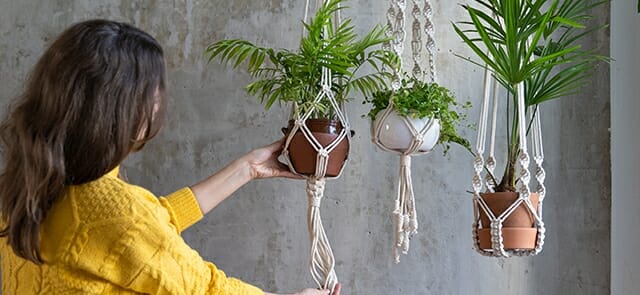
For beautiful hand-made Macrame plant hangers in VIC visit IG: hanah_macrame

Therapeutic Hobby

These last 2 years more than ever have we seen gardening become a hobby of any customers. Indoor Plant sales have gone through the roof, giving those isolated at home a sense of companionship and sating their natural human need to nurture. We feel challenged, accomplished and prideful when we care for and learn from our plants. Singing and talking to your plants is proven to be both beneficial to you and your plants!


Lower Stress
Quite often, what causes you stress is being in your own head, so there’s nothing like a good distraction to get you outta there! Focussing your energy on something peaceful like plant maintenance keeps you calm, attentive, and above all, busy! Your plant will enjoy the attention too. 


Immune System

Yep, that’s right! Not only do they reduce stress and improve your mood, but they are also known to boost your immune system. So a study in Texas in 2002 tells us, they are even known to heal patients in hospitals faster. In conjunction with their calming qualities which have obvious health benefits, plants release phytoncides, which have antifungal and antibacterial qualities. These qualities assist plants to fight disease. However, when we breathe them in, it provokes our immune system into producing NK white blood cells, which kill viruses and tumour cells in our body. Gosh, they’re amazing!


Increase productivity

Keeping calm, focussed and with a positive outlook has been proven to increase your productivity – who knew! It stands to reason that if you’re not surrounded by distractions or placed in a depressing cube that constantly reminds you that you’re at work, you’re obviously more likely to be able to focus on your task at hand, improving your quality of work and productivity. 

Allergies

With the stimulation of white blood cells boosting your immunity, cleaner air, and a relaxing environment giving you a calmer outlook, it’s no wonder that plants will also assist with fending off allergies. NASA is at it again, stating that plants draw in toxins via emitting water vapor, drawing it down into their roots and converting it into food. If your indoor plants are cared for properly they will reduce and remove pollen spores, mold, and dust, all of which can cause or irritate allergies.


Sleep Better
Cleaner and fresher air will help you sleep much better. And a calmer, relaxing environment is sure to send you off to sleep peacefully. On the other hand, if you’re a follower of Feng Shui, you may want to reconsider a plant in the bedroom as they represent upward energy and growth while your energy is supposed to be going down and quiet. But for the rest of us, go nuts!

We currently have a big sale with  40% OFF all our Indoor plants, in-store only! Come see us at 1477 Sydney Road, Campbellfield! 

You might like more of our articles below:

Sign up for our newsletter below

We will send you gardening tips, great deals, and exclusive giveaways. Happy Gardening!

Top 10 Plants for Mother’s Day!

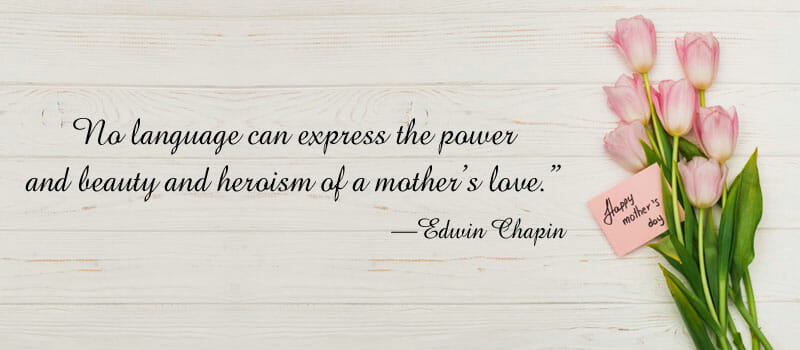
A big thanks to all the Mums this Mothers Day for putting in the hard yards, particularly these last few years. Mums of Australia deserve a sleep in, breakfast in bed and, of course, a beautiful gift to really show how much they are appreciated.
For Mums out there with a green thumb, we have a list of gorgeous green gifts that she is sure to love.
Or, if you know Mum has been wanting a particular plant for her garden, give us a call and we’ll help you get it for her!


Top 10 Mother’s Day Plant Pressies (+2 Extras)

Fuchsia

An easy plant to care for and bursting with vibrant colourful flowers in shades of red, white, pink and purple. Fuchsia are perfect for a doorstep or summer patio as they have a really long flowering season and will bloom right through the autumn in a sheltered spot. They are an all-time favourite for mum!


Daphne

Strong and sweetly scented in a compact little bun shape, the Daphne is a lovely little potted or cottage garden classic that Mum is sure to love. Some varieties flower for most of the year! They prefer rich, moist, well-drained soil in a sunny or part shade position.


Protea & Leucadendrons

Instead of buying Mum cut flowers, why not get her the everlasting kind! Proteas and Leucadendrons are a favourite in the floral industry, making superb, long-lasting cut flowers. If Mum likes to have flowers inside the house, why not get her a plant that produces them for her! These gorgeous plants are flowering right now too! They prefer well-drained soils in a sunny position and can be kept in large pots.


Camellia

A shrub that produces the most gorgeous winter blooms and can be shaped into a small bush, screen, espaliered or a tree. The Camellia comes in a variety of colours and flower styles, best suited for a mum with a love of pruning to keep this stunner looking fab!
Camellia prefers slightly acidic, moist, well-drained soils in part shade positions and can be kept in a pot or in the garden.


Weeping Cherry

A true garden feature for Mum to admire for many years to come, the Weeping Cherry is a real feast for the eyes in spring, summer and autumn! It gets covered in pink or white blooms in spring, a lush green umbrella canopy in summer and stunning autumnal colours in autumn! Best suited planted in the ground in a sunny position, well-drained, moist soil.


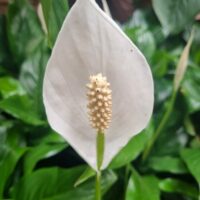
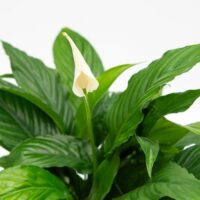
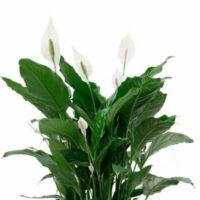
Peace Lily

Hard to kill, lush and leafy, and produces beautiful tall white flowers indoors! The Peace Lily is perfect for the Mum who is on the go and wants some indoor greenery but doesn’t have too much time to care for it. Peace Lilies are so good, they tell you when they need water, their leaves drooping down. Within an hour or two of watering, you’ll see those leaves spring right back up!
Best grown in well-lit areas of the house, watering roughly twice a month or when needed.


Mother-in-law Tongue

For an indoor Mum, a Mum with a black thumb and a Mum who loves a good joke, the Mother-in-law Tongue is hard to kill, an air-purifying indoor classic and sure to give (the right Mum!) a good giggle on Mothers Day!

Low light or well-lit areas, well-drained soil and don’t over-water.


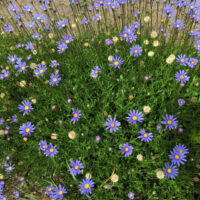
Daisies

Daisies are a popular choice for gardens—and for good reason. Bright, cheerful, and easy to grow, the flowers are readily identifiable and are a mainstay of cottage gardens and classic perennial borders alike. They flower abundantly for long periods for most of the year!


Mother’s Love Rose and other favourite roses!

Aptly named for a Mothers Day gift, this delicate soft pale pink rose in either a standard or a bush form is a wonderful surprise for Mum. Suited for pots or planted in the ground, this easy to care for plant is suited to any loving Mum! Prefers well-drained, rich soil and to be pruned back hard in winter to produce better blooms. We have lots of other very popular and rare roses that will surely delight mum!


Lemon Tree

For the culinary Mum, a zesty little number that will grow on her balcony or patio in a pot, or in a sunny spot in the garden – the Lemon tree! In fact, a Lime or Cumquat would also do just as well should she already have enough Lemons. These trees will need lots of water and fertiliser when producing flowers and fruit, to make them extra juicy.


Weeping Japanese Maple

A truly stunning little tree and one that just gets better and better with age (just like Mum!)
Mother’s Day is in autumn, a wonderfully colourful time of year and the time at which Japanese Maples show off their autumnal colours. Weeping Maples can be kept in a big pot or in the garden, prefer a moist, well-drained soil and a part shade position.

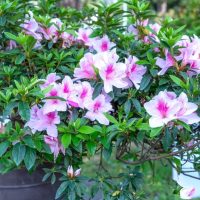
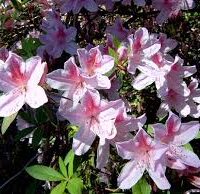
Azalea

Azaleas are beautiful plants known as the “Royalty of the Garden” because of their notoriously vibrant and colourful blossoms. The various shades of azaleas include pinks, purples, reds, oranges, whites and more. The number of unique blossoms for each type of azalea varies, as well as the shape of the petals

Gift Voucher

Give the gift of choice this Mother’s day with our lovely gift vouchers! 🎁👩‍🦰  These can be mailed by post or emailed and can be redeemed in-store or even online.

That’s it for the list of Top 10 Gift Ideas for Mother’s day. We hope you have a great family time this Sunday!

Top 10 Autumn Shrubs!

In autumn many deciduous plants transform from their lush green summer coats to hues of yellow, red, purple and gold. These warm colours gracefully transition us from the warmth of summer to the cold of winter.

Many of us have gardens that are on the smaller side, and if you don’t have that much space for big trees, there are always alternatives like shrubs, bushes or even dwarf trees that are nice and compact and will fit any sized garden.

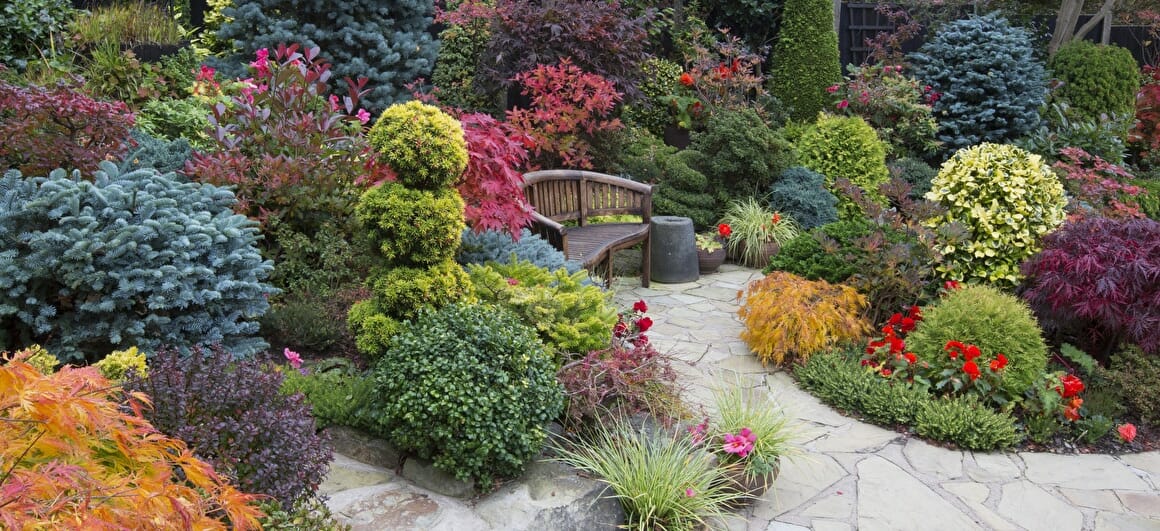
England Gardens Walsall Garden Shrubs

Top 10 most beautiful Autumn Foliage Shrubs.

  1. Berberis
  2. Nandina
  3. Witch hazel
  4. Beautyberry
  5. Oak-leaf Hydrangea
  6. Dogwood
  7. Physocarpus
  8. Viburnum opulus ‘Nana’
  9. Currants (Ribes)
  10. Blueberry

A few more beautiful Autumn Shrubs and climbers:

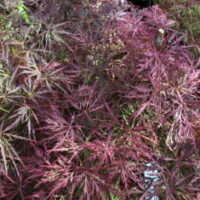
  • Dwarf Maples
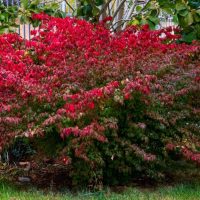
  • Euonymus ‘Burning Bush’
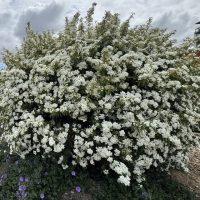
  • Spiraea ‘Double White May Bush’
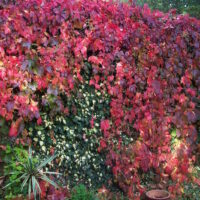
  • Parthenocissus ‘Virginia Creeper’
  • Parthenocissus ‘Boston Ivy’

______________________________________________________________


Berberis

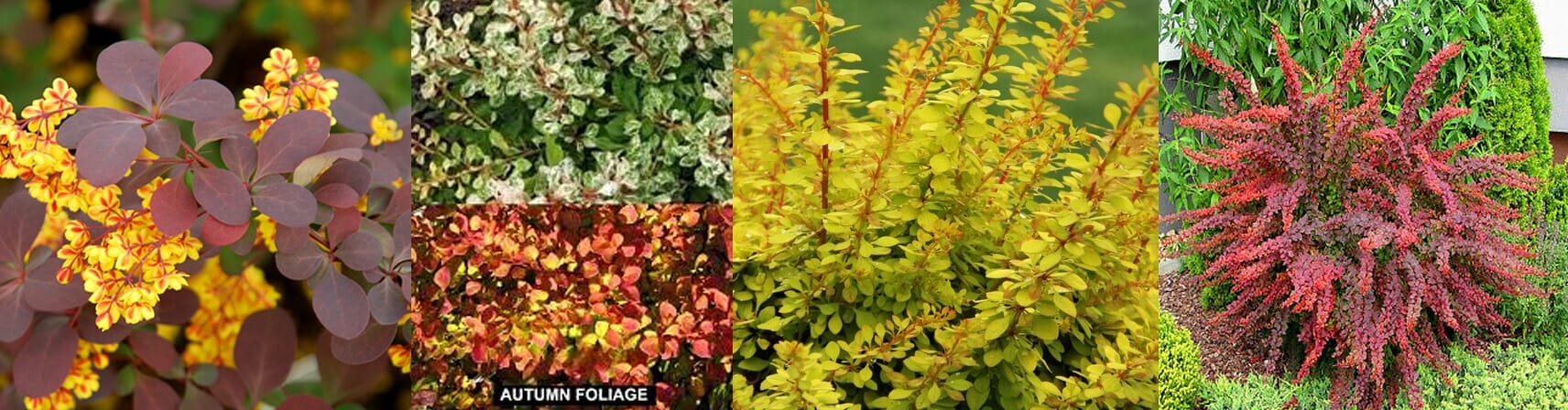
Nothing says autumn colour like Berberis! Small delicate green, purple or variegated leaves turn crimson, amber and gold as the temperature gets cooler. They make wonderful seasonal features and suit Cottage or Woodland garden styles. 

Berberis grow a maximum of 2m high but can be kept all the way down to 50-70cm. Small birds love to hide amongst the branches!


Nandina

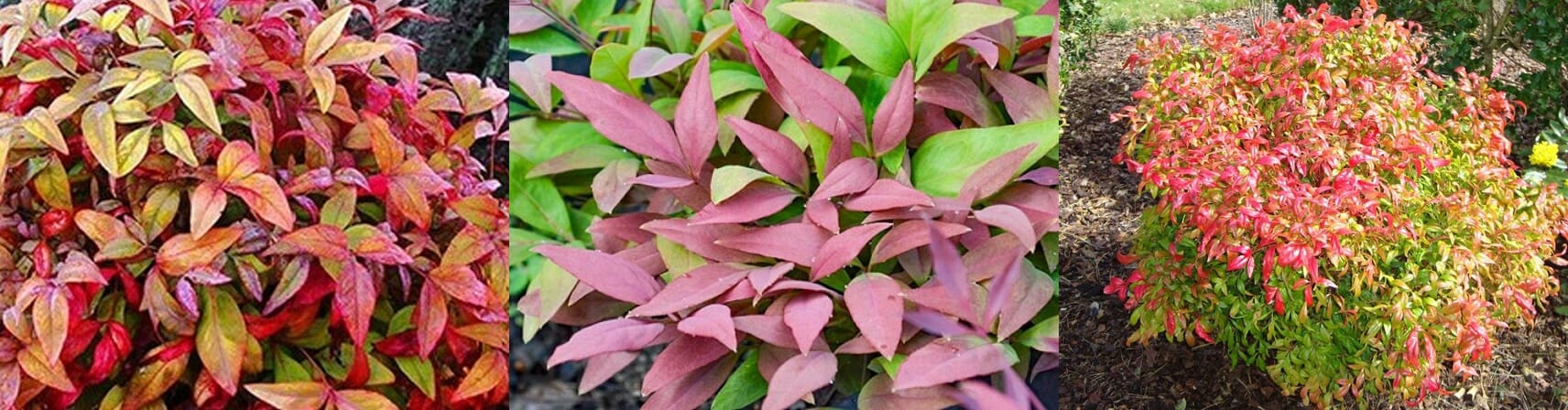
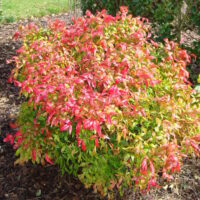
A hardy, easy to grow evergreen garden favourite, the Nandina or Sacred Bamboo comes in a few varieties. The Dwarf and Moon Bay varieties are compact and colourful, only growing to 1m tall. Their foliage is lush lime green in the warmer months, turning a deep crimson as it gets colder.


Witch hazel

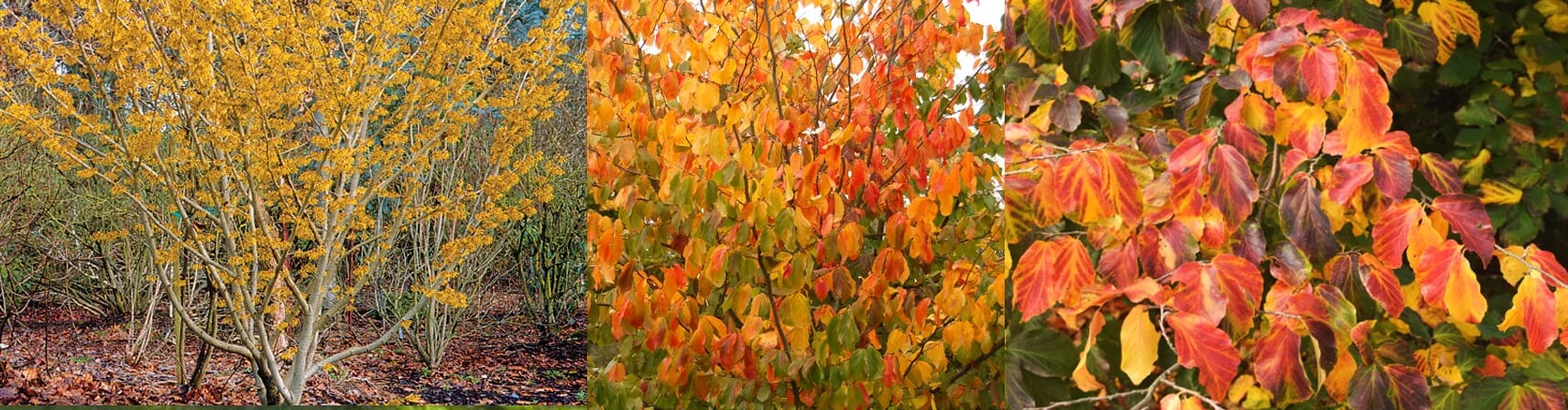
Bright blooms with wiggly petals pop up in late autumn in the nursery, causing customers to exclaim “what is THAT plant?” That is the often understated Witch Hazel! This medicinal plant produces phenomenal autumn colour and a really weird but staggeringly beautiful and fragrant flower. A must-have for the autumn garden.


Beautyberry

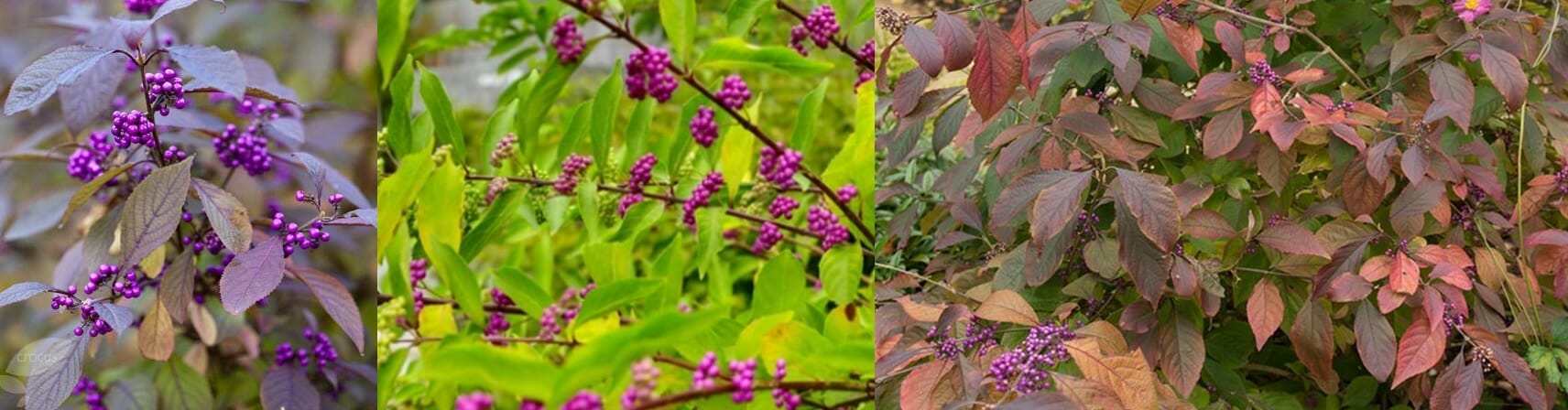
This fun plant isn’t on this list for its autumnal foliage (though it does produce a gorgeous yellow and amber glow!) The Beautyberry, or Callicarpa bodinieri, sprouts dazzling clusters of purple berries along the branches against the gold backdrop, creating an incredible contrast in colour! Beautyberry grows roughly 2 metres in height.


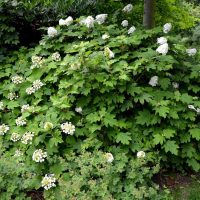
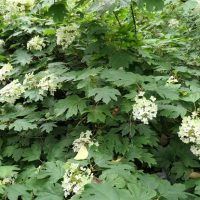
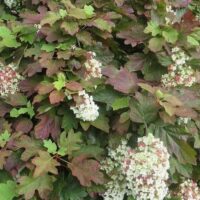
Oak-leaf Hydrangea

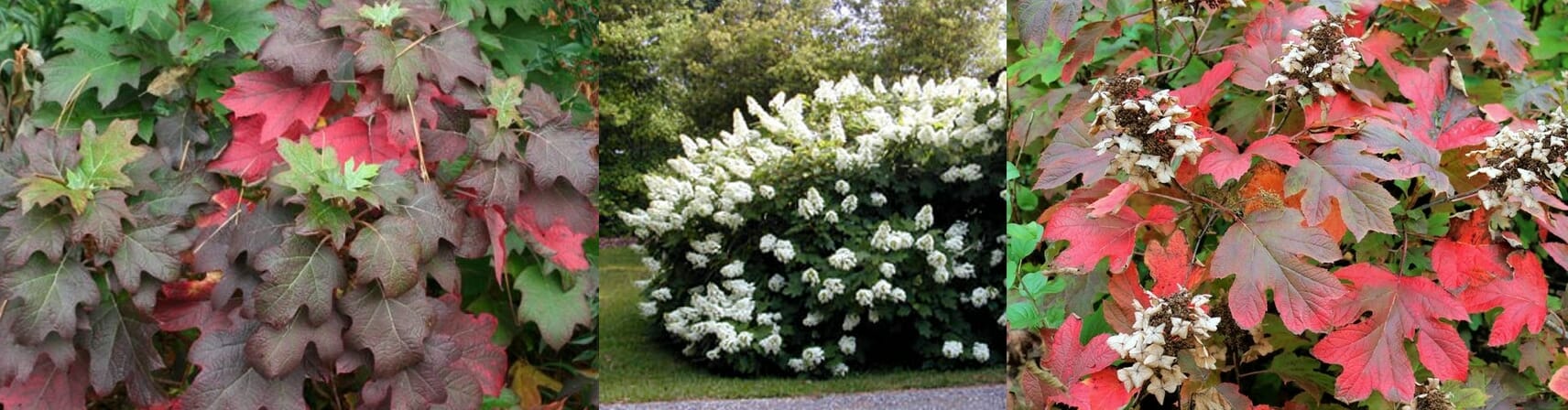
A small flowering shrub with leaves like that of an Oak tree. The Oak-leaf Hydrangea flowers during the spring and summer, its leaves turning crimson, carmine, amber, maroon and purple in the autumn. A truly versatile shrub.


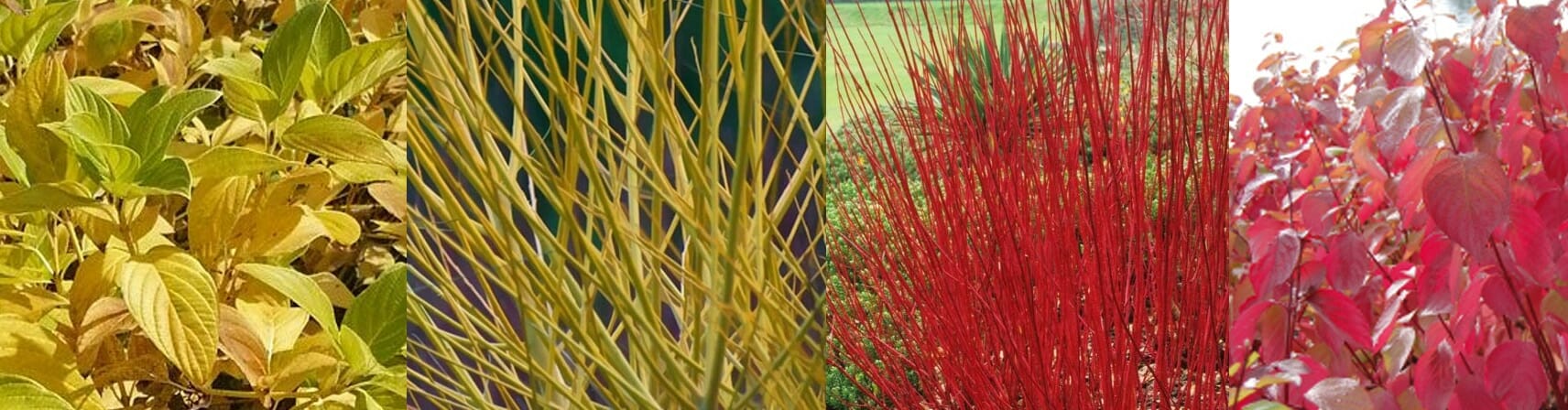
Dogwood

There are Dogwood trees and Dogwood shrubs. The trees are renowned for their autumn colour and beautiful summer flowers, whereas some shrub varieties also have vibrant autumnal foliage, but the branches underneath are the real show stoppers. Seen in autumn and winter are gorgeous, almost fluorescent stems of red or yellow. These shrubs grow from 1-2m tall.


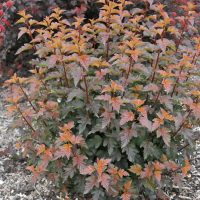
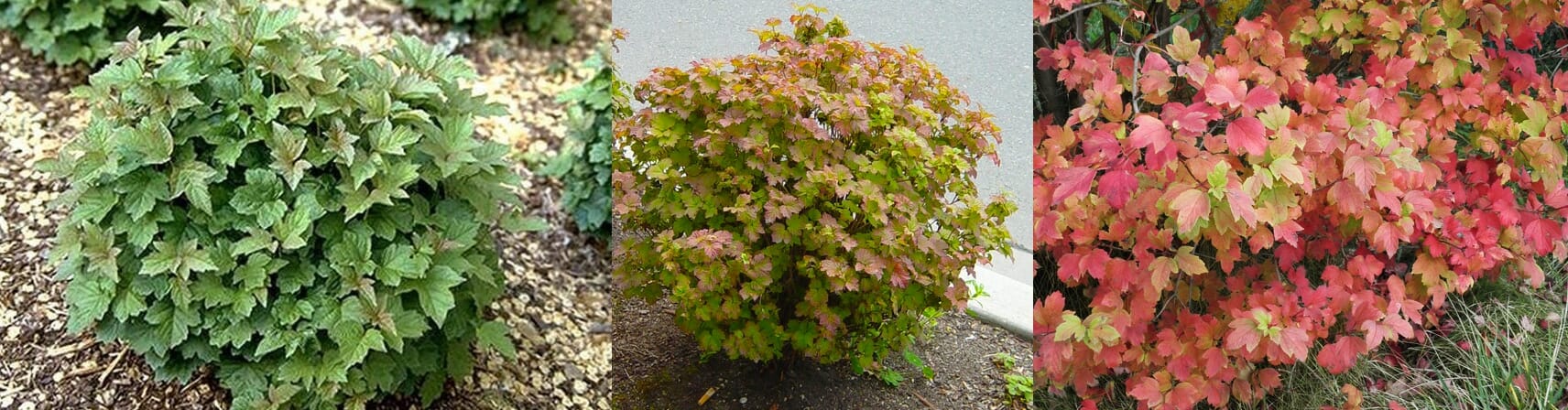
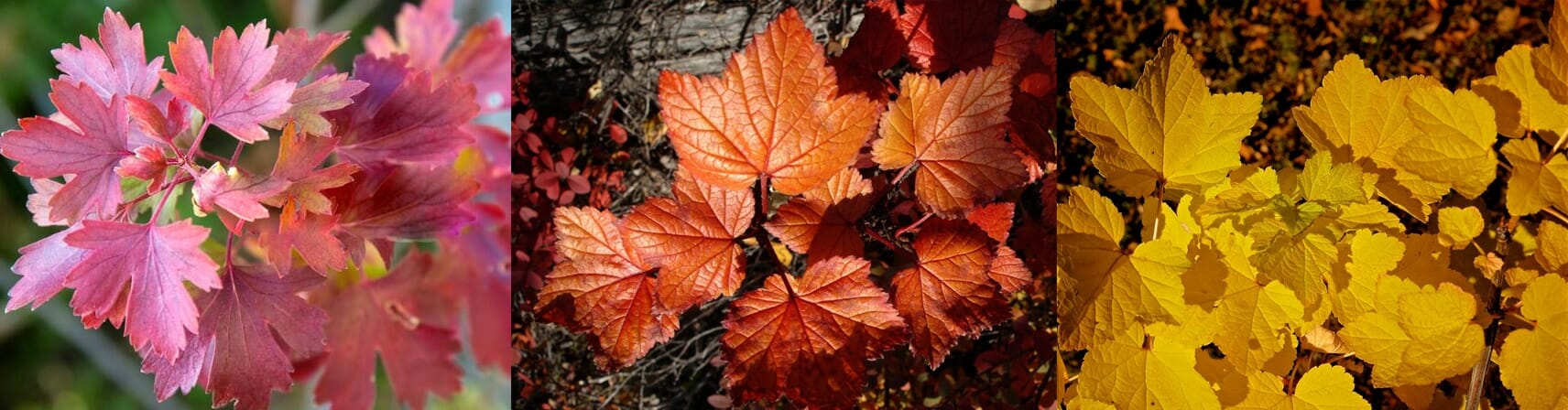
Physocarpus 

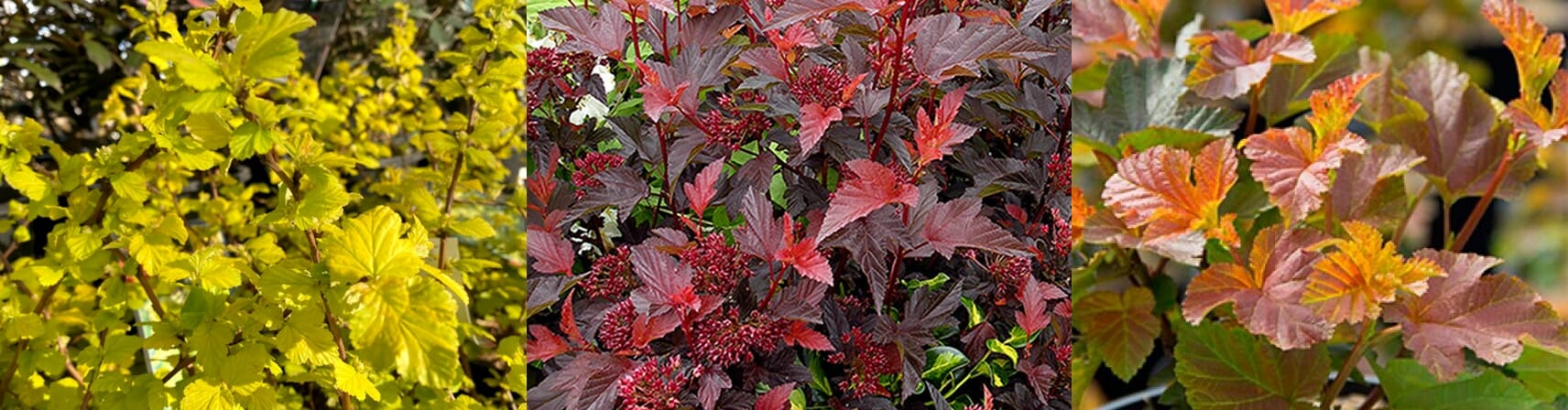
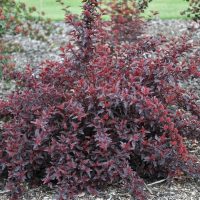
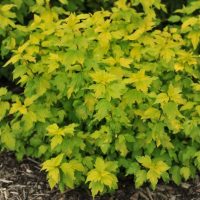
Varieties of Physocarpus or, commonly named, Ninebark come in beautiful purples, greens and golds, all of which convert to the rich colours of autumn when it begins to get cooler. The colours on the large leaves change from the edge inward making little artworks on each leaf. Suitable for pots and small gardens, growing anywhere between 1-3 metres tall.

Viburnum opulus ‘Nana’

A striking, small deciduous shrub that turns a rich purple and crimson red in autumn, the Viburnum opulus ‘Nana’ or European Cranberry Bush, grows only 30-60cm tall and compact. It is ideal for edging and borders, Cottage style gardens or pots! Unlike other viburnums, this one very rarely produces flowers or berries and hence requires far less maintenance.


Currants (Ribes)

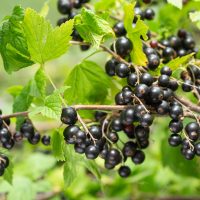
The next two are not only colourful but produce delicious berries in the summertime. Ribes nigrum or the humble Black Currant turns gorgeous reds, oranges and yellows in the autumn time. Ribes grow approximately 1-2 metres tall and should be pruned during the winter when they’re bare.


Blueberry

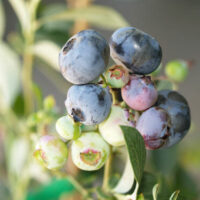
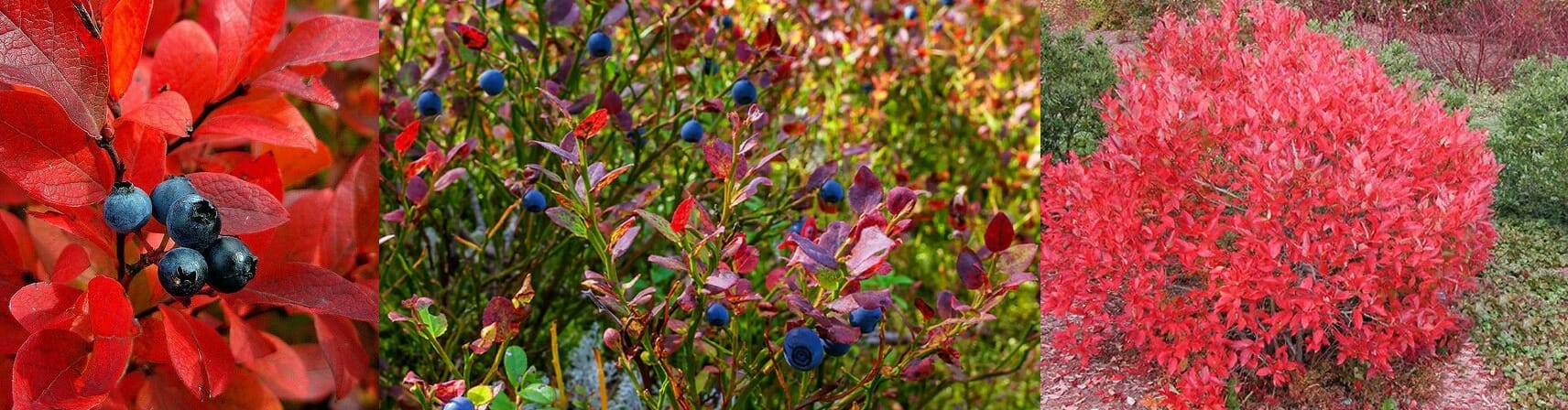
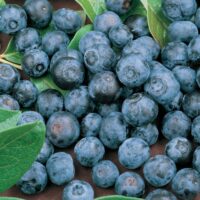
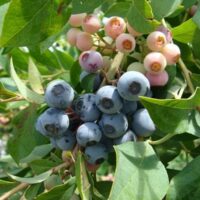
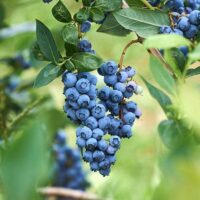
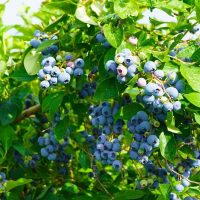
Bearing delicious, juicy blueberries in the summer under lush green foliage, the Blueberry bush is often forgotten for its autumn colour. Small, soft leaves change to gorgeous autumn colours. Blueberries grow best in acidic soil, benefit from a good trim and grow anywhere between 1-3 metres depending on the variety. Since different varieties produce berries at slightly different times of the year, planting a few different ones will extent the harvest period.


A few more beautiful Autumn Shrubs and climbers:

Besides the gorgeous plants mentioned above, here are a few others that are worth including in this list.

Dwarf Maples

Dwarf Japanese maples are excellent choices for smaller gardens because of their small stature and ability to thrive in small spaces.  Dwarf Japanese maples can be used in miniature conifer beds and rock gardens to provide dynamic contrast throughout the season. Dwarf Japanese maples can also be used in patio containers and bonsai.

Euonymus ‘Burning Bush’

A compact spreading deciduous shrub with stunning burning red foliage and ornamental berries.
Great as a feature plant or hedge that will add vibrant colour to your garden in autumn.
Plant in well-drained soil in a full sun to part shaded position. Approx growth 3mx3m. Frost and drought tolerant.

Spiraea ‘Double White May Bush’

Spirea is a semi-deciduous shrub with arching stems, lanceolate small green leaves and gorgeous white pompom flowers from spring to late summer. The leaves will change to a yellowish red colour in autumn before falling off. It will grow in coastal gardens and once established will tolerate frost, neglect and drought. Mature growth 2x2m

Parthenocissus ‘Virginia Creeper’

Virginia Creeper is a large deciduous climber that is very vigorous. Its foliage turns a bright red and orange in autumn. Given the space, it will ultimately grow higher than 12 meters with a spread of 4-8 meters.

Virginia Creeper thrives in a position of moist, well-drained soil and can handle both full shade and full sunlight. This vine makes for a gorgeous sight. It is generally easy to care for and is disease-free.

Parthenocissus ‘Boston Ivy’

Boston Ivy is a beautiful, classy small-leaved climber that is great for covering exposed or ugly walls, unattractive sheds, pergolas, arbours, rotundas, and trellises. The shiny green three lobed leaves turn spectacular shades of red and purple in autumn.

Check out some other articles that you may like:

Sign up for our newsletter below

We will send you gardening tips, great deals, and exclusive giveaways. Happy Gardening!

Top 10 places to visit this Autumn in Victoria!

Don’t miss the spectacular show of autumnal colour this year by staying inside! Get out and visit some of Victoria’s most colourful gardens and botanical festivals this season.

We have narrowed down our Top 10 places to visit this autumn for a spectacular show of sepia, scarlet, amber and gold!


Bright, Alpine National Park

Bright Victoria. Photo by Mehul Naik

No town could possibly do it better than Bright. Just before the busy snow season, the township of Bright makes for a picturesque vista of autumn colour. Holiday-makers, hikers and photographers will all find great pleasure in visiting this little town.


Whilst there, check out the Bright Autumn Festival, April 22nd to May 1st

Click here for directions

KaBloom Festival of Flowers, Silvan

Kabloom Festival of Flowers

Dates: April 2nd – April 26th

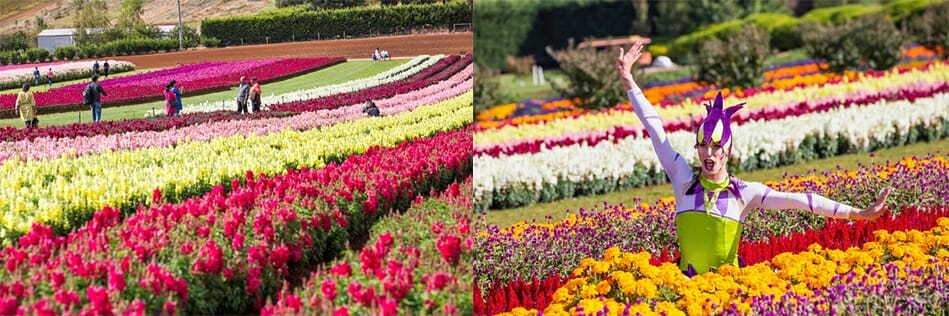
For some colour in autumn of a different kind, the KaBloom Festival of Flowers is a vibrant show of autumn flowers. Blooms of all colours of the rainbow are specifically grown for this festival in dense rows spanning the Tesselaar property in Silvan. It is a festival not to be missed!

Visit the KaBloom festival page here 

Click here for directions


Valley of Liquidambers, Heathcote

Valley of Liquidambers. Photo by Kylie McKay

Bath in a sea of autumnal colour in the Valley of Liquidambers! A gorgeous picnic spot to relax and unwind, or the chance to try out your photography skills. Whatever the reason, this spot is a must-see on your autumn list!

Click here for directions


Walhalla, Gippsland

Walhalla Gippsland. Photo by Kathryn Potempski

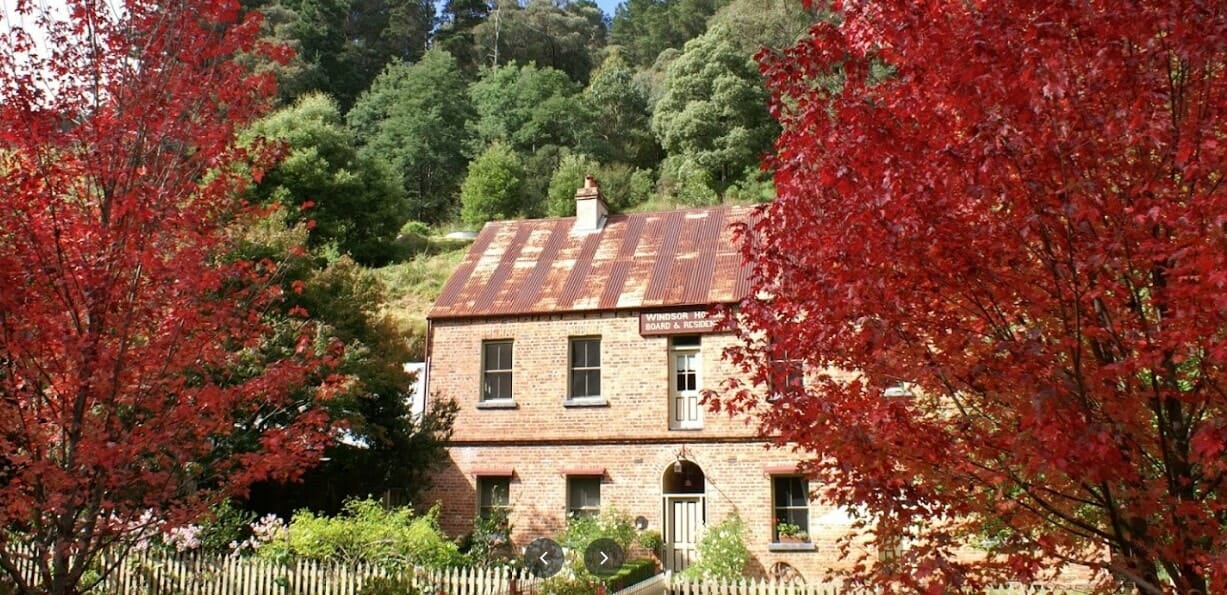
The little historic township of Walhalla in Gippsland has streets lined with gorgeous, deciduous trees and shrubs, showing off striking autumnal colour. Whilst here, enjoy some of the gorgeous alpine parks, gold mining heritage and old architecture. 

Click here for directions


Beechworth & Stanley

Beechworth. Photo by P. K

A short trip North from Bright, you’ll find an autumn colour extravaganza! Beechworth is an old-world town, boasting heritage architecture and enormous old oaks and elms covering the town in colour. Down the road in Stanley are copious amounts of walnut, apple and hazelnut orchards putting on their own autumnal show.

Click here for directions


Macedon, Macedon Ranges

Gardens of Tieve Tara. Photo by Trish Khoo

A little town nestled against Mount Macedon in Victoria’s north boasts an incredible Avenue of Honour of large Pin Oaks. Just up the road, you will also find three gardens that are a must-visit. Duneira Gardens, Tieve Tara Gardens  and Forest Glade Gardens all put on a gorgeous autumnal show. 

Click here for directions


Daylesford & Hepburn Shire

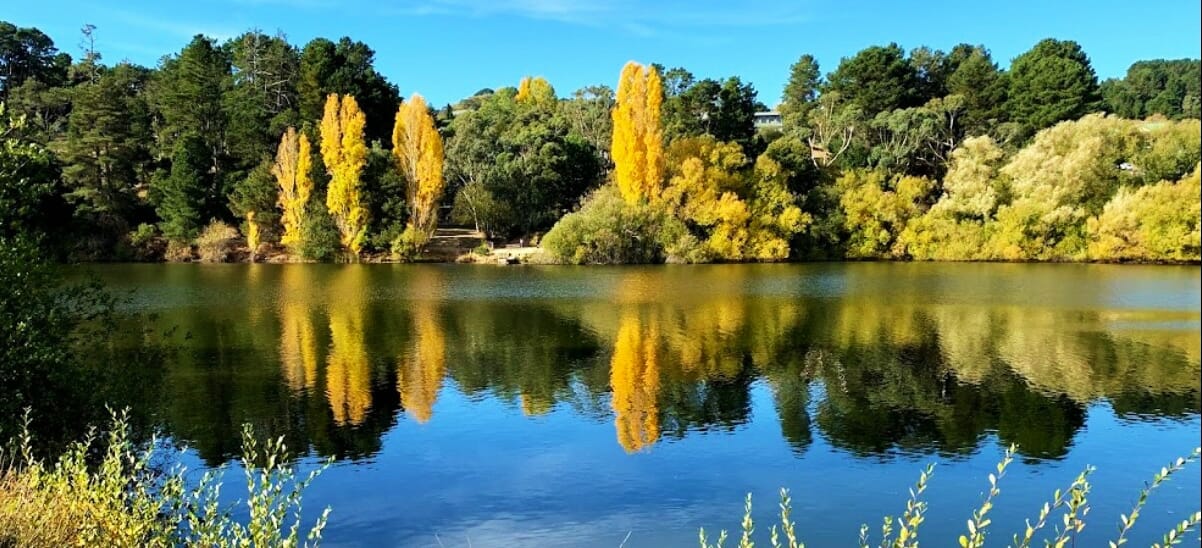
Central Lake, Daylesford. Photo by Winston

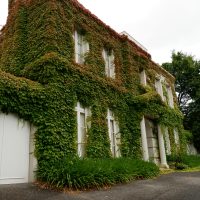
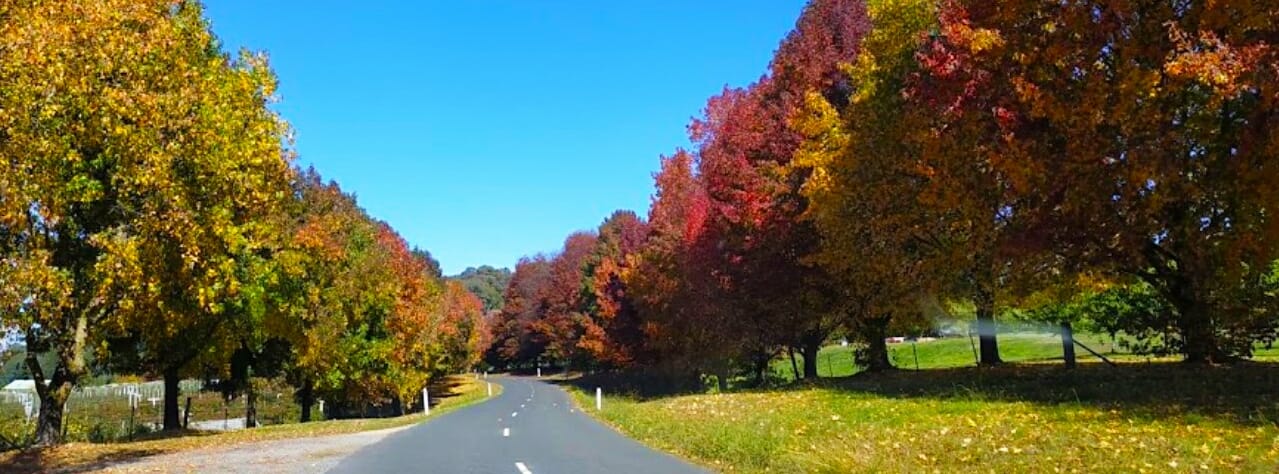
The star of spa country, the bustling tourist town of Daylesford makes for a brilliant and fun autumn destination. The Wombat Hill Gardens above the town boasts some 80-160-year-old trees, Scarlet and English Oak, Elms, Beech and Hornbeam just to name a few. Down in Hepburn Springs, you will find gorgeous autumn colours along the roadside and down in the Mineral Springs Park. Lavandula Lavender Farm puts on a fun-filled festival with jam making, chestnut roasting and preserving. This year events are still postponed due to Covid but with hope, they’ll be back soon!

Click here for directions


Alfred Nicolas Memorial Gardens

Alfred Nicholas garden Photo by Coffee Kuo

Up in the Dandenong Ranges, nestled amongst the tall redwoods are brilliant eye-catching gardens, and the Alfred Nicholas Memorial Gardens is no exception. If you’re a Japanese Maple and Ginkgo biloba fan, these gardens are for you. Burnham Beeches Bakery is just next door with stunning gardens to match that of the Memorial gardens.

Click here for directions


Dandenong Ranges Botanic Gardens

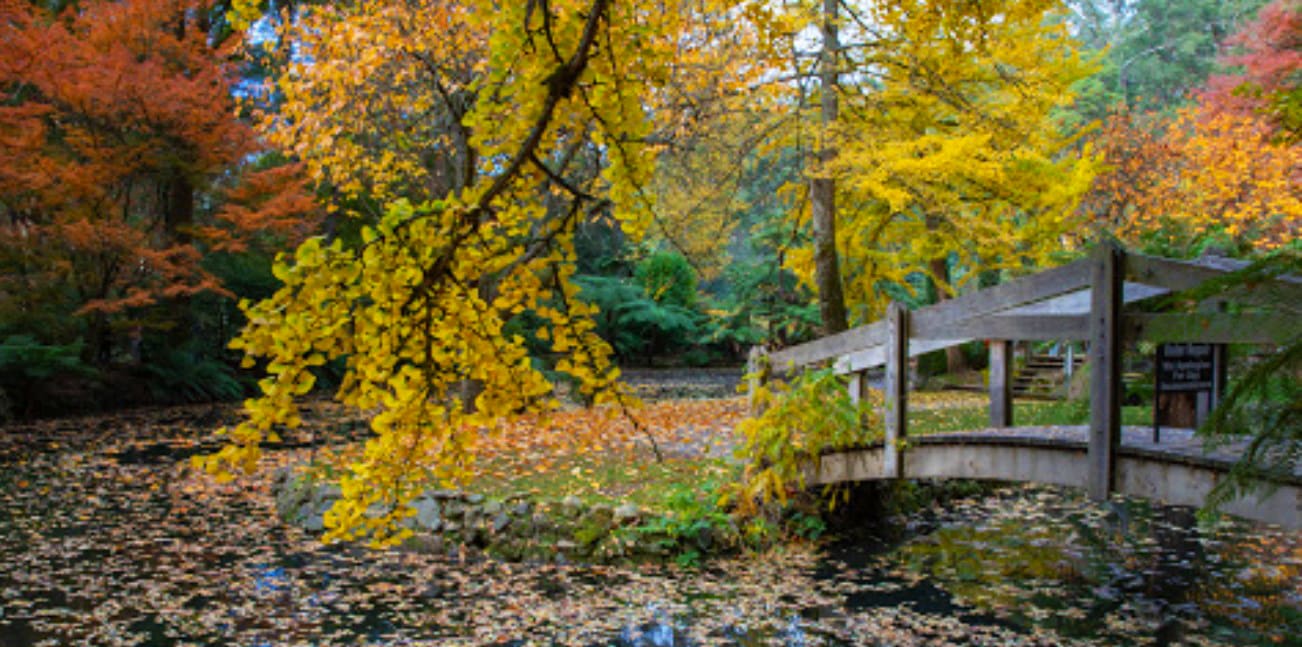
Dandenong Ranges Botanic Garden Ornamental Lake. Photo by Gavin Clark

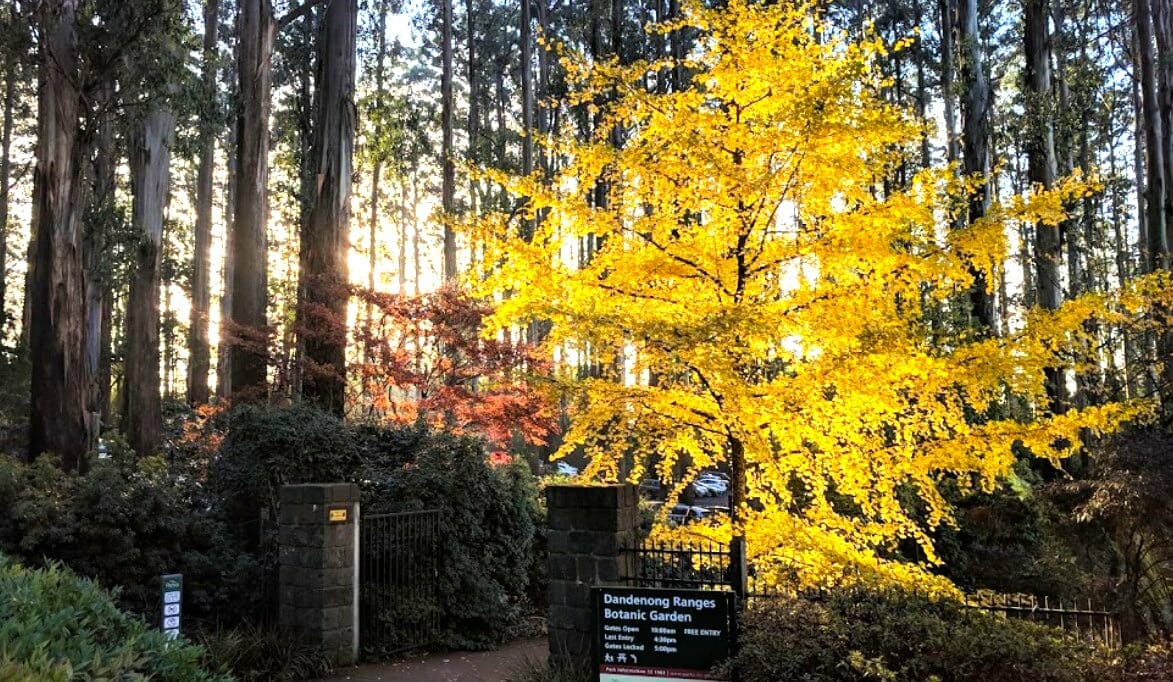
This is a garden jam-packed full of colour and excitement (well, at least for the fellow plant lover!) Dandenong Ranges Botanic Gardens has an extensive amount of deciduous and evergreen tree varieties, shrubs and flowers. A must see in both spring and autumn, the gardens put on a spectacular colour display. Japanese and European Maples, Cherry trees, weeping Silver Birch against a gorgeous pond, giant Oaks, and a Ginkgo biloba as a golden beacon standing vigil at the entrance against the towering redwoods! You’ll easily spend all day here.

Click here for directions


Cloudehill Gardens, Olinda

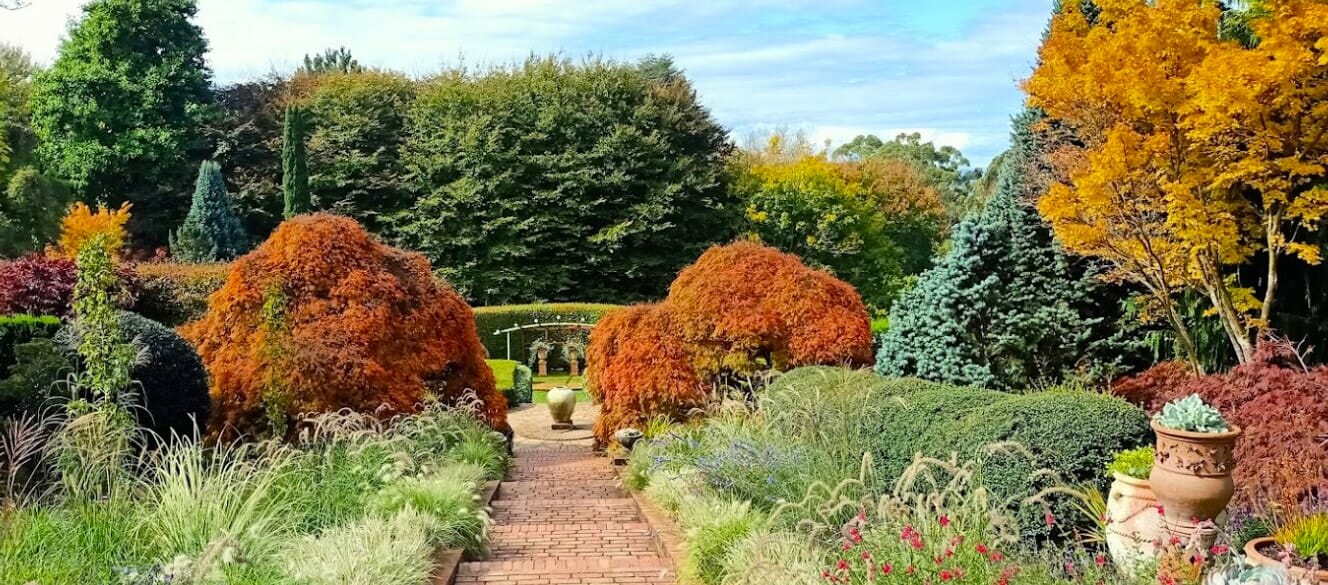
Cloudehill Garden & Nursery. Photo by Mathew Fedley

A beautiful, dense, cottage-style garden, Cloudehill Garden was created and revived from the remains of an old cut flower nursery. These gardens show a real love of the horticultural industry, with many rare and interesting varieties grown and cultivated here including a beautiful specimen, Enkianthus perulatus. Autumn brings about a phenomenal colour and textural delight with flowering grasses, shrubs and of course deciduous foliar display!

Click here for directions

And finally our own nursery:
Hello Hello Plants Nursery in Campbellfield 

Hello Hello Nursery at 1477 Sydney Road, Campbellfield

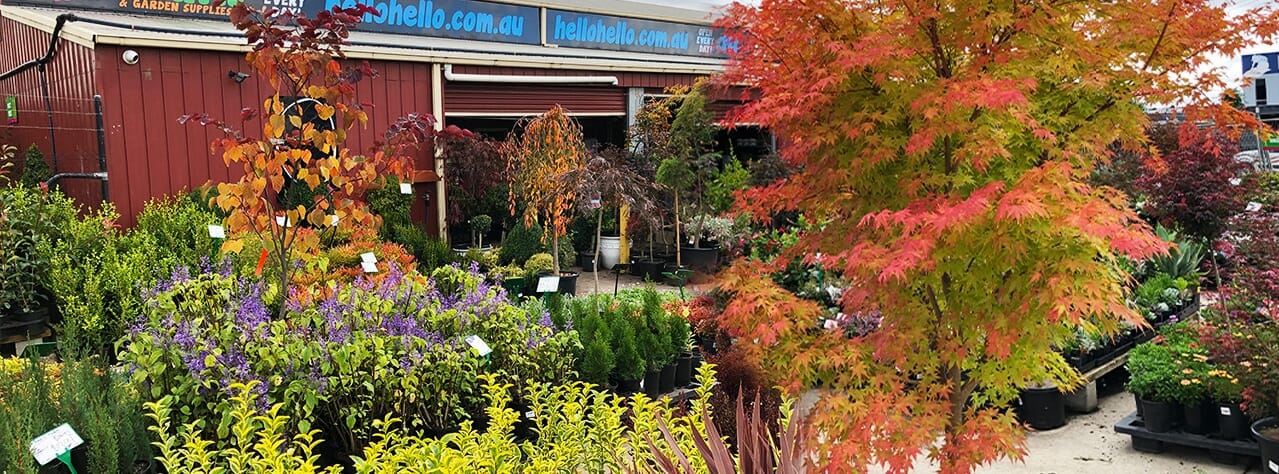
Our nursery is filled with beautiful and colourful plants at this time of the year! It makes it so easy to choose what you would like to have in your garden.

Click here for directions

Some other articles you may like:

We also have a list of the Top 10 Autumn trees and Top 10 Autumn shrubs that you can buy today, to add some Autumn magic to your own garden. Click on the banner below to read it!

That’s it for this list of Top 10 places to visit this Autumn in Victoria, 2022.
We hope that you enjoy this beautiful Autumn display of colours.
Hello Hello Plants.

Sign up for our newsletter below

We will send you gardening tips, great deals, and exclusive giveaways. Happy Gardening!

Blog Post Top 10 Screening Plants

Top 10 Screening Plants!

Imagine being in your backyard relaxing, enjoying a drink and kicking back on your deck to catch some serious rays and then you catch the neighbour having a peek at you over the fence. Relaxation ruined! Or what if a two-storey unit goes up right next to your property with a whole floor of windows peering down into your backyard creating the feeling that you’re always being watched, even when you’re not!
Not all of us are lucky enough to get views of the rolling hills or the ocean from our yard. Instead we’re in fence-to-fence housing with backyards to match. To reclaim some privacy, screening plants are essential. But screening is not the only reason to be planting a hedge, green wall or screen.

Top reasons to plant screening plants:

  1. Privacy from neighbours, tall units and busy roads
  2. Protection from strong winds and gusts
  3. Cools any concrete or brick areas during summer and subsequently reduces heat inside the house.
  4. Thick screens are great sound insulators from busy roads
  5. A filter for dust and smoke pollution that might otherwise just blow onto your outdoor furniture, deck, windows or pool
  6. Attract wildlife and birds
  7. Hides unsightly features such as water tanks or ugly walls
  8. Create a lush, relaxing outdoor environment

Hedging or screening plants. What’s the difference?

Although they sound the same, hedging and screening have some subtle differences. It just depends on your needs.

  • A screen is typically less formal in design than a hedge, and it is used to hide an eyesore, create privacy or block the wind
  • A screen often uses more individual plants, rather than a dense block of foliage
  • A screen commonly requires less maintenance than most hedges, which usually need several trimmings throughout the year to keep them in a tight shape
  • Hedges provide total block-out while screens break a view (from a particular window for example)
  • A hedge will be dense, generally from top to bottom, and will block out light and views while a screen can be pleached halfway down the bottom.

Planting and Growing Tips for Screening plants:

  • Drip-irrigation system on a simple timer is highly advised. Correct watering is critical for quality growth.
  • Work the soil according to the plant requirements. Adding some quality compost or composted manure through the soil is ideal.
  • Once planted, fertilise with some liquid fertiliser and feed at regular intervals. A controlled release component that feeds for 6-months and an organic component to look after all-important soil microorganisms works wonders.
  • Mulch well at planting time and top-up at least once a year.
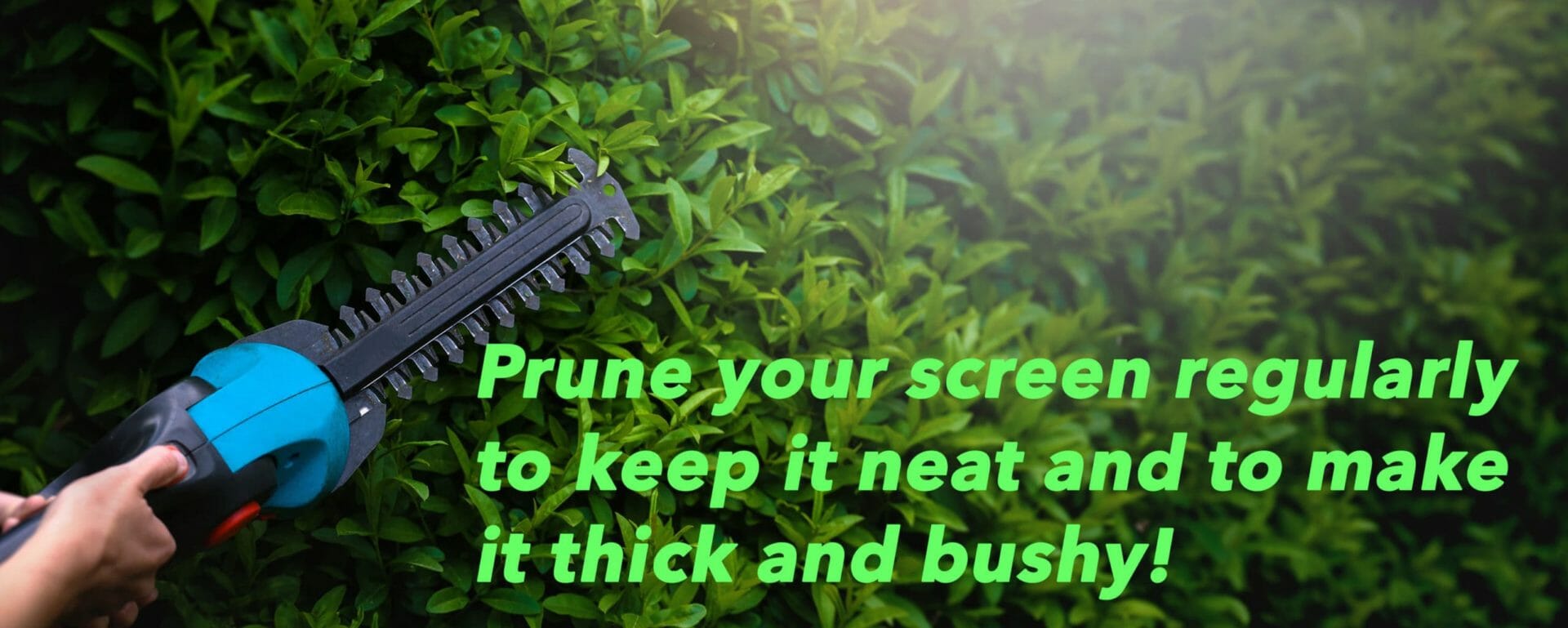
  • Prune early and prune often. Regular pruning and shaping makes a screen dense and bushy, similar to a hedge. Light pruning will allow more light through and the plant to grow more tree like.
  • If you want a dense screen, grow plants fairly close together – a distance slightly less than the mature spread of the plant (We have provided ideal planting distance for each plant below)
Trimming your screen is very important! It keeps it healthy and lush looking!
  • Be patient! If you are on a budget and will plant fewer or smaller plants, they will take some time to get established before they start growing fast. If you want a quicker effect, be prepared to pay more for larger plants; what we would call instant screens.
  • Should you be in a real hurry, bamboo makes a quick and tall screen. Clumping varieties are advised rather than the running types, which are prone to taking over a garden, and your neighbours!
  • Make sure to trim your screens at the desired height often. If you let them grow too tall, they might be difficult or even costly to trim back afterward.
  • Choose your plants by your requirements such as soil type, growth speed, maintenance, and also your visual preference. The wrong plant in the wrong environment won’t grow!

Ok, now that you know the basics, let’s take a look at the plants


Top 10 Screening Plants

  1. Leighton Green Cypress
  2. Bamboo Gracilis
  3. Sweet Viburnum
  4. Weeping Lily Pillys
  5. Ficus Flash
  6. Cherry Laurel/ Portugal Laurel
  7. Photinia Robusta
  8. Orange Jessamine
  9. Pittosporum Silver SheenPittosporum Wonder Screen
  10.  Neighbours-Be-Gone Lilly Pilly – Syzygium Australe


1. Leighton Green Cypress

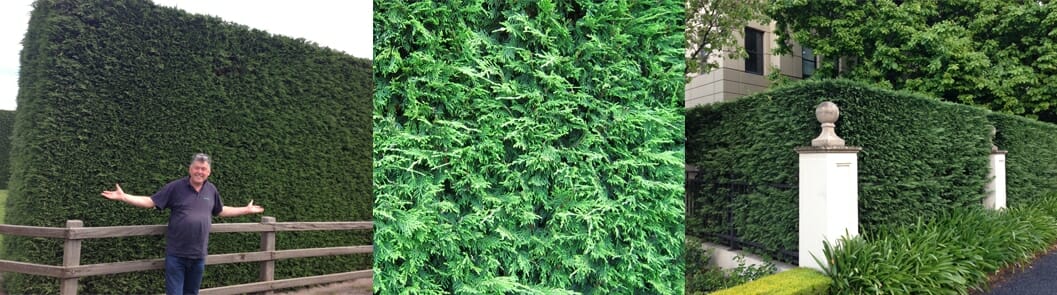
Leighton Green Conifer is a fast-growing conifer that provides great green colour all year round. Grows upright and is usually quite symmetrical.
Click here to read the full fact sheet.

Ideal for: Total visual, noise, dust & dirt protection. Large gardens – NOT small
Growth Rate: Fast – Upto 3 meters in the first 18 months
Height: 10-12m if left unchecked
Soil Requirements: Tolerates nearly all soil types but prefers well-drained, fertile soil.
Maintenance: Medium-Low. Prune 2-3 times a year to keep nice and thick.
Planting Distance: 1m apart

2. Bambusa ‘Gracilis/Slender Weavers’

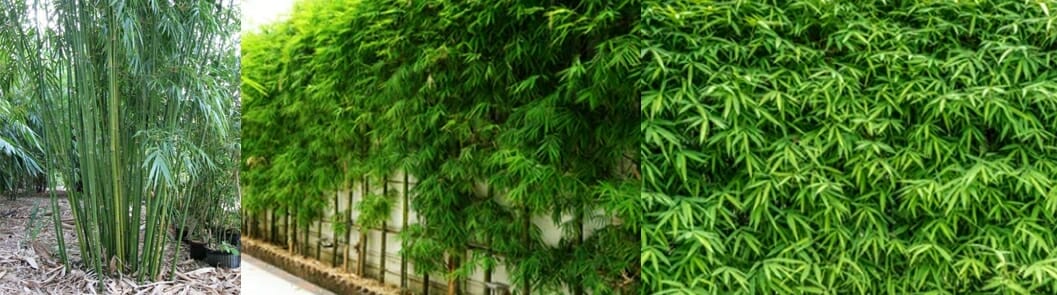
Slender Weavers Bamboo’s stalks are tall, narrow, and straight, and graceful leaves with ever-changing green stems make this bamboo a real stunner. It is ideal as a large screening plant for privacy against a double story next door or planted in a small courtyard as a great specimen. It is also an extremely fast grower and will grow in a wide range of situations including a windy coastline or a shady mountain gully.

Ideal for: Tall narrow hedge in small spaces.
Growth Rate: Very Fast- 3 to 4 meters in 12 months time
Height: 4-6 meters, up to 8m in warmer areas
Soil Requirements: Deep, well-drained, fertile soils.
Maintenance: Low. Requires regular watering so a timed watering system would be ideal. Prune and thin once a year. Thick shoots can be dried and used as garden stakes!
Planting Distance: 80cm apart for a dense screen. Keep in mind that they clump (send out new shoots all the time.)

3. Sweet Viburnum – Viburnum odoratissimum

Sweet Viburnum is a dense evergreen shrub with distinctly large leathery oval green leaves and producing fragrant small white flowers in spring. It makes a perfect ornamental addition to any garden, particularly as it sprouts beautiful red berries in autumn.

Ideal for:  Ornamental flowering hedge or screening plant that grows even in shaded areas
Growth Rate: Moderate – 30-60cm per year
Height x Width: 3-4m
Soil Requirements: Moist, moderately fertile, cool soil
Maintenance: Low-Moderate. A couple of prunings a year to keep it in shape. Produces berries that may require cleaning up.
Planting Distance: 1m apart

4. Weeping Lilly Pilly – Waterhousea floribunda

This Australian native is known as the Weeping Lilly Pilly due to its slightly drooping habit, which is visually very attractive. It is often used as a hedge or screen and responds well to pruning. Although often used as a hedge, it can also be planted as an evergreen tree. It flowers white in summer. It can easily grow in many soil types and copes well with damp soils. It is fast-growing and has a lovely, lush, compact foliage with the new growth a pink/rust colour adding contrast. It is less prone to bug attacks than other Lilly pillys.

Ideal for: Average soil types and around pools with regular trimming
Growth Rate:
Fast. Up to 2m a year.
Height: 8m if left unchecked
Soil Requirements: Grows well in a wide range, but prefers Loamy to Sandy loam soils
Maintenance: Moderate. Twice yearly pruning to keep it in shape is advised. Does produces tiny fruit in warmer climates that may require cleaning up. Not so much in Melbourne
Planting Distance: 1 to 1.5m for total screen

5. Ficus ‘Flash’

Ficus hillii ‘Flash’ is ideal as a screen because of its dense foliage, fast-growing habit and ability to be trimmed into many shapes! It has attractive foliage which, consists of different beautiful glossy greens. Ficus hillii ‘Flash’ can also be shaped into a standard (ball on a stick) topiary style tree and pleached (Leaves on top, bottom trunk bare). Caution: It does have an aggressive root system so it is advised to contain the size of the plant to contain the roots. Not suited for around pools.

Ideal for: Very windy, drought-prone areas, salt
Growth Rate: Fast – 1-1.5m per year
Height: 10-15m tall in the natural environment. 4-6m tall in urban environments.
Soil Requirements: Fast. Up to 60cm per year.
Maintenance: Low. One or two prunings a year is enough.
Planting Distance: 1 to 1.5m for total screen

6. Cherry Laurel and Portugal Laurel

Cherry Laurel is a large evergreen shrub or small tree that has deep green glossy leaves that are large, leathery, and oblong. The veins are distinctly yellow. It has strongly scented tiny creamy white flowers that appear in spring. Cherry Laurel is an attractive and useful addition to the landscape. This plant is shade tolerant and makes an excellent dense hedge. Prefers well-drained moist soil.

Portugal Laurel is an evergreen, large spreading tree. It features glossy dark green leaves with slender spikes of small, scented white flowers in summer. Portugal Laurel is very effective as a hedging or screening plant that can be kept clipped from 1-4 metres, or left to grow into a small spreading tree. Its dark glossy green leaves provide an ideal backdrop for other plants in the garden, and it’s very showy when in full flower.

Cherry laurel Portugal Laurel Hello Hello Plants Melbourne Australia

Ideal for: Flowering Screen or Pleached tree
Growth Rate: Moderate- 30-60cm per year
Height: 4-8m depending on conditions
Soil Requirements: Slightly acidic, moderately fertile, moist, well-drained soils.
Maintenance: Low. Twice yearly trimming to keep it neat. Can produce berries that may need cleaning up
Planting Distance: 60-90cm

7. Photinia Robusta

Photinia Robusta is a small fast-growing tree with glossy red foliage turning green in the warmer months. It has small white flowers, that can have a slightly unpleasant odour in summer with red fleshy fruit following. With a dense growth habit, it’s great for screening.

Ideal for: Colourful, red and glossy screen
Growth Rate: Moderate- 30- 50 cm in 1 year
Height: Up to 7m
Soil Requirements: Fertile, loamy, and well-drained soil
Maintenance: Low. Pruning two times a year. Flowers may require pruning if they bother you.
Planting Distance: 1 to 1.5m for total screen

8. Orange Jessamine – Murraya paniculata

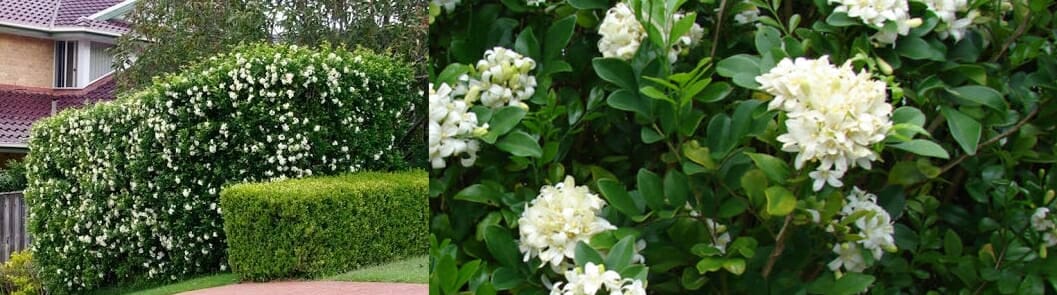
Orange Jessamine makes a fantastic hedging or screening plant. As it flowers it creates a wonderful feature hedge that is highly fragrant. It can also be used in pots as a specimen tree or as screening on balconies. Orange Jessamine’s white, highly perfumed flowers appear in summer in large masses but can spot flowers throughout the year. The uncommonly seen fruit is a small orange berry shape.

Murraya orange jessamine

Ideal for: Flowering hedge or screen
Growth Rate: Slow to medium – Grows about 30-40 cm per year
Height: 3-4m
Soil Requirements: Adaptable to various soils but prefers loamy, free-draining soil enriched with organic matter
Maintenance: Low. One pruning per year is enough.
Planting Distance: 30-50cm apart

9. Pittosporum ‘Silver Sheen’ &  Pittosporum ‘Wonder Screen’

Pittosporum ‘Silver Sheen’ is a lovely evergreen screening plant. The silvery-green leaves give it a unique shimmering effect. It can be planted along fence lines to give your space some privacy. It likes full sun, can grow in coastal areas, tolerates light frost, is suitable for growing in containers, and responds very well to pruning.

Wonder Screen is a new form of Pittosporum that is noted for its dense and tighter habit. Similar to ‘Silver Sheen’ foliage it produces a striking mix of silver and green with dark stems. It will grow in full sun to a semi-shade position. Grows to approximately 2-4m in height.

Pittosporum Silver Sheen

Ideal for: Different looking screening and hedging
Growth Rate: Fast. 60-75cm per year
Height: 2-4 m high and
Soil Requirements: Adaptable to most soil types except wet clay or really dry but prefers deep, well-drained soil.
Maintenance: Low. One to two prunings per year
Planting Distance:
1 per meter

10. Neighbours-Be-Gone Lilly Pilly – Syzygium australe 

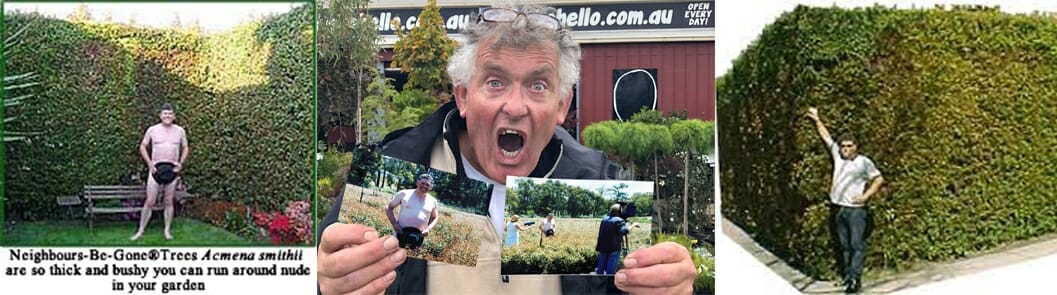
Neighbors-be-gone and Chris running around nude in the garden is literally what made Hello Hello Plants famous back in the day! Chris had (and still has) these wacky ideas for ads and he just had to do them!

Neighbours be gone

Neighbors-be-gone trees can be used to create tall screens, large hedges, and large topiary. They can be planted in pots or confined areas. Although they have the potential to grow into large trees, their size can be contained by regular clipping. Neighbors-be-gone trees have deep green, dense, fine foliage and copper-red new growth and can grow two or more meters per year once established, and love to be clipped and shaped.
Click here to read the full fact sheet.

Ideal For: Thick privacy screens
Growth Rate: Very fast: 1-2m per year once established
Height: Over 25m if left unchecked. Maintain at the desired height.
Soil Requirements: They thrive in almost any soil
Maintenance: Moderate. Requires a few prunings per year and clean up when it flowers and fruits.
Planting Distance:
For fast results plant 75cm apart otherwise 1-1.5 metres apart

Some other great recommendations for Screens

Some other great Screens that require Fence/Trellis support

If you already have a fence, you can also plant a climbing plant to grow over it! It might not cover everything, but will provide some privacy, especially higher up.


Here are some more articles you may like:

Sign up for our newsletter below

We will send you gardening tips, great deals, and exclusive giveaways. Happy Gardening!

Top 10 Indoor air purifying toxin removing plants

Top 10 Indoor Air Purifying Plants!

Indoor Plants: Air Purifying Edition

Are you looking to purify the air in your home? Reduce toxins? Then check out this list of Air Purifying Indoor Plants that made the list on NASA’s Clean Air Study. Keep in mind that you need to have one plant for every 10 square metres to achieve this! Sounds like a good excuse to expand your indoor plant collection (shhh, we won’t tell anyone!)


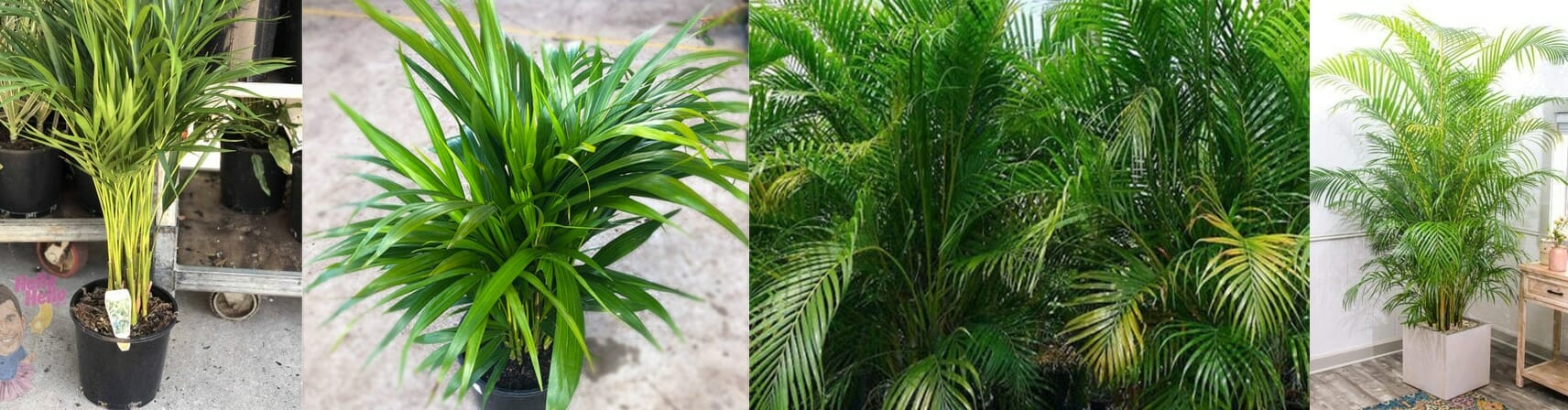
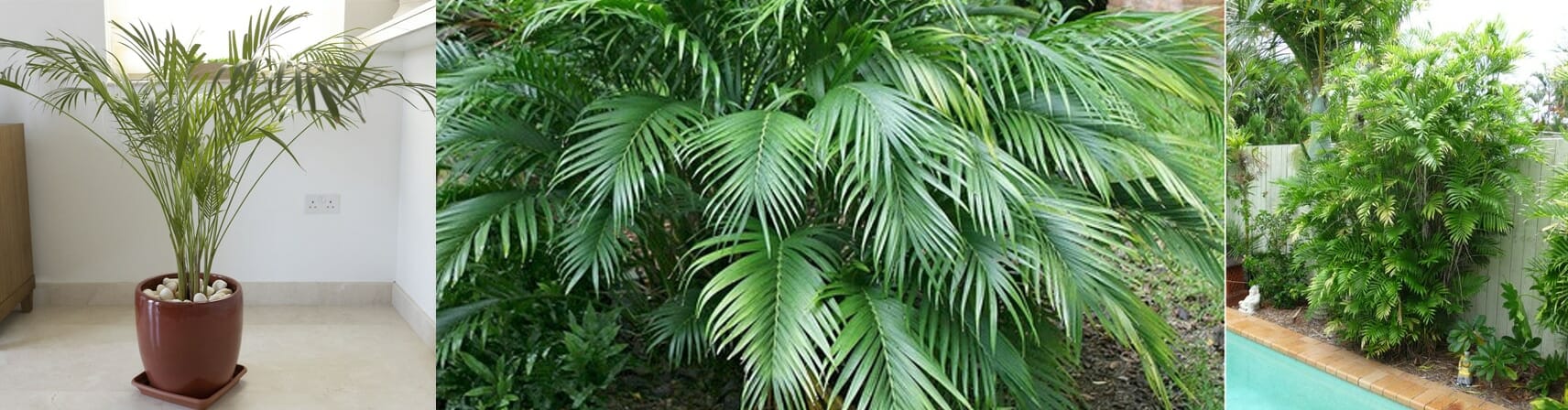
Golden Cane Palm 

Dypsis lutescens ‘Golden Cane Palm’

The Golden Cane Palm grows up to 2 meters indoors and will provide lush green foliage and gorgeous gold-coloured bamboo stems! They like good drainage and nice bright light. Due to being a palm and more on the tropical side, they will do better in moody Victoria when indoors as they need warmer temperature and humidity, all of which Melbourne fails to provide most of the time.

Toxins removed: benzene, carbon monoxide, formaldehyde, trichloroethylene, xylene.


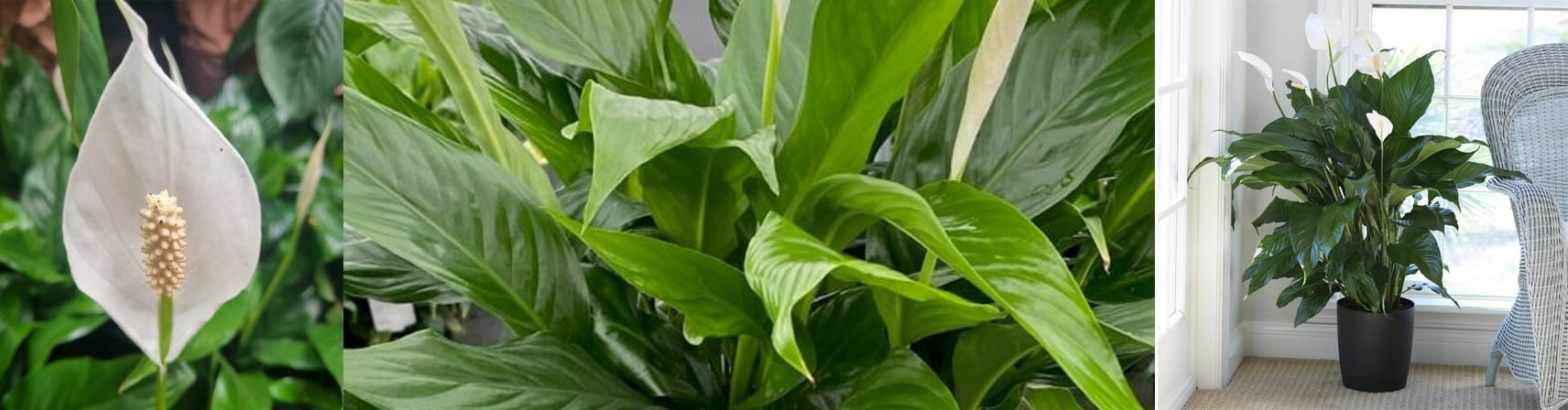
Peace Lily

Looking for a painless, straightforward and sometimes theatrical indoor plant that will give you lush green foliage with unique white flowers? Look no further! The Peace Lily is the one for you. They can handle low to brightly lit areas and are simply happy with weekly watering. They’ll tell you when they need it, they can be quite the drama queen. They are one of the most efficient air cleaners and, even better, they are super pretty and undemanding!

Toxins removed: benzene, carbon monoxide, formaldehyde, trichloroethylene, xylene


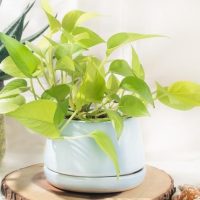
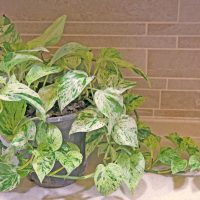
Devil’s Ivy Pothos

This toxin remover is an easy to grow indoor plant that can be trained up a pole or hanging down in a vine-like habit. The Devil’s Ivy or Pothos like protection from the sun. So that’s good news for those of you in a house that’s never heard or seen bright light! 

Pothos only need watering when the soil feels dry but they can also benefit from the occasional misting or humidifier. A real good beginner’s indoor plant we say!

Toxins removed: xylene, benzene, formaldehyde and trichloroethylene.


Lady Palm

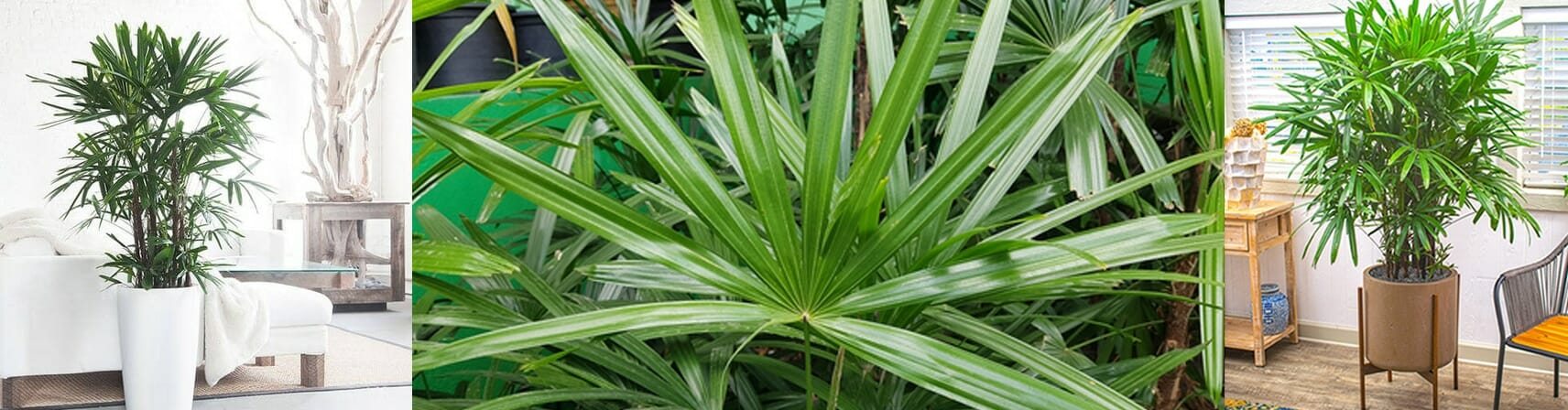
Finally! An indoor plant that can handle the cold and dramatic ups and downs of Melbourne’s weather (unfortunately some of us are not so lucky). The Rhapis Lady Palm is a great way to bring the thick, green foliage inside while purifying your air! They are quite slow-growing, so they can stay in the same pot for long periods of time. Perfect for the lazy plant parent!

Toxins removed: ammonia, formaldehyde and xylene


Bamboo Palm

Let’s take a step back in time and look at the Bamboo Palm, which was a favourite in Victorian-era houses. Imagine if a palm and bamboo had a love child – this is what you’d get, which we love! It prefers to be in an indoor position with bright, warm, indirect sunlight and can grow to a whopping 3 meters tall! It likes moist, well draining soil.

Toxins removed: benzene, formaldehyde and trichloroethylene


English Ivy

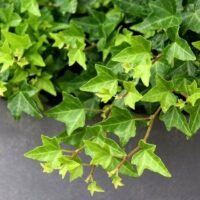
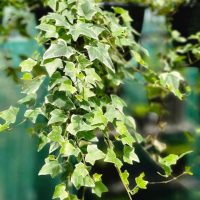
Ladies and Gents, we have a winner! The Hedra English Ivy was voted one of the best air purifier indoor houseplants by NASA. Commonly seen growing outdoors, English Ivy also looks great indoors in hanging baskets or small pots, looking elegant whilst purifying your air at the same time! We love a multi-tasker. They’re super easy to propagate too!

Toxins removed: benzene, formaldehyde, xylene and toluene.


Spider PlantChlorophytum Comosum Vittatum 'Spider Plant'

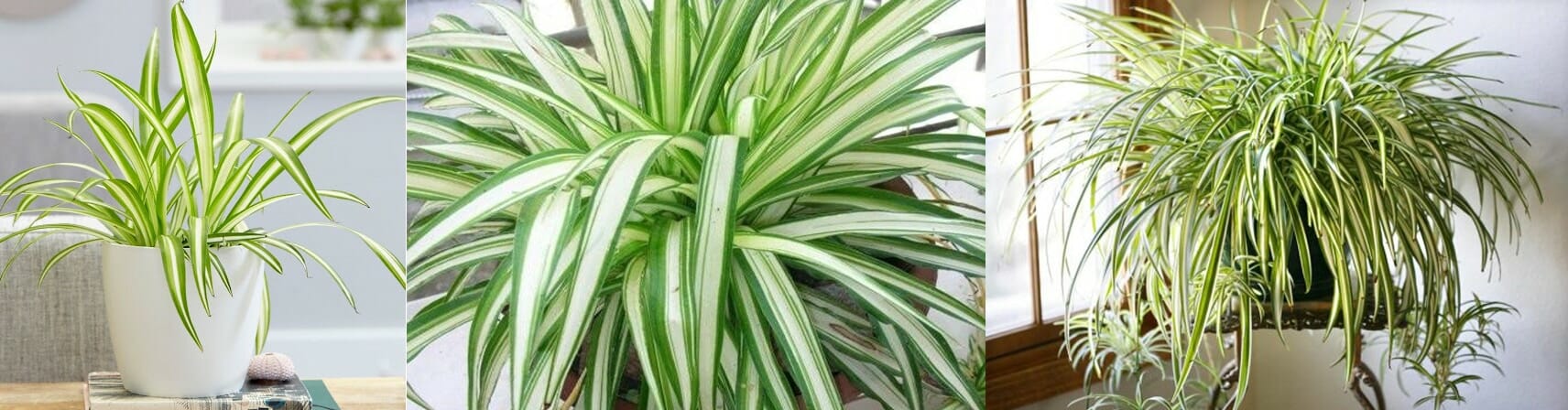
If you have some questionable plant care history that you would prefer to not discuss when it comes to indoor plants and needs something easy to start new (it’s okay, we won’t judge) – then the Spider Plant is a perfect choice for plant newbies or the recently reformed! They thrive in indirect light and can handle lots of conditions. Its leaves hang gracefully down, producing little white clusters of flowers on long stems. Watch these little fellows as they eventually turn into little baby spider plants!

Toxins removed: formaldehyde and xylene.


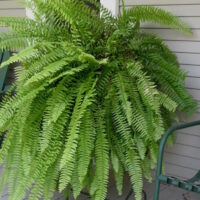
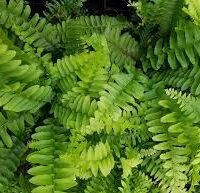
Boston Fern

Nephrolepis Boston Fern

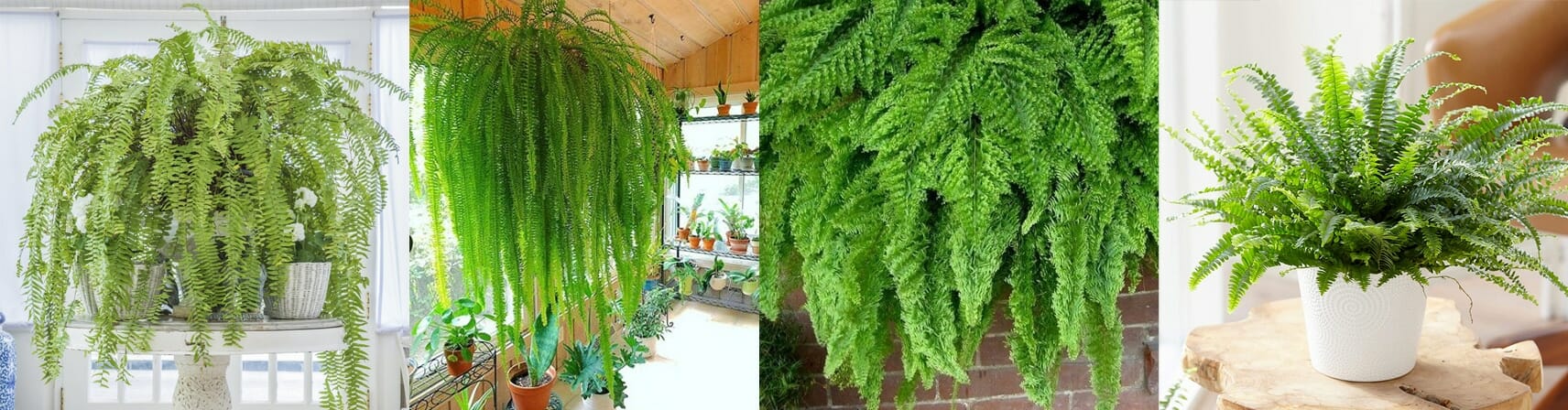
Boston Ferns! Easy to grow, beautiful fronds and did you know they’re also a toxin remover too! These bad boys can get up to 1m in height and width when they are doing their best – crazy right?! To achieve this, keep them away from direct sunlight and keep the soil moist. To keep them even happier, they love a good misting to create some humidity.

Toxins removed: Mainly formaldehyde but also filters out toxins like ammonia, benzene and xylene


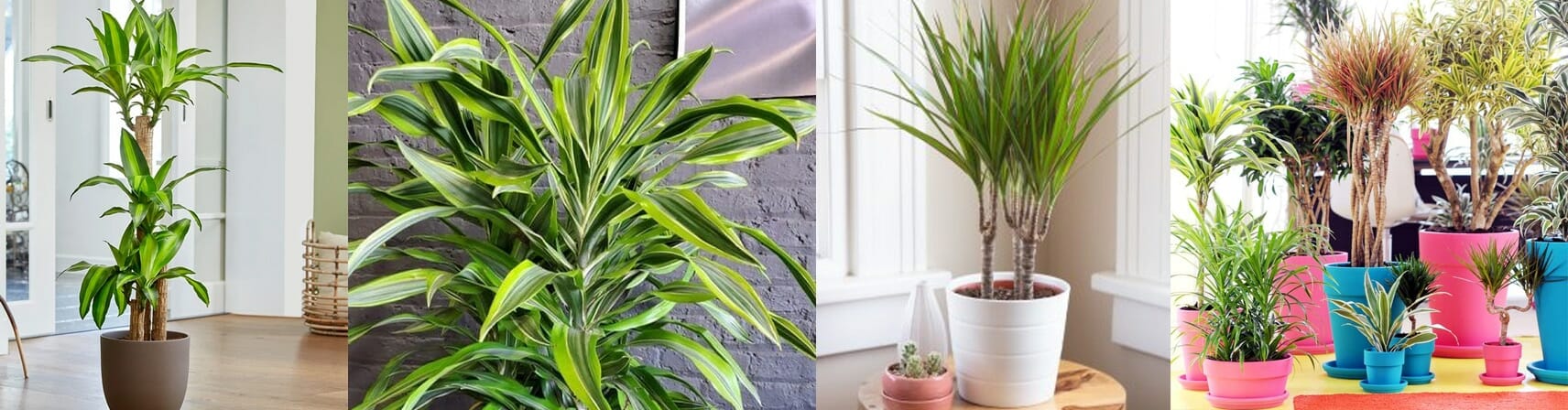
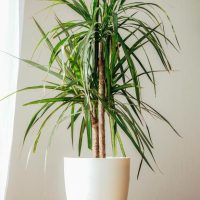
Dracaena

Dracaena marginata

The Dracaena looks like a mini tree or palm and works beautifully as a tall feature plant! Bring the outdoors in, we say!  It is a high performing air filter that is hardy and quite tolerant to most common plant diseases. However, they do have one weak spot (like most of us right?) and are not a fan of overwatering as it can cause root rot.  

They prefer indirect sunlight but never direct sunlight!

Toxins removed: Trichloroethylene, benzene, xylene and toluene


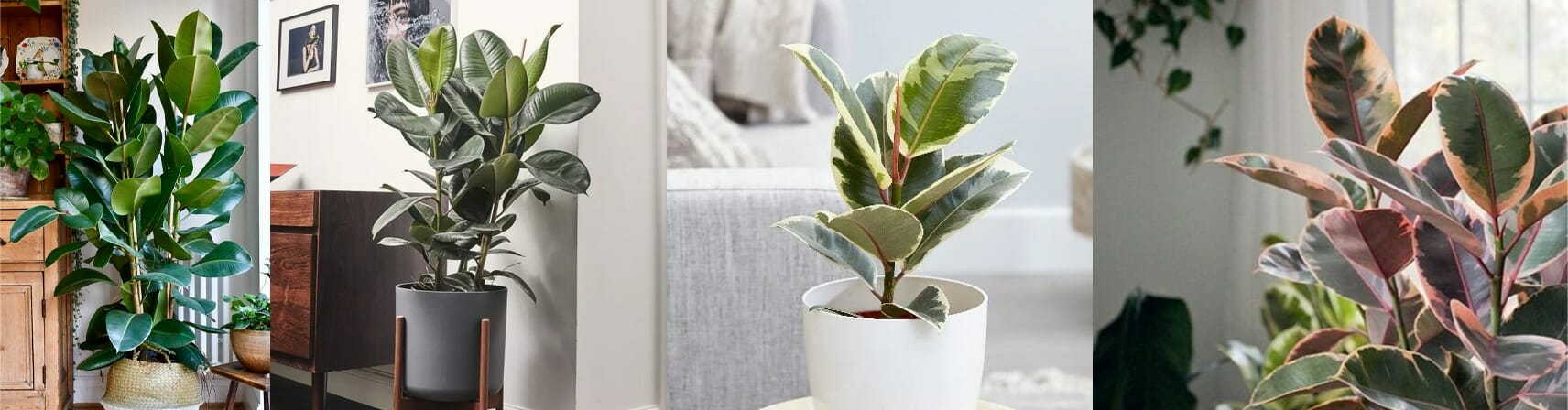
Rubber Plant

Ficus elasctica Rubber plant

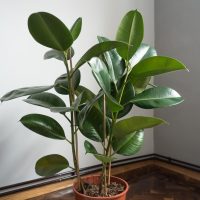
Last but certainly not least! The robust Rubber Plant! A lover of bright, indirect light so keeps it away from those Northern and Western windows! Grow in a pot indoors and water weekly in Summer or every 2 weeks in Winter. While it is not top of the list for air purifiers, it is certainly one of the most aesthetic looking ones that everyone should have regardless!


Toxins removed: xylene, benzene, formaldehyde and trichloroethylene


Snake Plant/Mother-in-Law’s Tongue

Sansevieria trifasciata Snake plant Mothers in law tongue

Mother-in-Law’s Tongue or Snake Plant produces upright sword-shaped leaves that are deep green, thick, succulent and patterned with bands of cream, yellow.
They are sensitive to cold so can only be grown outdoors in warmer climates where they will grow in full or part sun and tolerate heat and neglect. The interesting foliage makes them useful as feature plants, they are often grown in low water and low maintenance gardens, in pots along borders and edges.
In cooler climates, they can be grown indoors either alone or with other indoor plants with contrasting foliage. They prefer bright indirect sunlight but will tolerate lower light levels.

Toxins removed: formaldehyde, trichloroethylene, benzene and xylene.


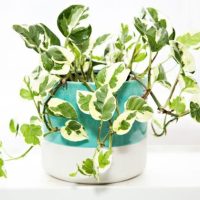
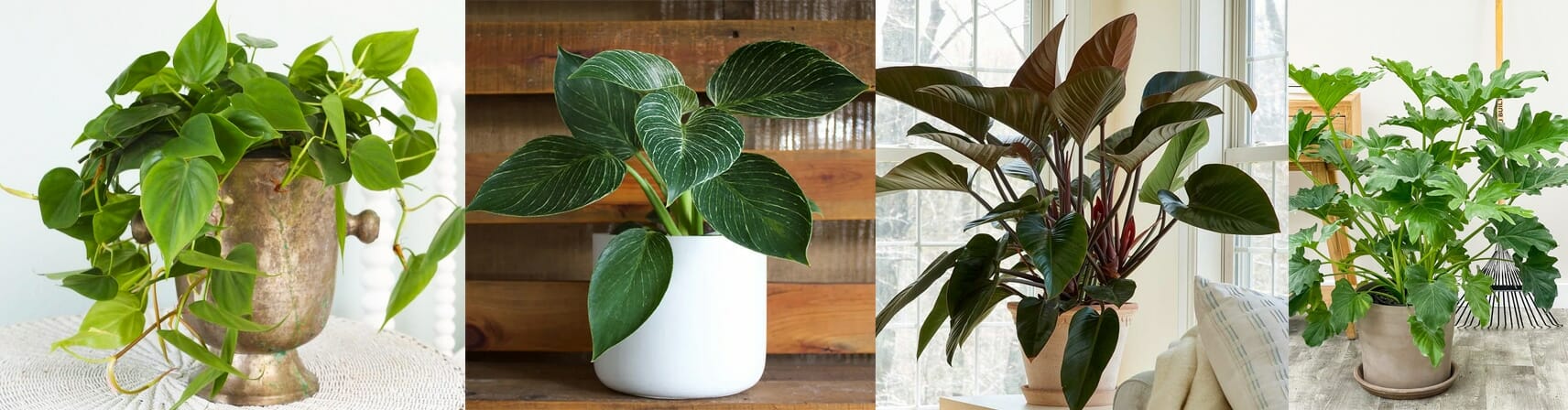
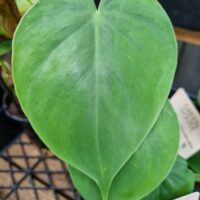
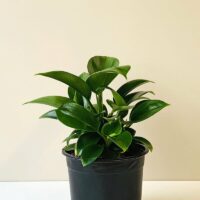
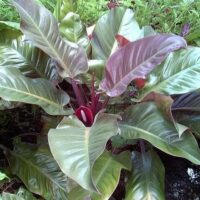
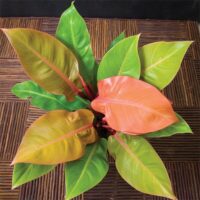
Philodendron

Philodendron

Philodendron care is easy because if you watch for the signals, the plant will tell you exactly what it needs. Even inexperienced houseplant owners will have no trouble growing philodendron plants because the plants adapt readily to conditions inside the home. This makes learning how to care for a philodendron incredibly simple. There are so many beautiful varieties to choose from!

Now while we know we’ve taught you a lot about air-purifying plants, the one thing we hope you take away from this is that you should buy yourself a new indoor plant! – Treat yo’ self! – and if anyone asks, it’s for the good of Earth, you know, purifying the air and all! 😉 

Here are some more articles you may like:


Sign up for our newsletter below

We will send you gardening tips, great deals, and exclusive giveaways. Happy Gardening!


Select the fields to be shown. Others will be hidden. Drag and drop to rearrange the order.
  • Image
  • SKU
  • Rating
  • Price
  • Stock
  • Availability
  • Add to cart
  • Description
  • Content
  • Weight
  • Dimensions
  • Additional information
Click outside to hide the comparison bar
Compare