| Description | Magnolia grandiflora
An evergreen beauty with elegance and class, the 'Super Gem' Magnolia is a newer, compact growing form of the Little Gem Magnolia.
Hand-sized white and heavily fragrant flowers against robust, dark green foliage make this plant a favourite for hedging and feature planting.
Tolerating poor soils, heat and frost, they are an ideal plant for the Melbourne and rural Victorian garden.
See our Magnolia & Michelia - Evergreen Factsheet here for more about the different Magnolia & Michelia varieties!
For care instructions, features and more, check out Additional Information below
8"/20cm pot | Acanthus mollis
Oyster Plants produces large dark green, shiny, lobed leaves. They bear beautiful purple and white flowers on tall, erect spikes from November to January. Will die back over Winter and burst to life again in Spring. Great mass planted.
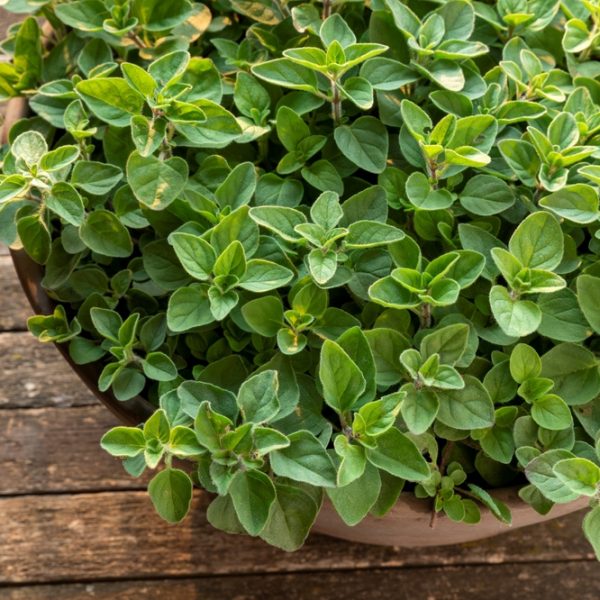
Oyster Plants grow best in part shade and prefers moist soil. This plant is also very hardy making it all round a great choice for a lovely addition to your garden. | There are many different varieties of oregano, but Greek Oregano is by far the most popular one in the kitchen. Most say it has a smoother, yet stronger flavour that is more palatable than common oregano. Like common oregano, this variety is a hardy perennial that is native to the Mediterranean region. Suited to pots or in the ground, this herb loves the sun, so plant in a sunny position with lots of midday sun. In well drained, sandy soil with average watering, trim it regularly to keep it in great condition. The best flavour is in the leaves just before the plant flowers. Leaves can be used fresh or dried, and leaves can be frozen also. Enjoy this great culinary herb, on pizzas, in egg dishes, and in tomato dishes. Like the Greeks, why not toss fresh leaves into a salad? Or add it to a Mexican dish, like fajitas or tacos.
4" pot size. | Allium schoenoprasum
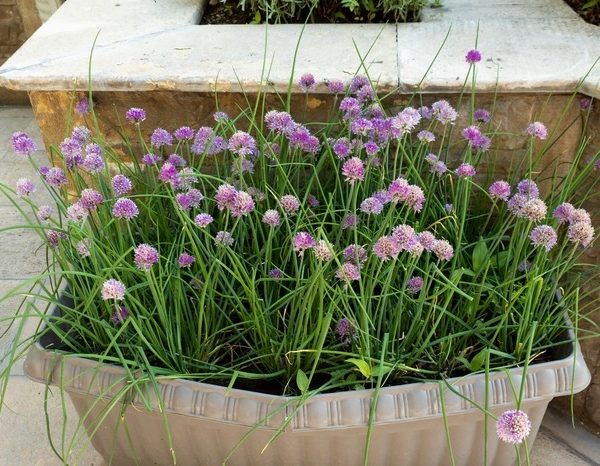
Chives come from the same family as onions, leeks, and garlic. And originate from Northern Europe and North America. Chives are used as decorative borders in Britain. They are the mildest of all onions, and are probably the easiest to grow of all the culinary herbs! They are a hardy perennial herb and grow in clumps, in almost any soil condition. Although they prefer rich soil in a nice sunny position. They are also perfect to grow in pots. Splitting the plant every few years will ensure the plants survival. Chives can reach up to 60cm in height and don't have the typical onion bulb. The clumps have shoots of little purple flowers, which are very pretty and also edible. Use chives in sauces, fresh salads, in egg or omelette recipes or with cream cheese. Can be used as a garnish on soups or potatoes. Diced leaves are great mixed in sour cream for baked potatoes. Or why not mix with softened butter and add to grilled meat! When harvesting, cut close to the ground, which is better for the plant. Store in airtight plastic in the fridge for up to a week. You can also preserve chives in butters, oils, and vinaigrettes.
4"/10cm pot size. | Carpobrotus rossii
A very hardy native groundcover affectionately called pig face as the flowers (apparently) resemble that of a pig.
• Grown over slopes, retaining walls or over hard to cover ground
• Covered in large, vibrant magenta pink flowers in summer
• Grows best in full sun, tolerating most soil types
6"/14cm pot size. |
| Additional information |
| Origin |
Southeastern USA
|
| Plant Type |
Tree
|
| Leaf Drop |
Evergreen
|
| Sunshine |
Full Sun, Part Shade
|
| Tolerances |
Drought Sensitive, Poor Soil Tolerant, Soggy Soil Sensitive, Frost Tolerant, Heat Tolerant
|
| Soil Type |
Clay, Loam, Loamy – Clay, Sandy – Loam, Well drained
|
| pH |
Acidic, Neutral
|
| Water Requirement |
Moderate
|
| Fertilise Me |
April, December, February, January, March, November, October, September
|
| Fertilizer Frequency |
Monthly, When needed
|
| Planting Distance |
1 per 1.5 metres, 2m apart
|
| Growth Speed |
Moderate
|
| Prune Me |
after flowering, Only if required
|
| Flowering |
Yes
|
| Flower Colour |
White
|
| Flowering Time |
December, February, January, March, November, October
|
| Fragrance |
Strong
|
| Foliage Colour |
Green
|
| Fruit / Seed |
Yes – Non-edible
|
| Fruiting Time |
April, March, May
|
| Attracts |
Bees, Birds
|
| Toxic To |
Non-toxic
|
| Uses |
Fenceline, Fragrance, Bird attracting, Feature Tree, Hedging & Screening
|
| |
| botanical name |
Origanum vulgare "Hirtum"
|
|
| botanical name |
Allium schoenoprasum
|
| |